Estepona’s Housing Crisis: The Price Behind the Beauty
Article
August 2, 2026
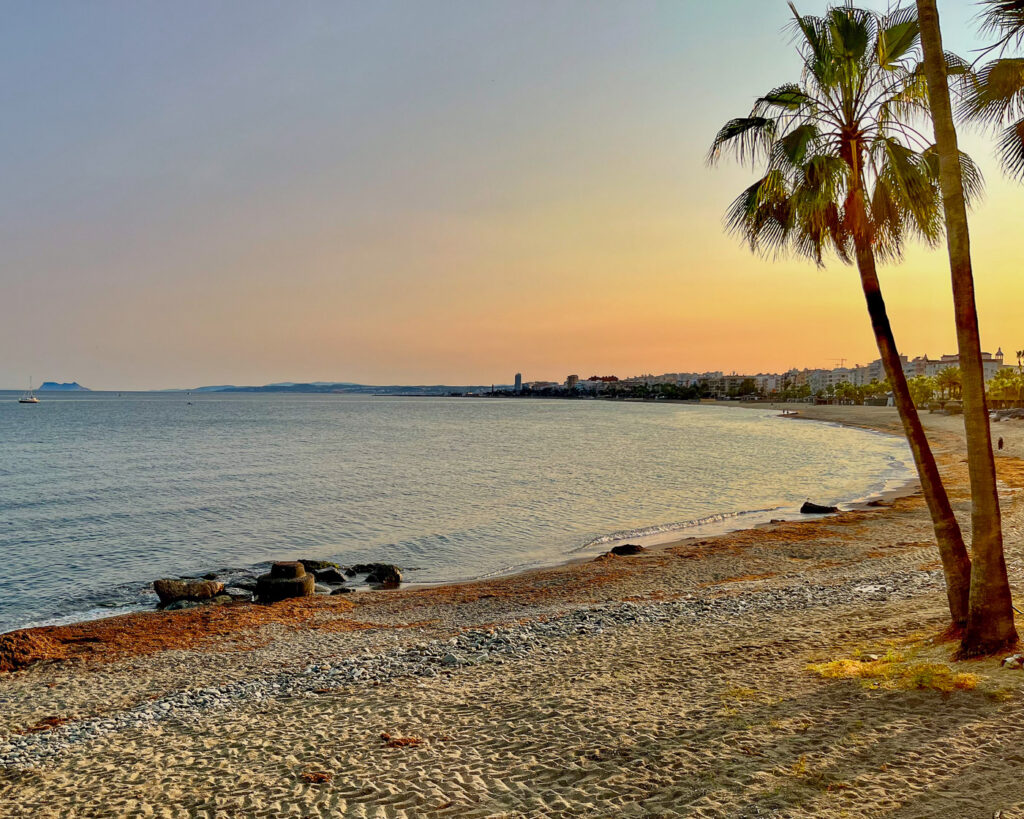
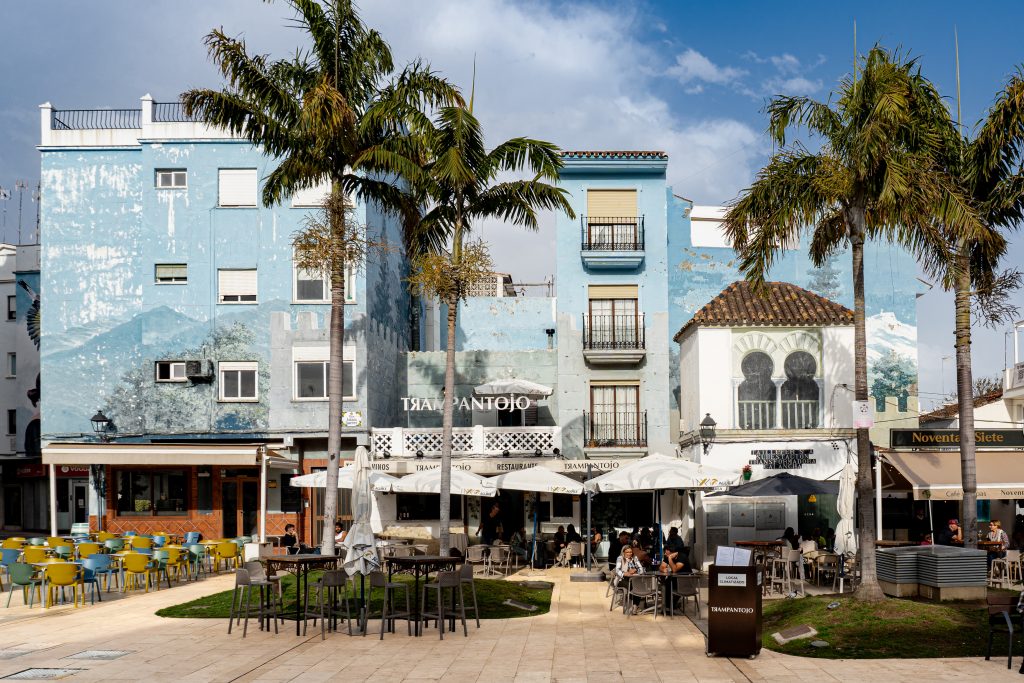
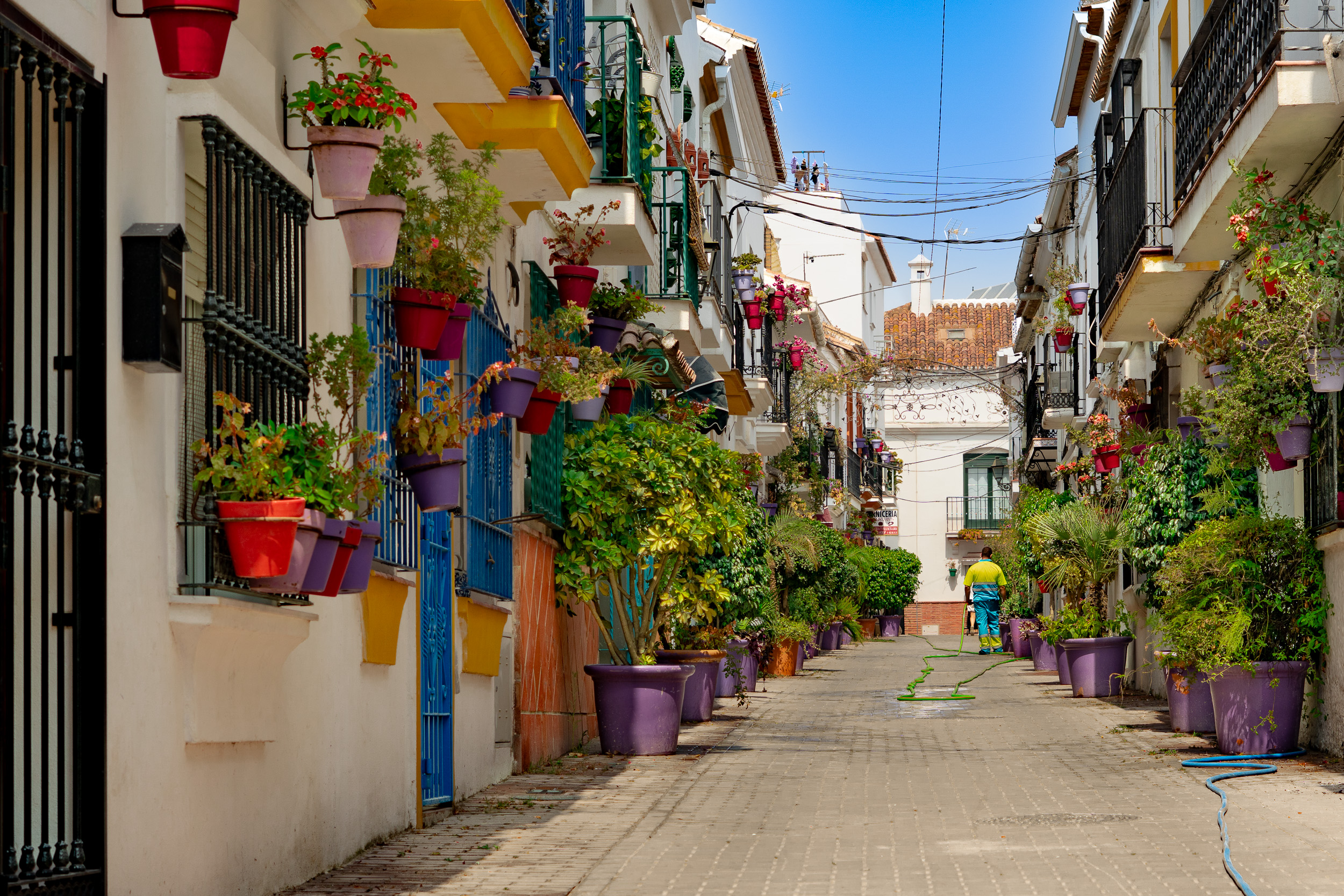
Estepona is a beautiful town on the Costa del Sol, approximately one hour by car from Málaga Airport. It is sometimes called the “White Pearl” because of its attractive historic centre with whitewashed houses. The old town is carefully preserved, and many of its streets have undergone restoration projects.
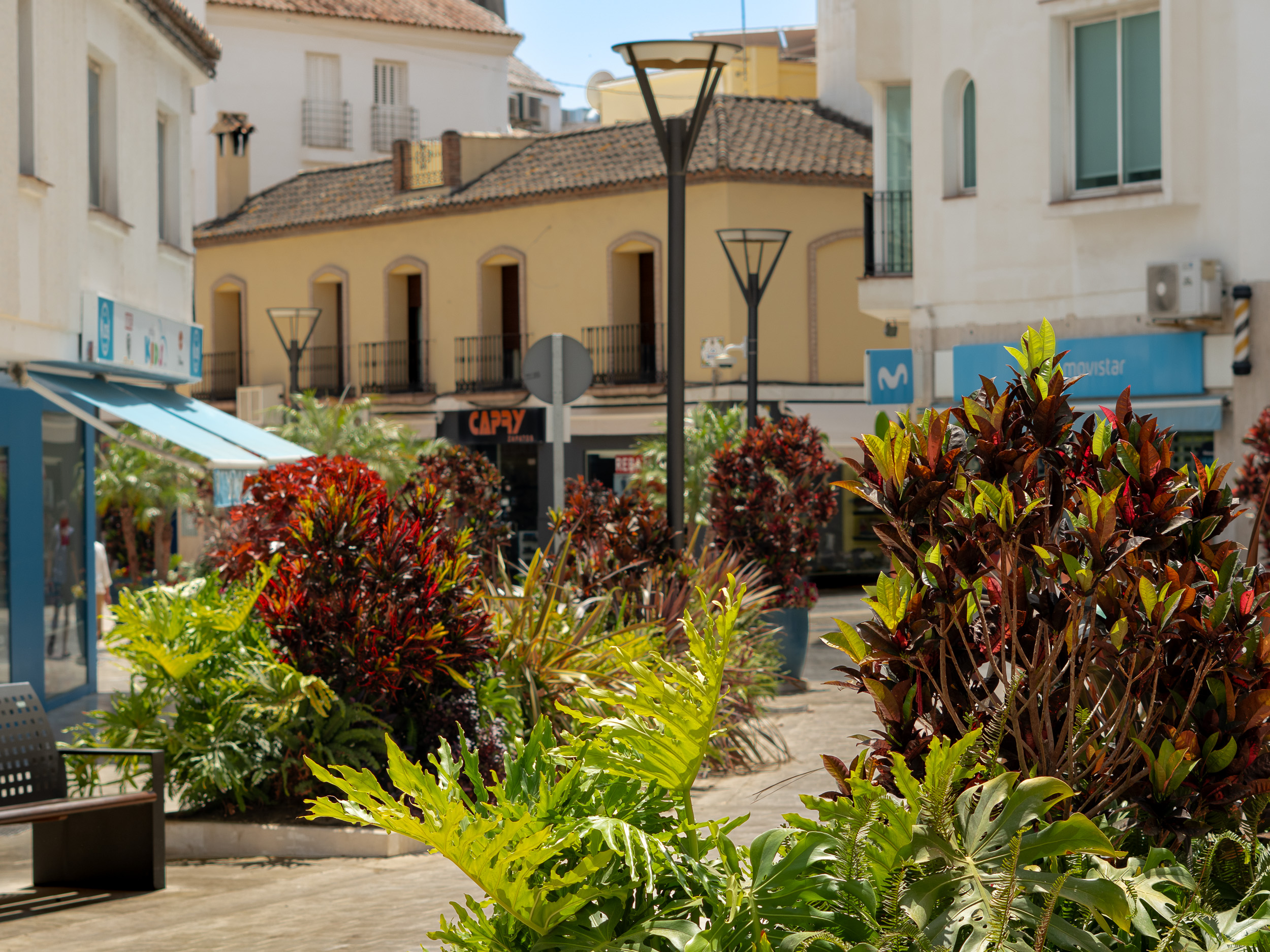
The three-kilometre-long promenade along the beach, the Paseo Marítimo, is lined with beautiful plants and is sometimes referred to as “the jewel of Estepona”. The abundant vegetation and numerous flowerpots throughout the old town have earned the coastal town a second nickname: “the Garden of the Costa del Sol”. All this makes Estepona an ideal destination for a beach holiday or a day by the sea.
Behind this beautiful appearance, however, lies a serious housing crisis. The housing crisis (crisis de la vivienda) has developed into a structural social problem. In both Málaga city and Estepona, local residents are being confronted with extreme increases in housing prices – a phenomenon known as gentrification.
The local economy and the housing crisis
The gap between the local economy and the property market has become increasingly unsustainable in recent years.
Rental prices in Estepona have almost doubled within a few years. At the end of 2021, the average asking rent was approximately €10.30 per square metre per month. An 80-square-metre apartment would therefore have cost around €824 per month. By June 2026, this had risen to €19.40 per square metre, or approximately €1,552 for a comparable property. This represents an increase of around 88% in four and a half years.
Since 2018, wages for young workers have risen by only a fraction of this amount. Although precise municipal data on real wage growth is unavailable, it is clear that wages have increased far more slowly than housing prices. Estepona’s local economy relies heavily on hospitality, retail and tourism-related services.
The lack of affordable housing is also beginning to affect the labour market in Estepona and elsewhere on the western Costa del Sol. High rents make it increasingly difficult for workers from outside the area to accept jobs along the coast. Trade unions report that police officers avoid or leave postings in places such as Estepona and Marbella, while healthcare institutions, schools and hospitality businesses across the region struggle to attract enough staff.
The impact of luxury developments and gentrification
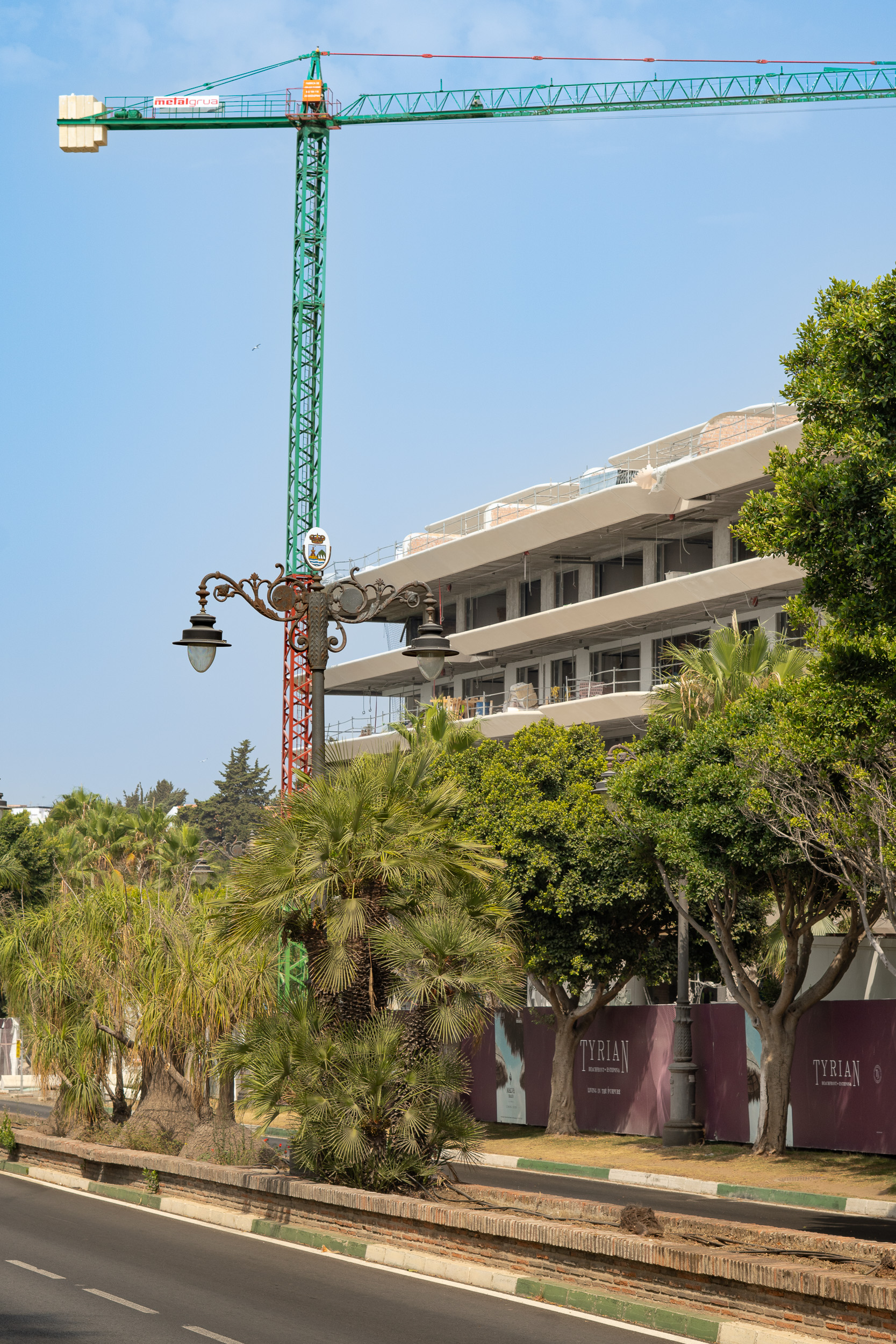
One example of a luxury development in Estepona is Tyrian Residences on Avenida Litoral. Designed by Prestige Expo Group, the project consists of just 40 exclusive apartments. Because of their exceptional size and layout, they are marketed as “villas in the sky”.
The properties range from 280 to as much as 1,060 square metres. They include private lifts and garages with space for up to five vehicles. The development also offers a 1,400-square-metre wellness complex with a spa and private cinema facilities. Construction is in its final phase, with completion scheduled for the second half of 2026.
Tyrian Residences has an exclusive partnership with the Malva Beach restaurant, located within walking distance of the development on Estepona’s seafront. Residents have access to a permanently reserved area on the beach and inside the restaurant.
Tyrian Residences and Malva Beach are not being singled out or criticised individually in this article. They are mentioned only as a visible example of a broader development in Estepona and to illustrate the growing presence of ultra-luxury property and exclusive services in the town.

A billionaire purchasing a €9 million “villa in the sky” does not directly compete with a local resident looking for a two-bedroom apartment. Nevertheless, developments at the very top of the market can have a profound influence on the wider housing crisis.
When an area becomes known for ultra-luxury property, land values rise throughout the municipality. Developers purchase scarce building land to construct exclusive resorts because these offer much higher profit margins than social or affordable rental housing. As a result, less land remains available for ordinary family homes.
This is an example of gentrification, a process in which investment attracts more affluent residents. Real estate prices and the cost of living rise to such an extent that lower-income residents or the working class are displaced.
Displacement of the local economy
The arrival of wealthy international residents also changes the town’s commercial infrastructure. Local shops and traditional tapas bars increasingly make way for high-end restaurants and exclusive beach clubs. This contributes to a general rise in the cost of living. On paper, Estepona has even become more expensive to live in than Málaga city.
Pressure on infrastructure
The rapid construction of luxury developments is also placing pressure on public infrastructure. At the beginning of 2026, Estepona’s mayor made an urgent appeal to the central government because the electricity network could no longer cope with the scale of new construction. Some new property owners were reportedly unable to move into their homes because an adequate electricity connection was not available, while the growing demand also increased pressure on the rest of the town.
Political tensions have also emerged because the municipality continues to invest millions in improving tourist areas, while opposition parties argue that more of this money should be directed towards public housing.
Political choices and housing policy
Estepona’s municipal government has focused strongly in recent years on urban renewal, private investment, residential tourism and luxury property developments. This strategy has made the town more attractive to international buyers and investors and has resulted in a large number of new developments. Within the property sector, Estepona is increasingly presented as a quieter alternative to Marbella.
The downside is that a substantial part of the new housing supply is aimed at higher-income households, second-home owners and international buyers. The property market is therefore becoming increasingly disconnected from the incomes of many local residents. Young people and workers in hospitality, retail, healthcare and other service industries are finding it particularly difficult to secure affordable housing.
The municipality has announced plans for hundreds of protected homes (VPO) and intends to expand this supply further in the coming years. VPO stands for Vivienda de Protección Oficial: housing sold or rented at regulated prices to households that meet certain income conditions. However, many of these homes still need to be built. For residents currently facing high rents, these plans therefore offer little immediate relief.
Spain’s national housing law allows areas with exceptionally high housing costs to be designated as a zona de mercado residencial tensionado, or stressed residential market area. Stricter rules concerning rental prices and new tenancy agreements can be introduced in such areas. This designation must, however, be approved by the autonomous regional government. So far, this instrument has not been used in Andalucía, meaning that Estepona is not subject to rent restrictions under this system.
Both local and regional housing policies consequently focus mainly on increasing supply, making building land available and cooperating with private developers. Direct regulation of rental prices plays only a limited role. The central question is whether the planned housing can be completed quickly enough and whether it will be genuinely affordable before growing numbers of residents are forced to live outside Estepona.
Sources and further reading
- Boletín Oficial del Estado (BOE). (2023). Ley 12/2023, de 24 de mayo, por el derecho a la vivienda. Ministerio de Transportes, Movilidad y Agenda Urbana. Gobierno de España.
- El Español (Edición Málaga). (2026, 10 June). Una empresa vinculada al alcalde de Estepona, García Urbano, logra licencia para 20 apartamentos turísticos en Málaga capital.
- El País. (2026, 4 July). Málaga activa una moratoria de tres años para prohibir nuevos hoteles y apartamentos turísticos en suelo residencial.
- El Plural. (2026, 10 June). Polémica en la Costa del Sol: El alcalde de Estepona promueve apartamentos turísticos en Málaga en plena crisis habitacional.
- Estepona Info. (2026). Estepona on the front line of the housing crisis shaking Spain: The impact of real estate speculation on the New Golden Mile.
- Idealista España. (2026). Evolución del precio de la vivienda en alquiler y venta en Estepona (Málaga).
- Junta de Andalucía. (2026). Entrada en vigor de la Ley de Vivienda de Andalucía y el plan de choque para la movilización de suelo residencial público (VPO). Consejería de Fomento, Articulación del Territorio y Vivienda.
- Latinpress. (2026). Análisis de la concesión de licencias turísticas a sociedades patrimoniales en la provincia de Málaga.
- Ministerio de Vivienda y Agenda Urbana. (2026). Plan Estatal de Vivienda 2026-2030: Objetivos, regulación de grandes tenedores y presupuestos generales. Gobierno de España.
- Prestige Expo Group. (2026). Tyrian Residences: Project Overview and WELL-certification Specifications.
- Tyrian Residences Blog. (2026). Malva Beach Estepona: Exclusive Beachfront Culinary Experience with Chef Txema Palacio.
Related articles
The rise of tourism in Andalucía and its impact today
Touristification in Málaga’s La Trinidad neighbourhood