Estepona: White Pearl on the Costa del Sol
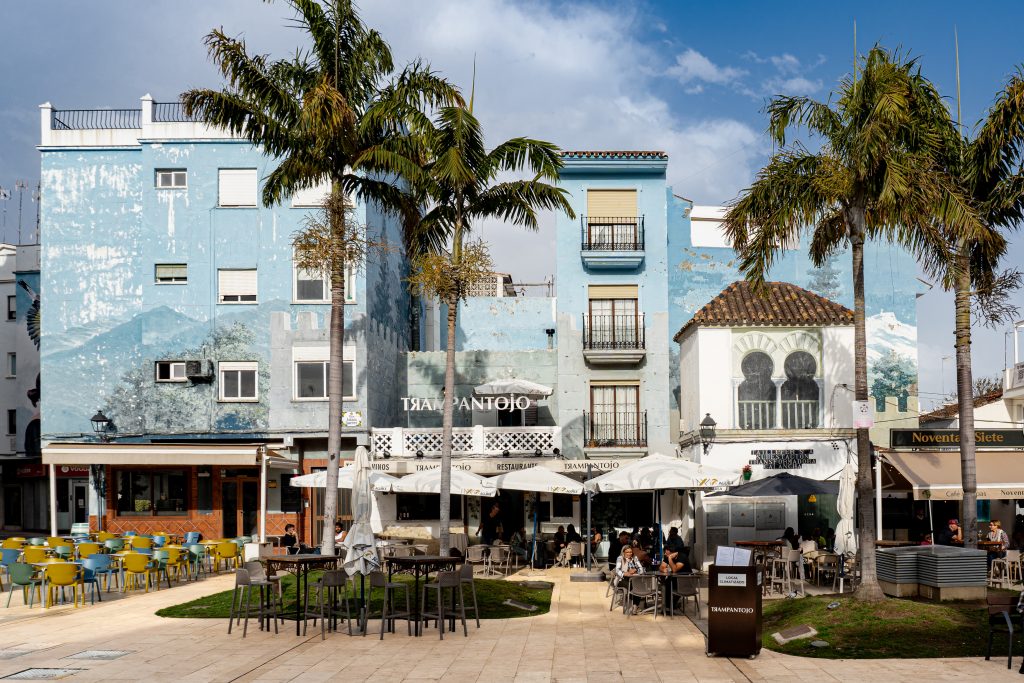
Estepona: photos of one of the most beautiful Andalusian towns—perhaps even in all of Spain. It is also known as the “White Pearl” of the Costa del Sol. It has a magnificent coastline, an historic old white village of narrow streets, full of color, plants, cacti and flowers. Estepona has a long seafront, beautiful, clean beaches and many street art murals on apartment buildings.

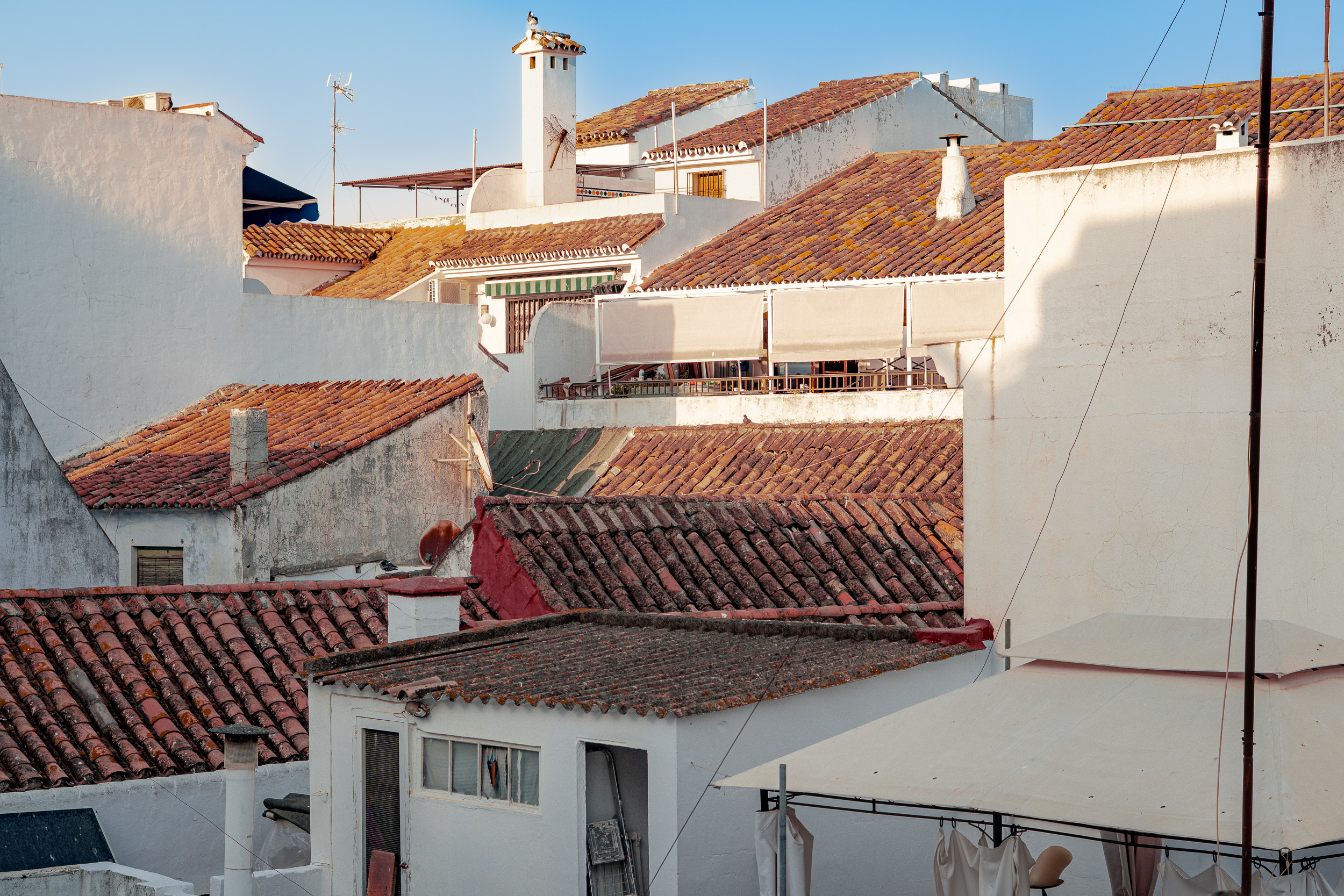
Estepona is a former fishing village 80 kilometers from the city of Málaga that is now a very popular tourist destination. It features a beautiful coastal promenade (the Paseo Marítimo), a marina, hotel apartments, and many restaurants and bars. An authentic Andalusian atmosphere still prevails in the old town, with its typical Andalusian streets, whitewashed houses, and colourful flower pots.
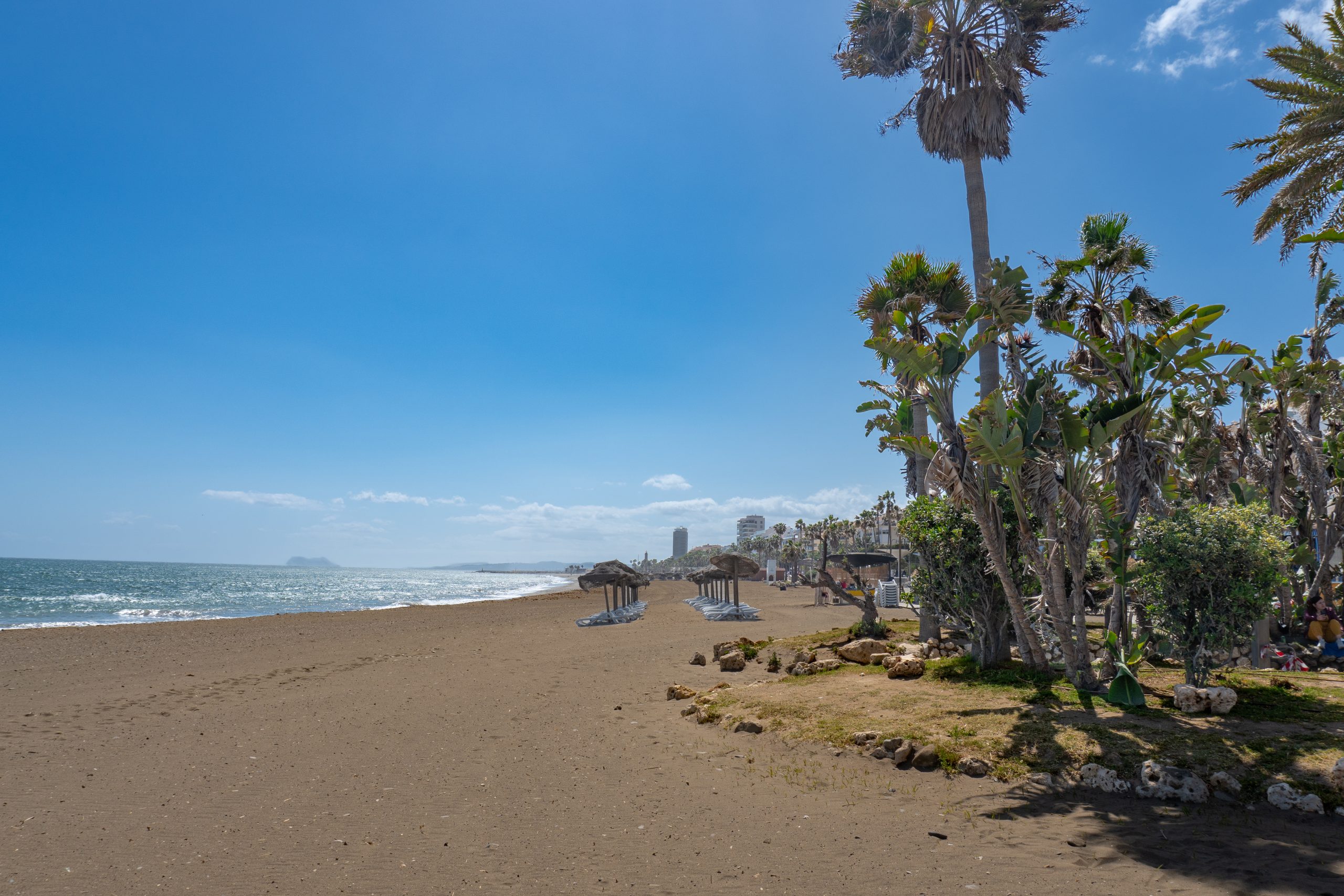
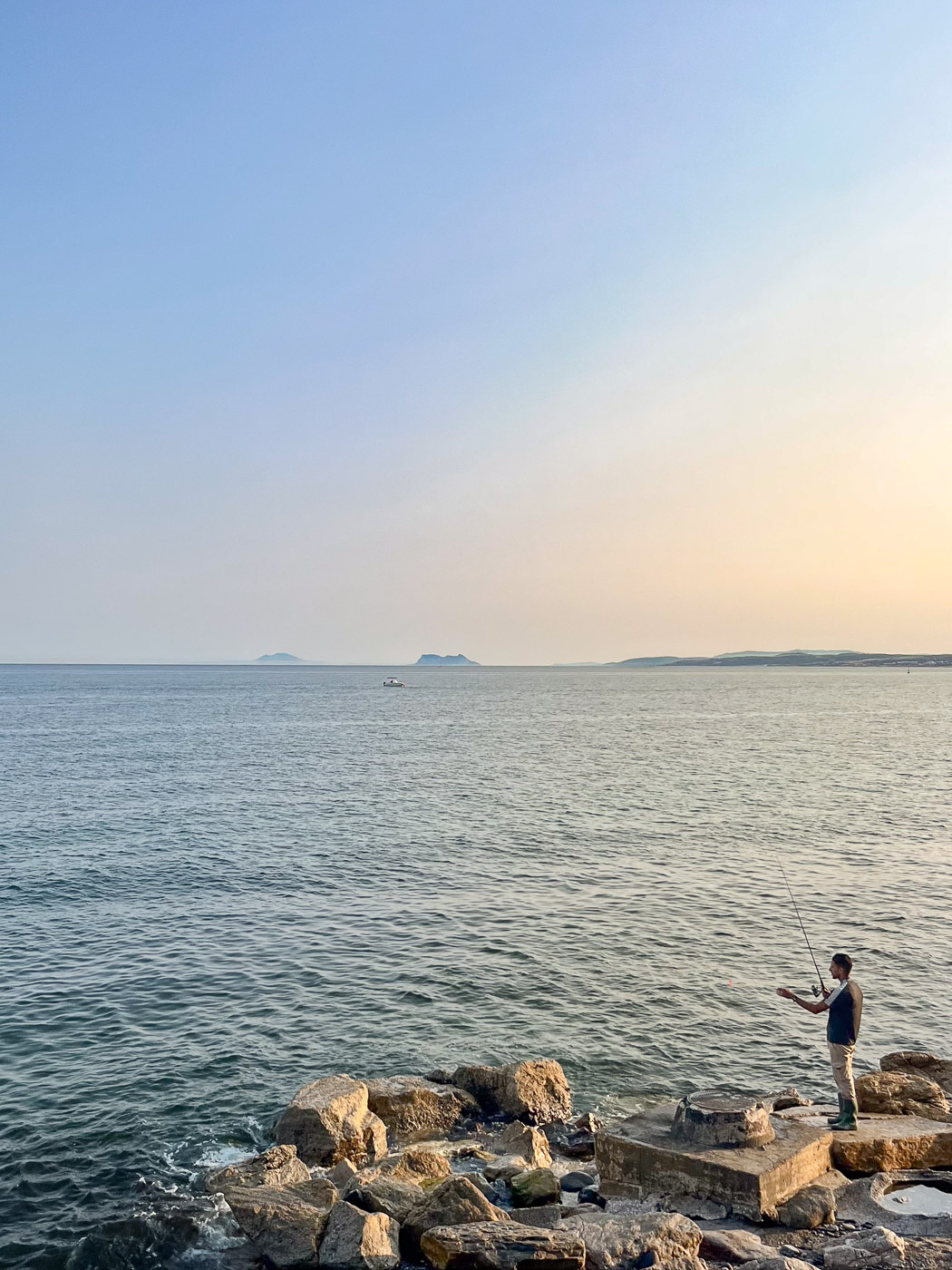
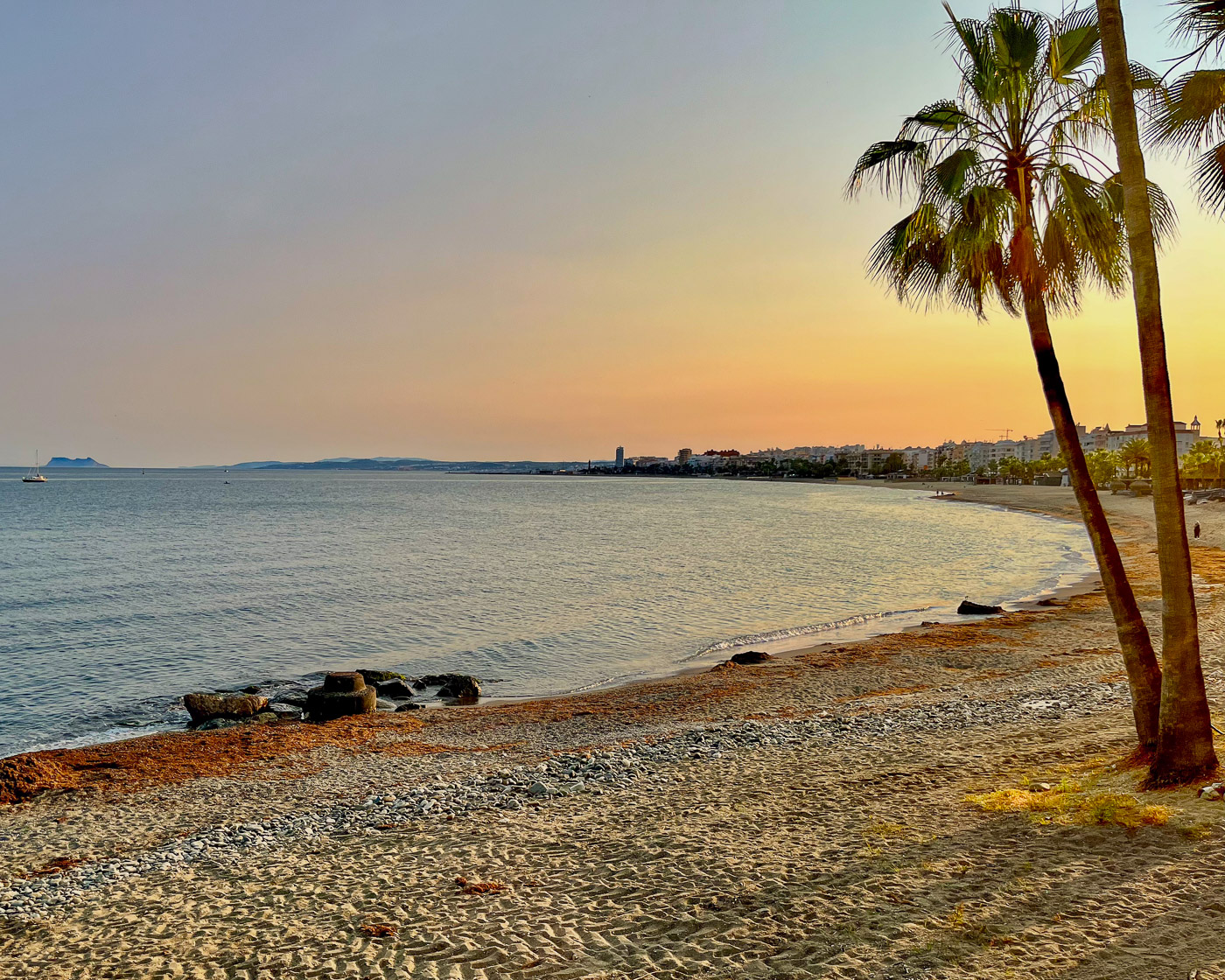
On clear days, the British Gibraltar can be seen in the background (see picture above). It is nicknamed “The Rock” – referencing its iconic 426-meter-high limestone monolith.
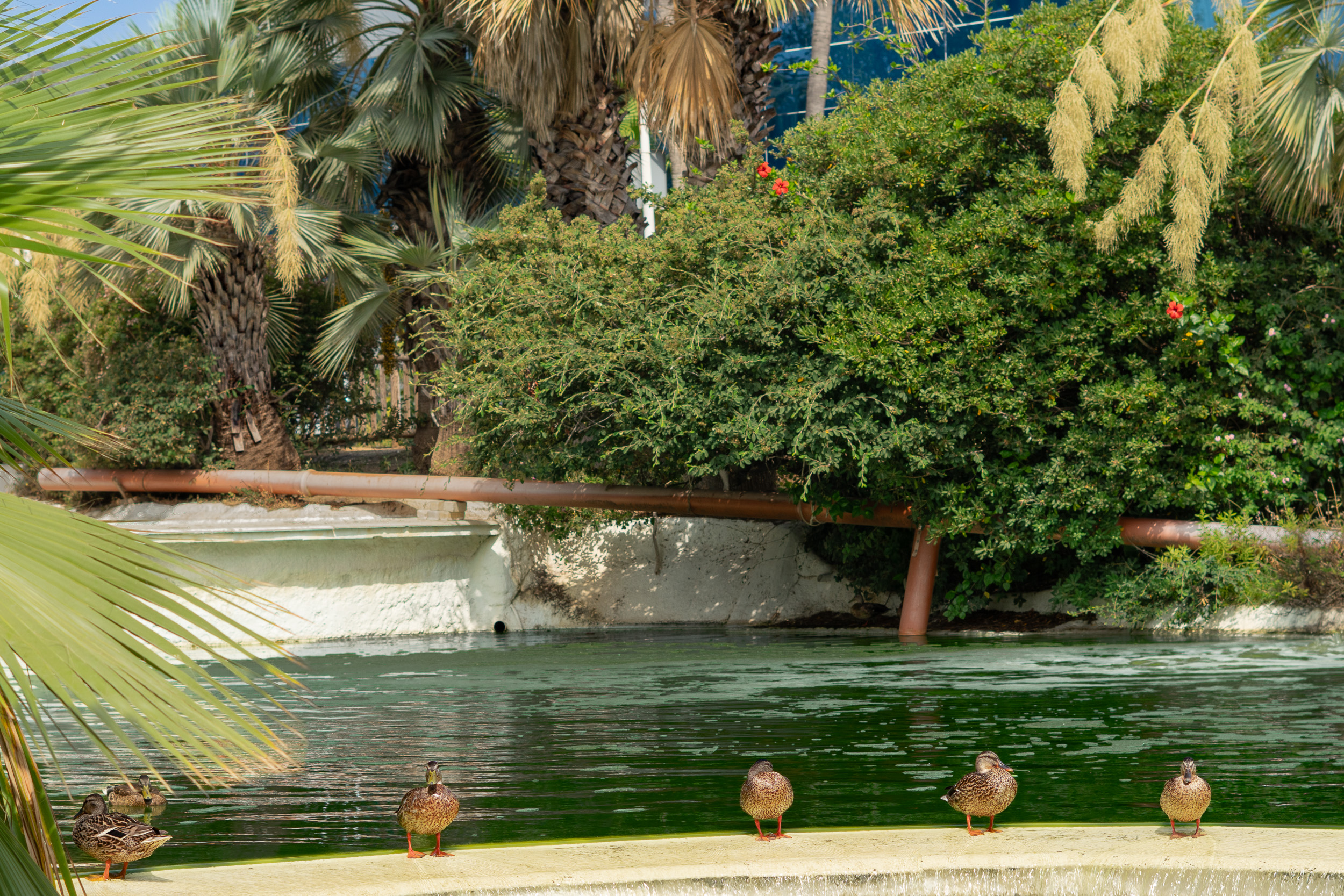
In this gallery:
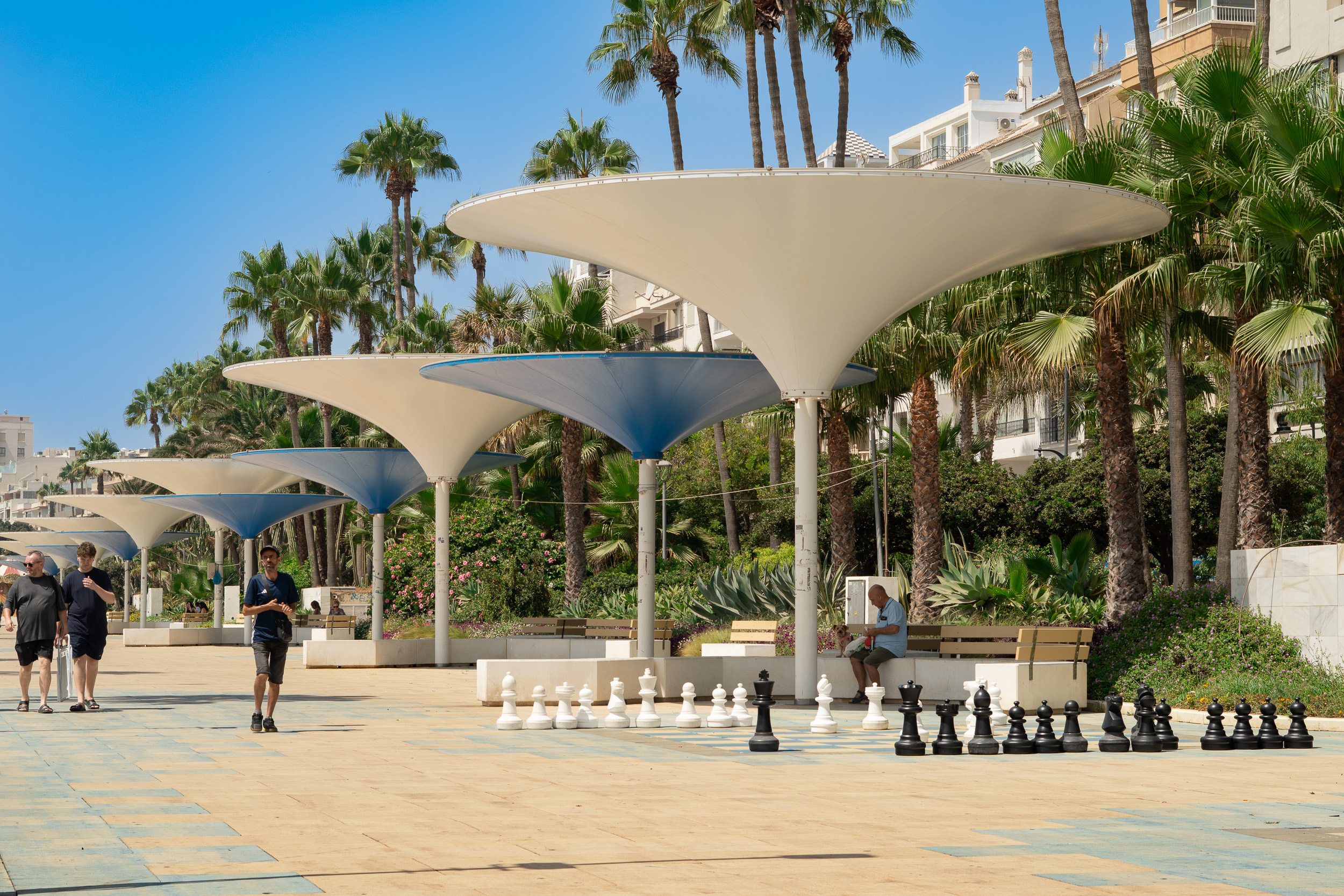
The Paseo Máritimo promenade and La Rada beach · Estepona old town flower streets · Calle Terraza and the Orchidarium · Traditional Jábega fishing boats
Estepona’s Paseo Marítimo promenade and La Rada beach

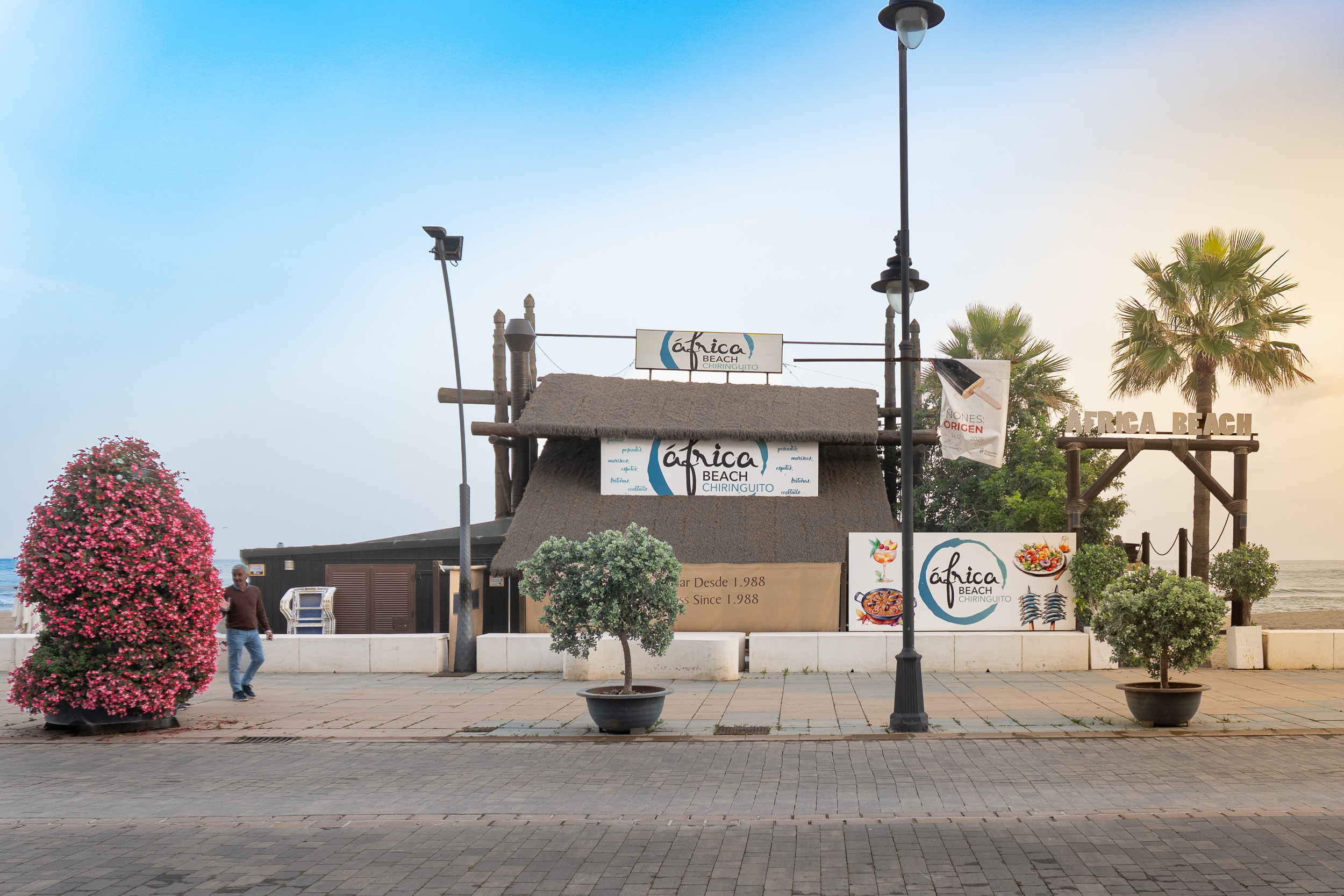
Chiringuitos are informal beach bars or restaurants, typical of the Spanish coast, where visitors can enjoy food and drinks close to the sea.
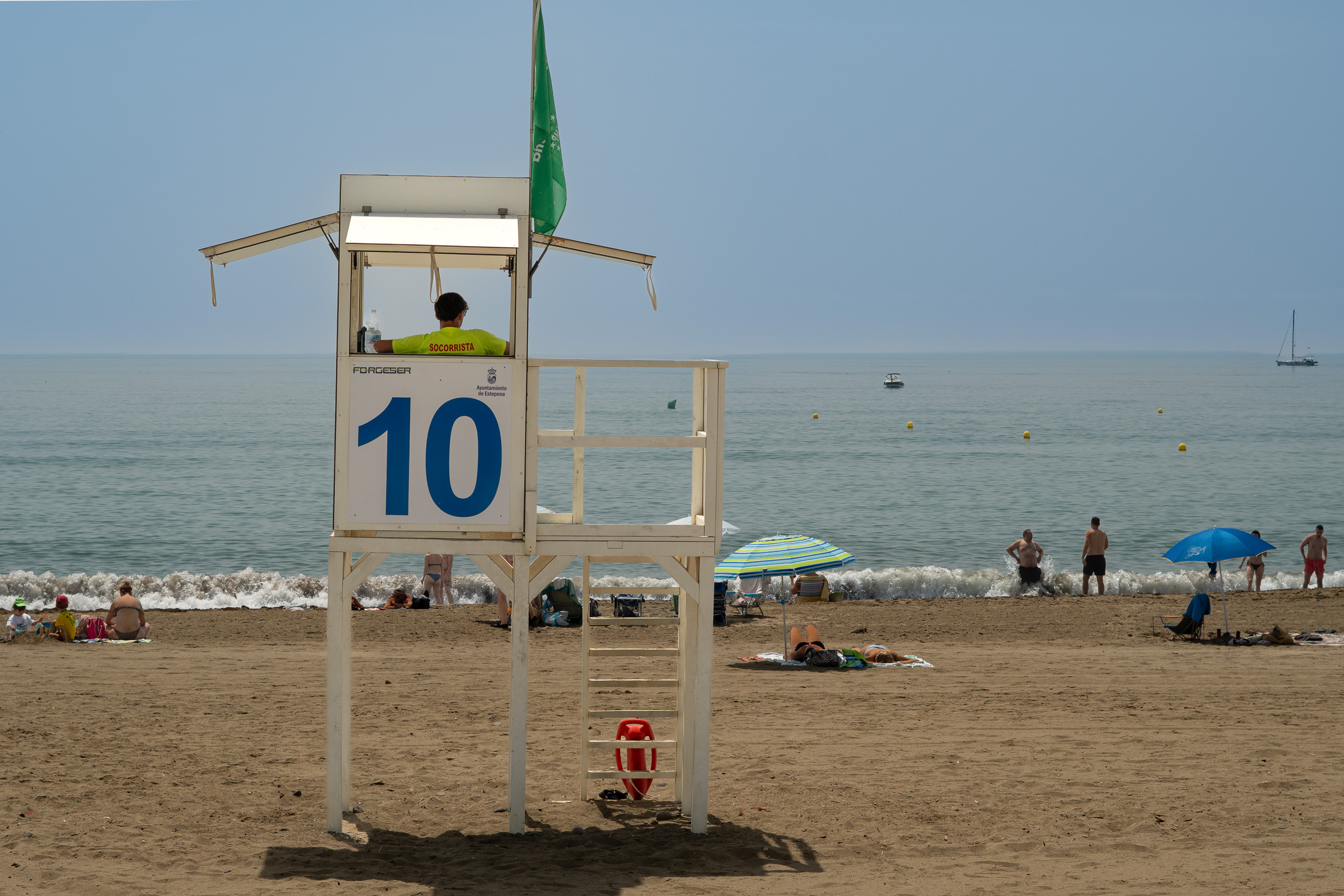
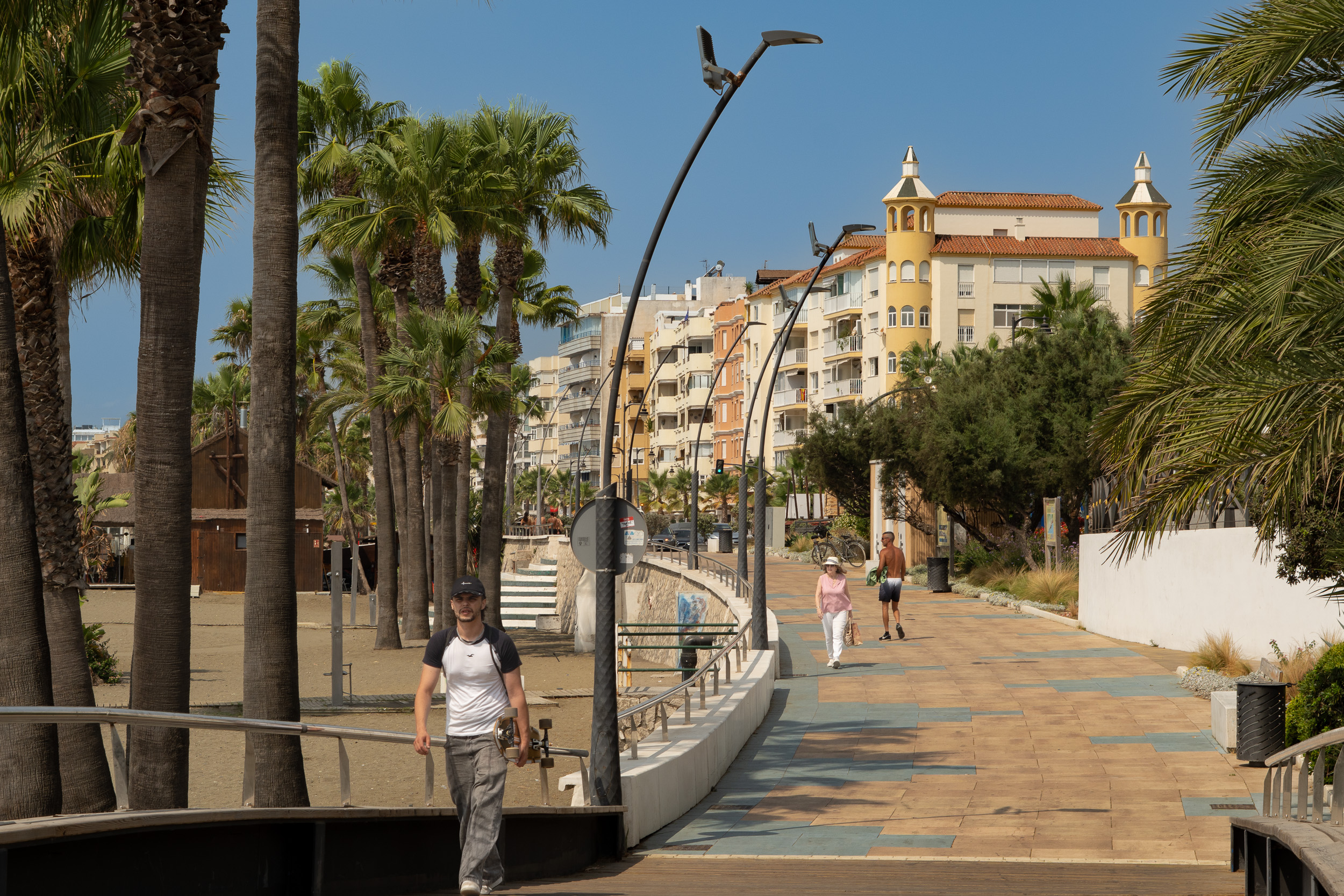
Below you can see pictures of the Paseo Marítimo of Estepona, a lovely promenade for a walk. The seafront promenade stretches for nearly 3 kilometres along the Mediterranean and connects La Rada Beach with Estepona Port. Often referred to as the “jewel of Estepona”, the promenade is known for its sea views, cycling paths, playgrounds along the beach.
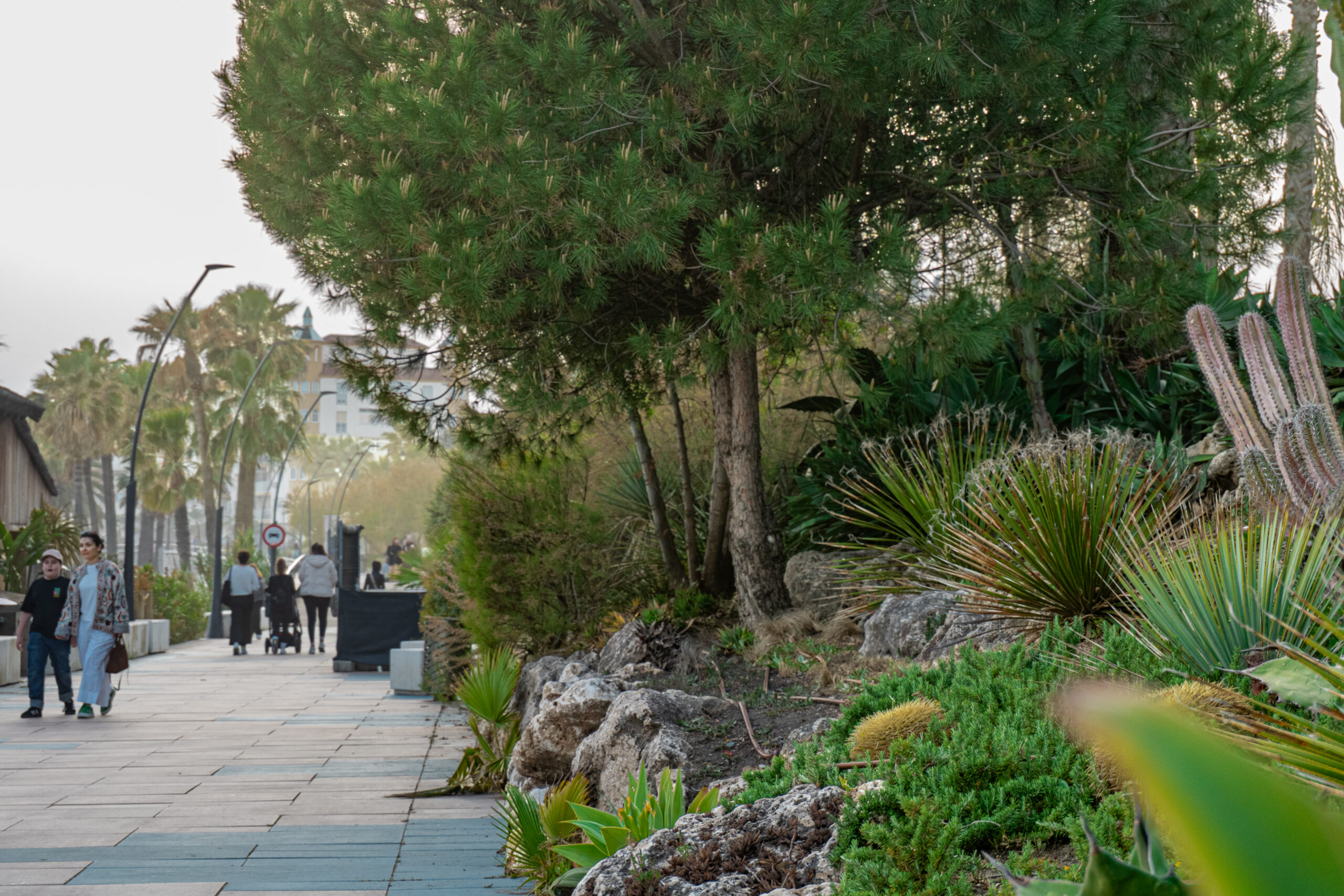
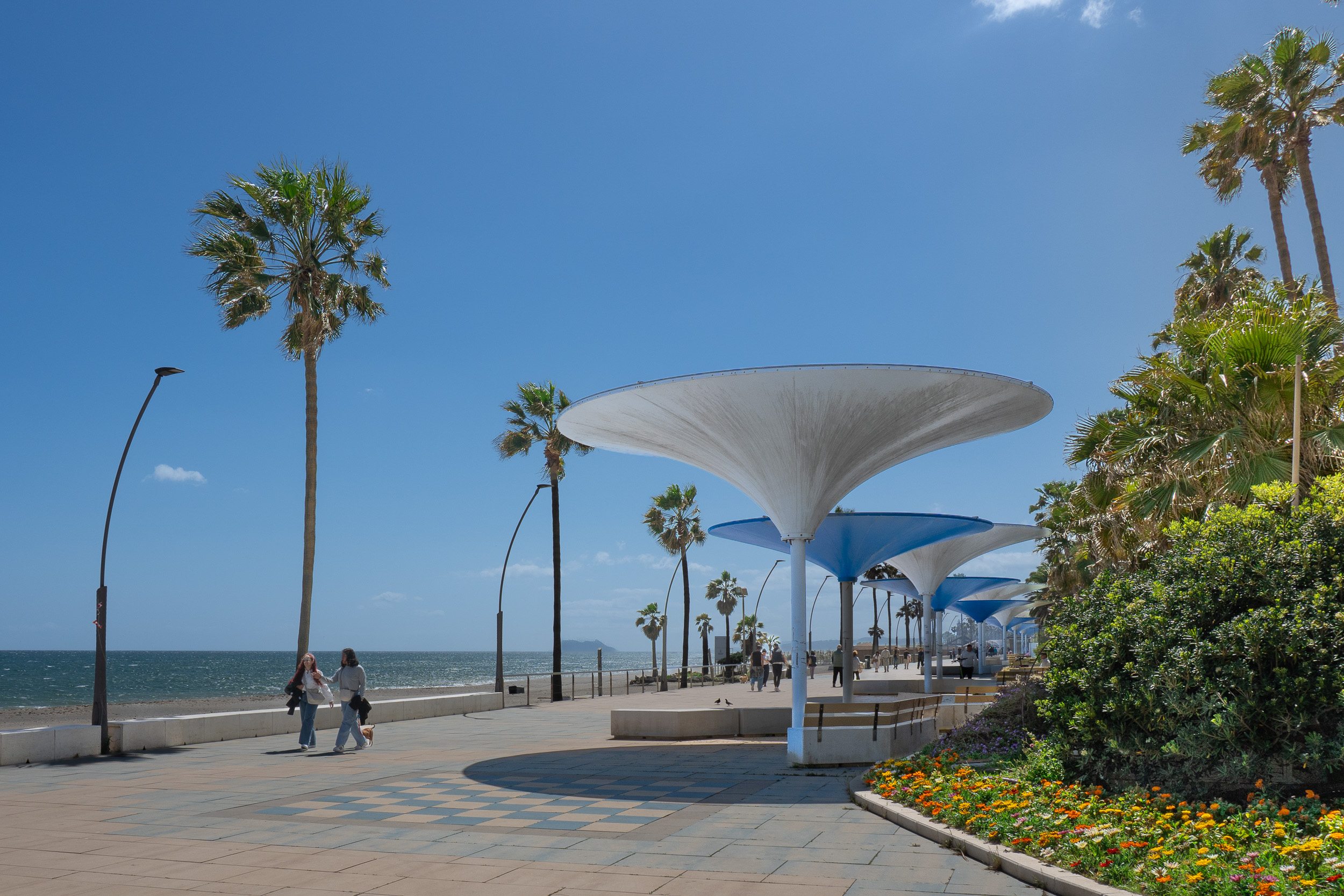
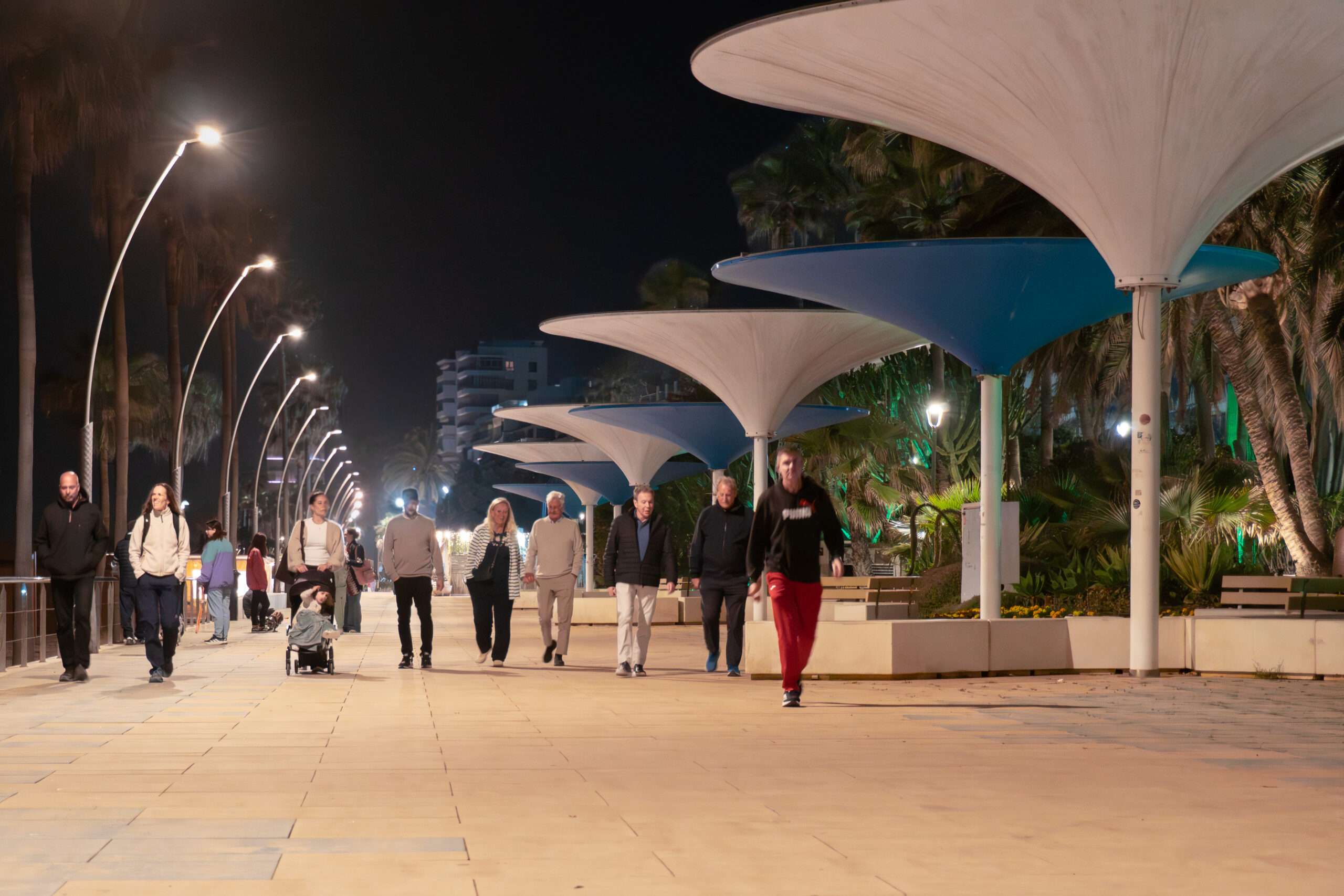
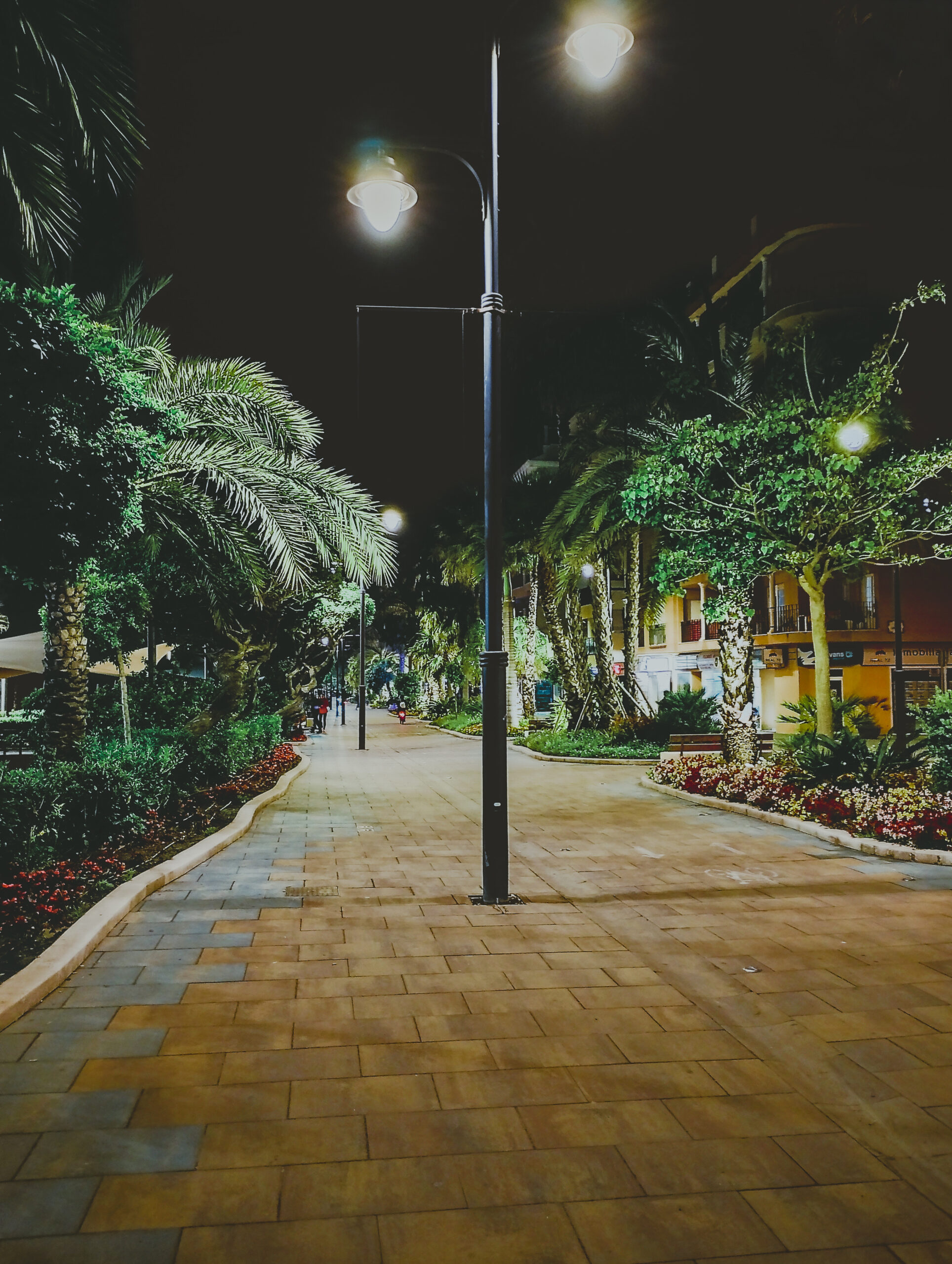
Estepona’s old town: whitewashed houses and colourful flowerpots
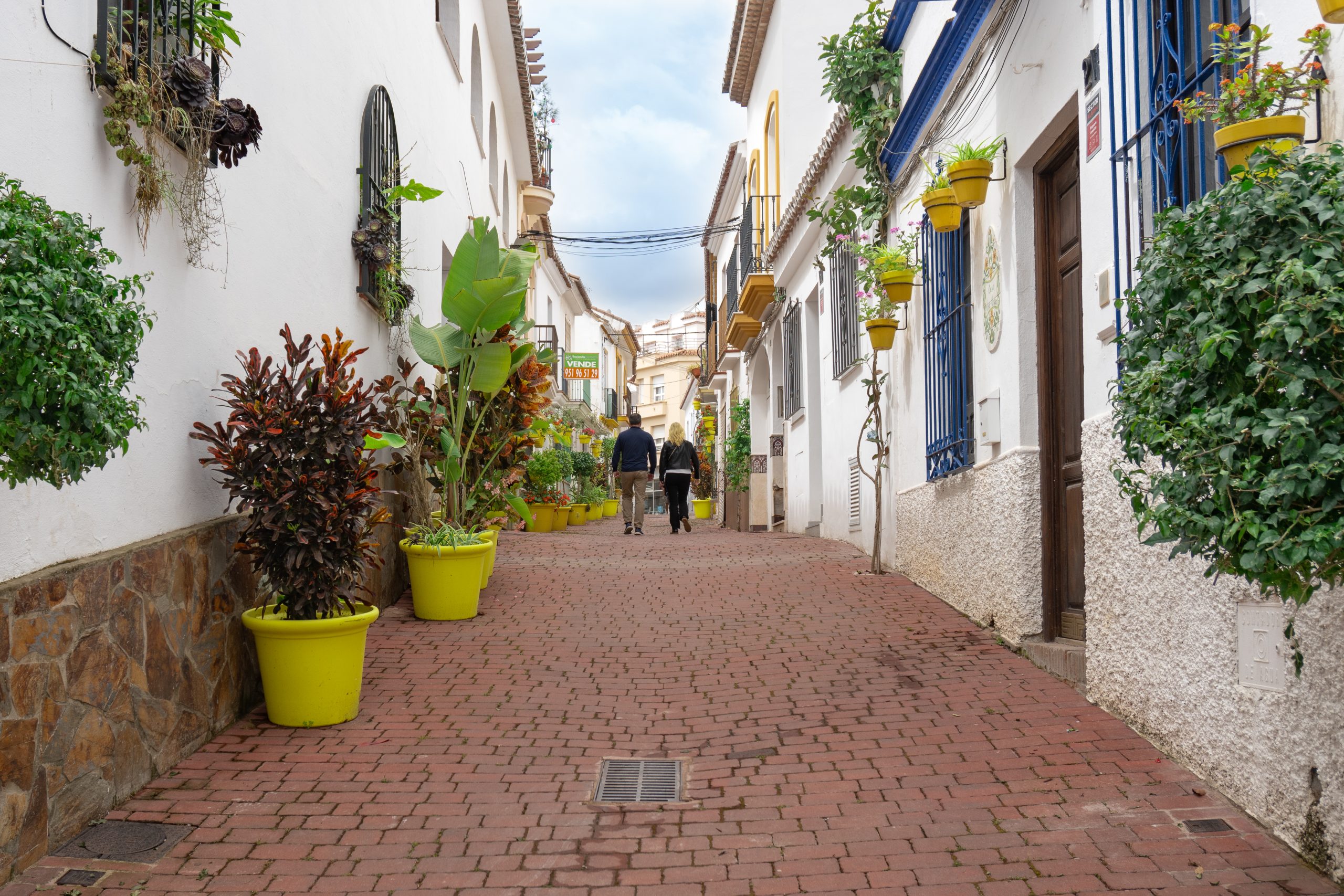
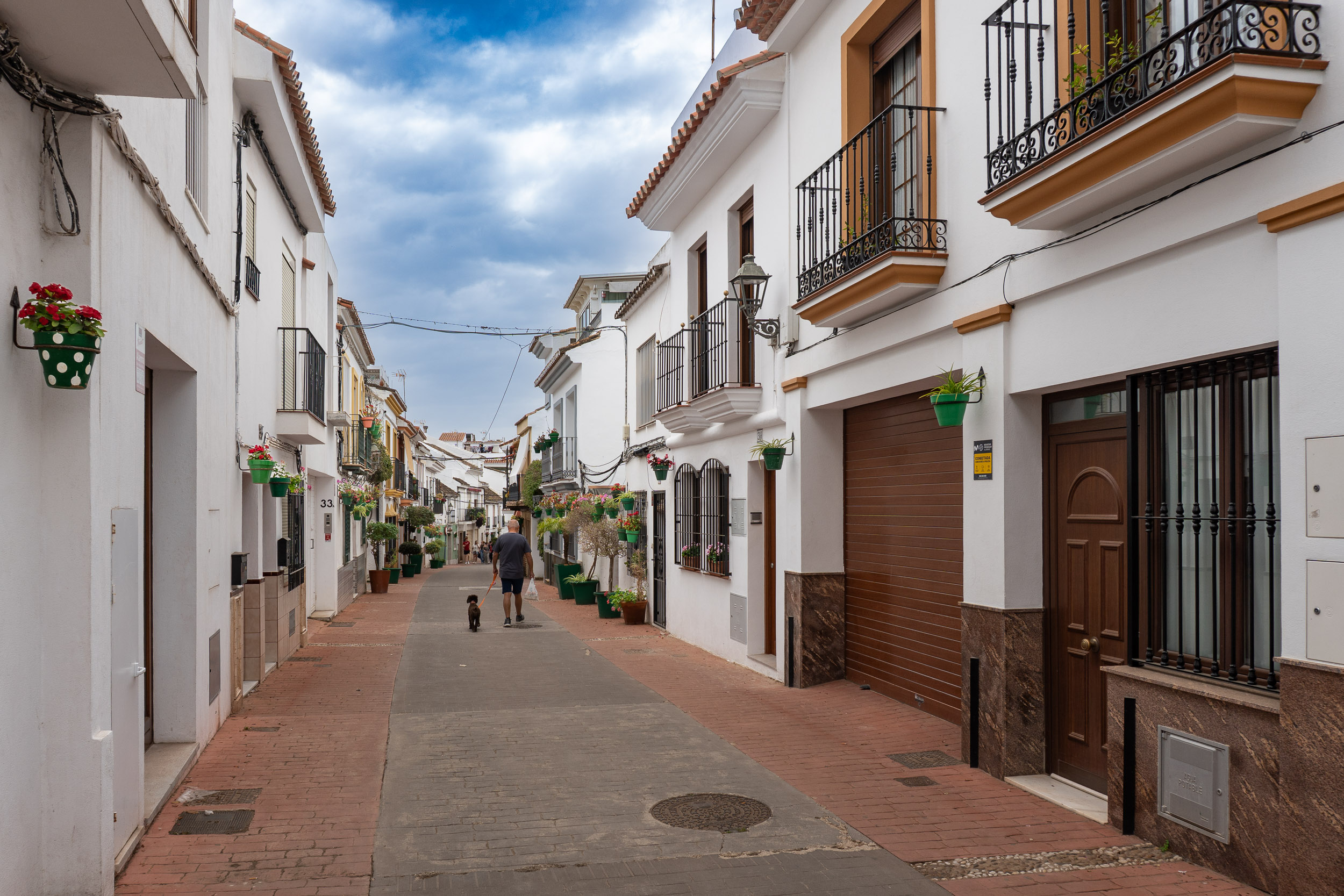
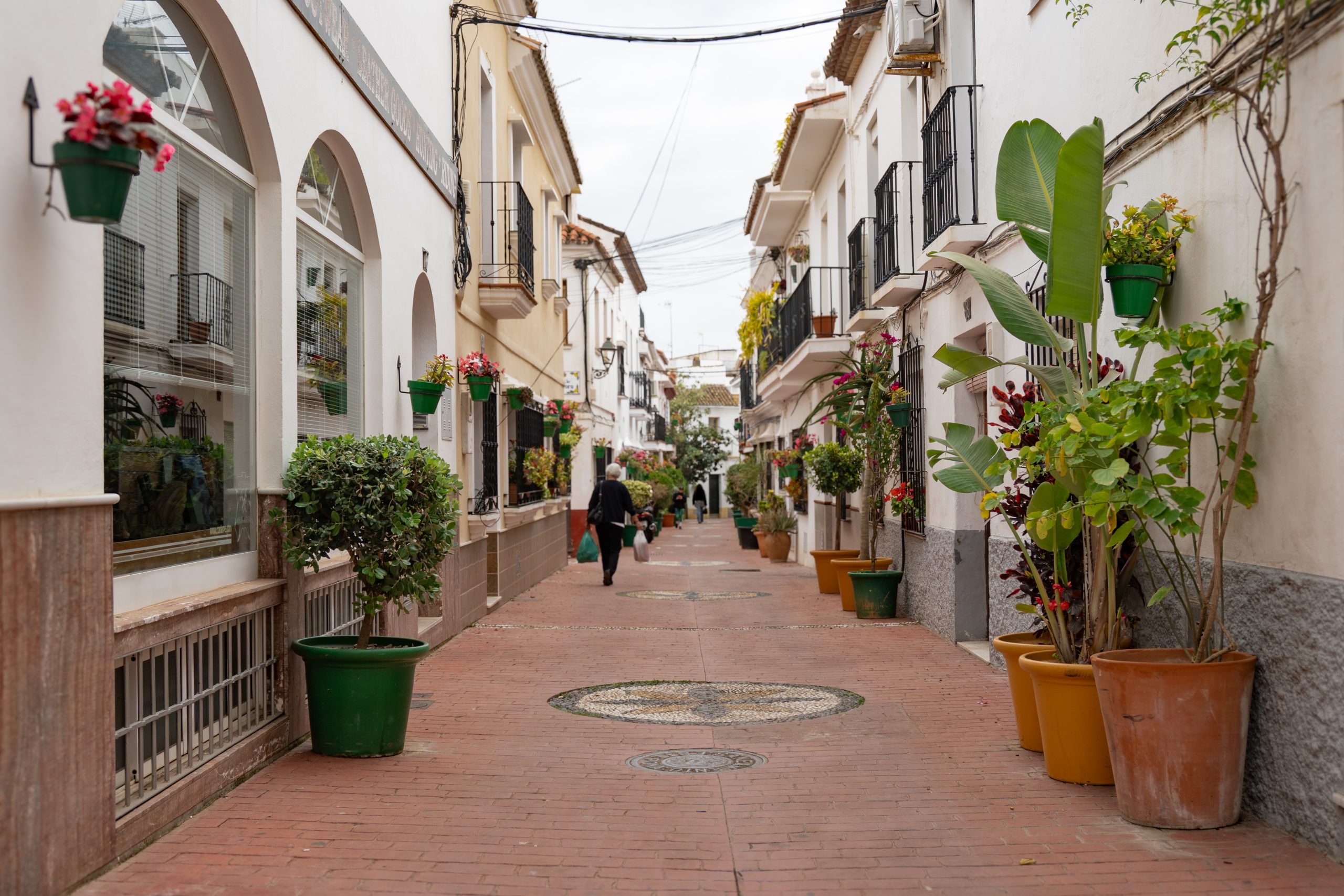
The old town (casco antiguo) of Estepona is considered one of the best-preserved historic centres on the Costa del Sol. Its narrow pedestrian streets feature typical Andalusian whitewashed houses, colourful flower pots and charming squares. Take a look at the photos below to explore this unique area of Estepona and its white streets.
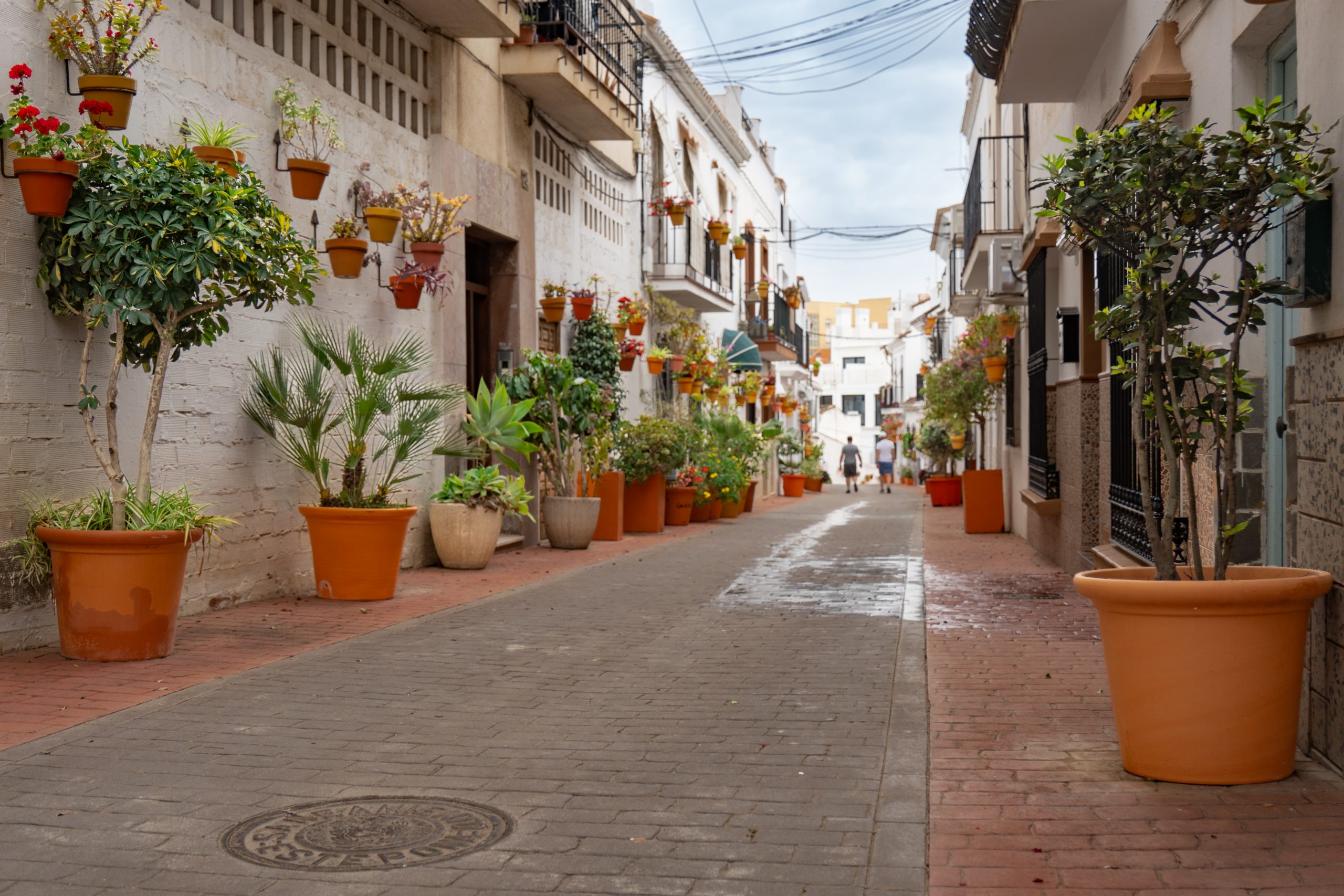
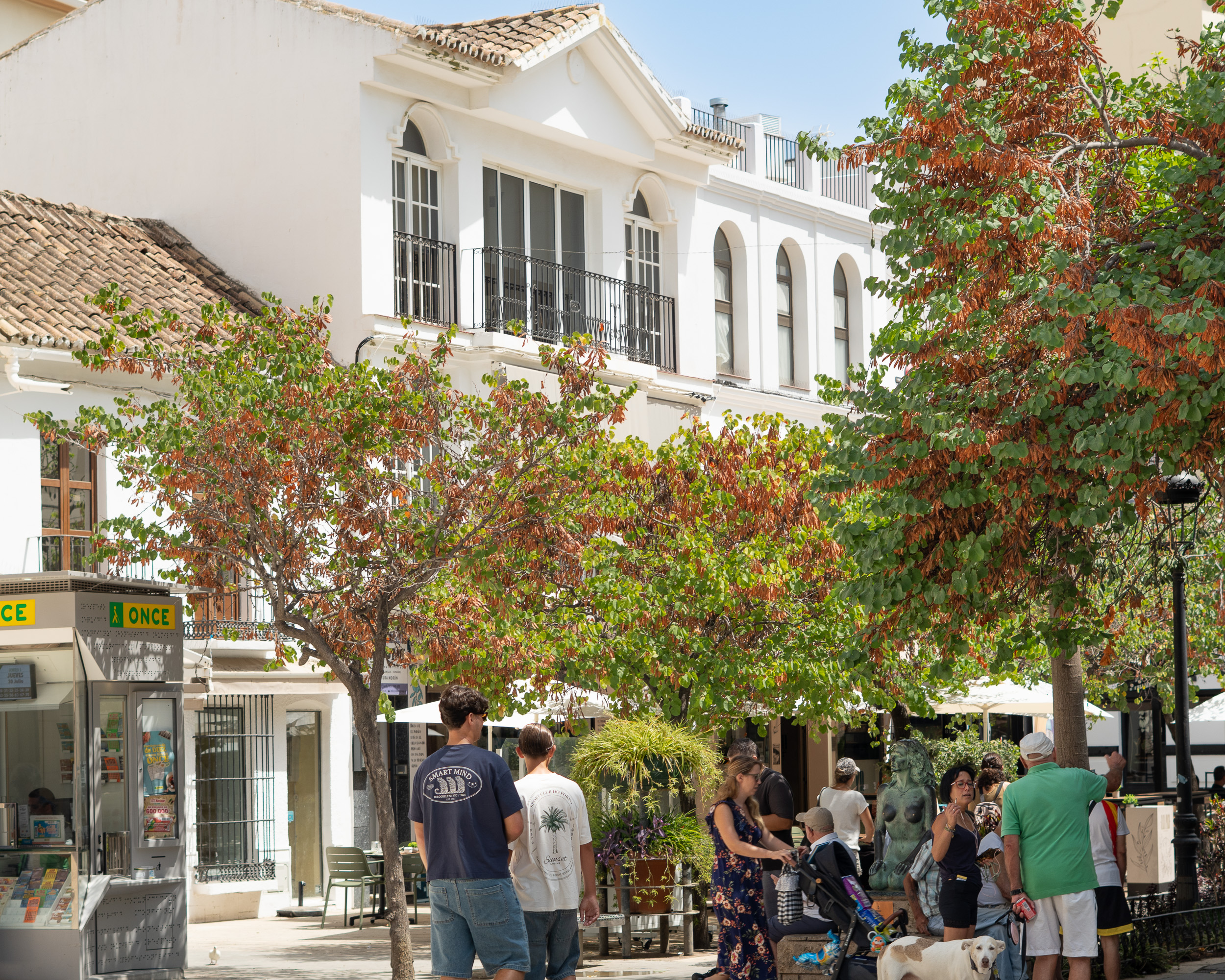
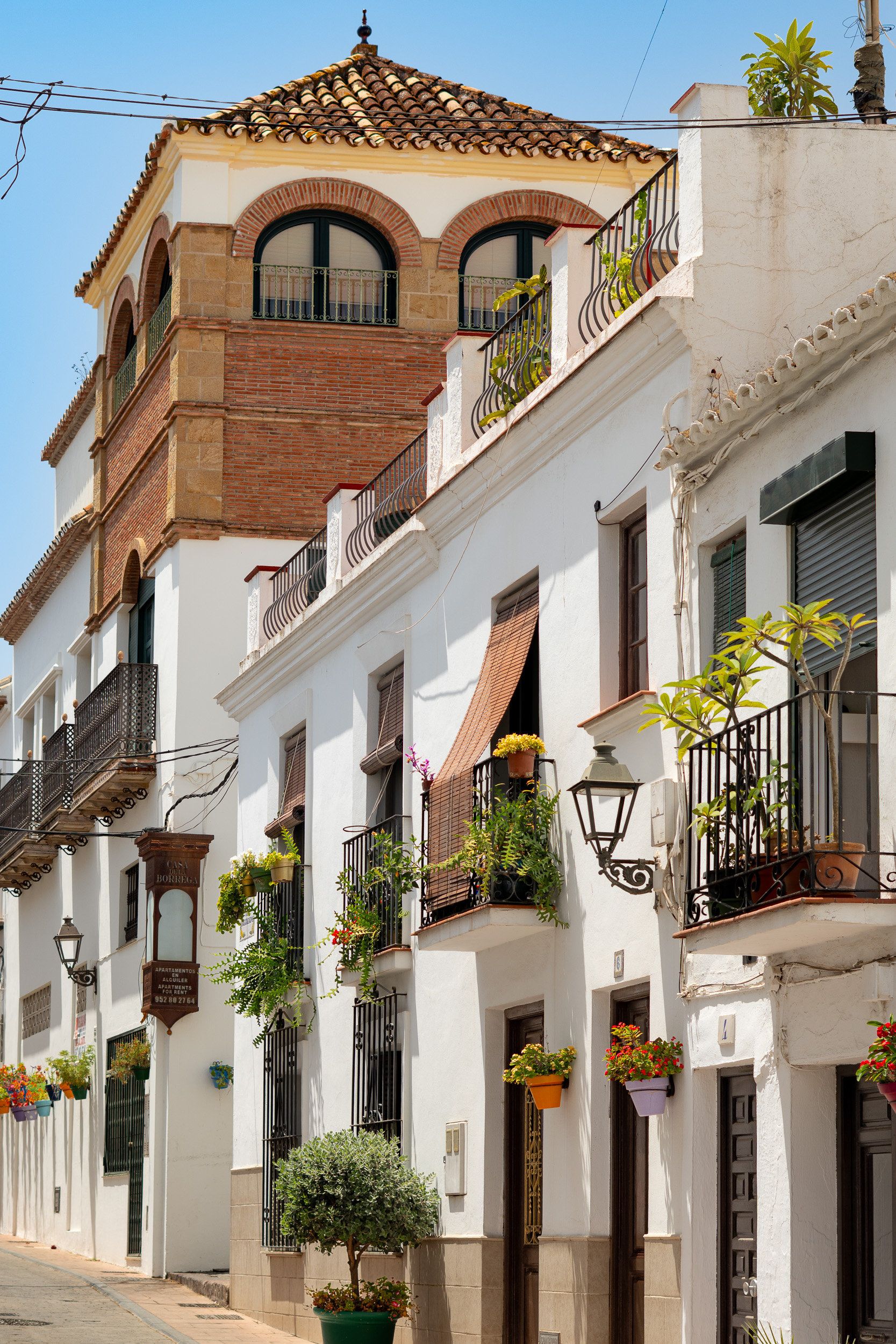
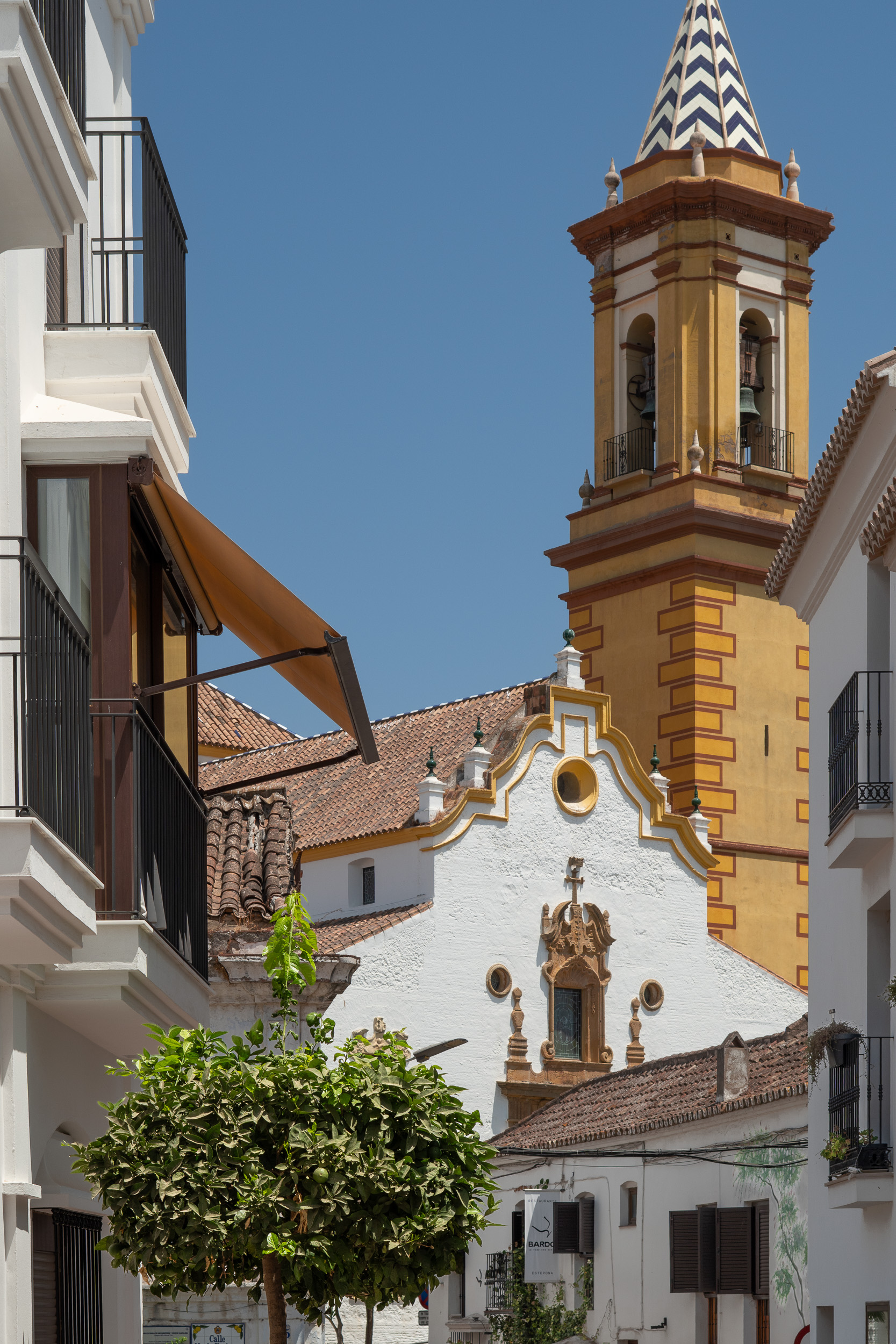
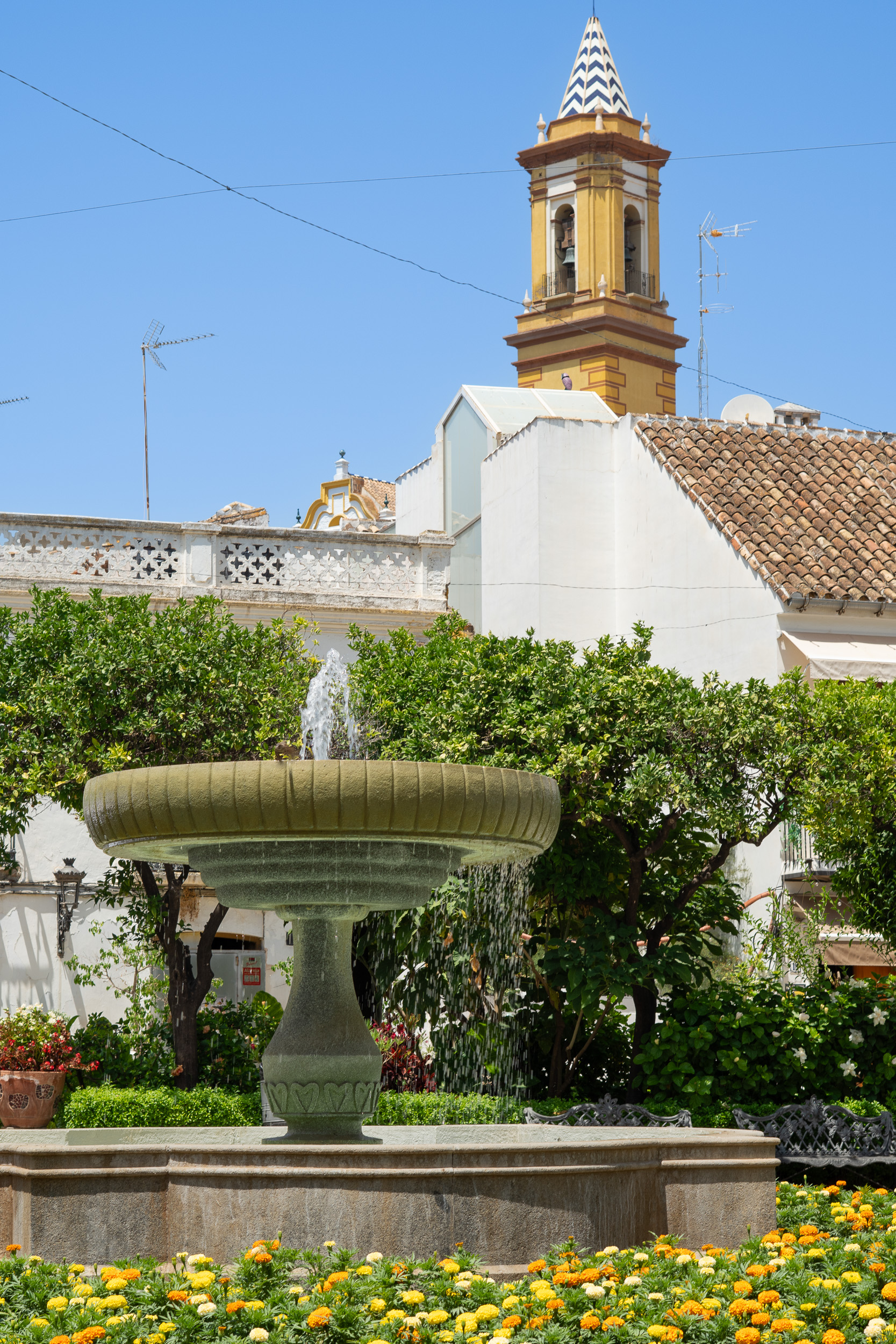
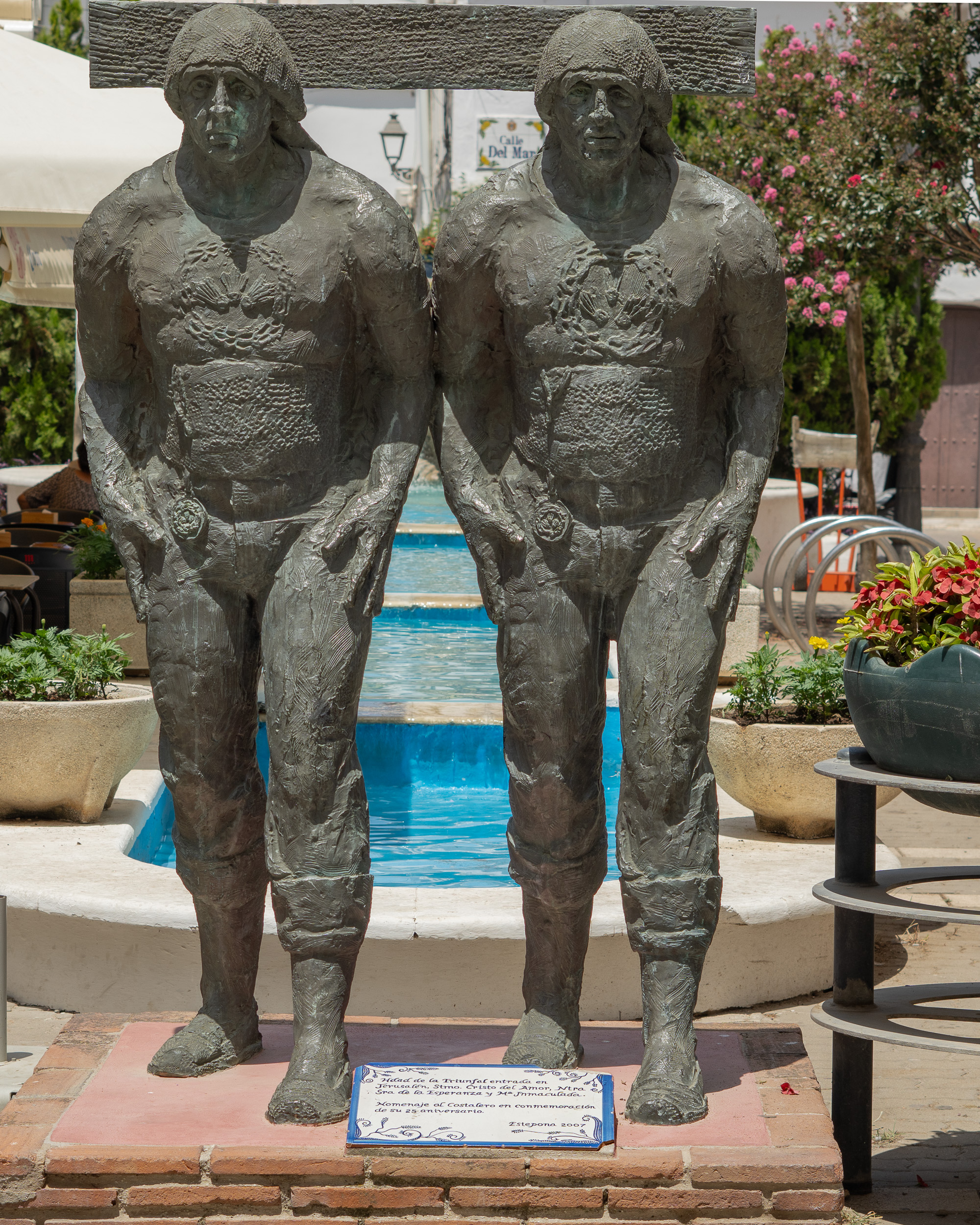
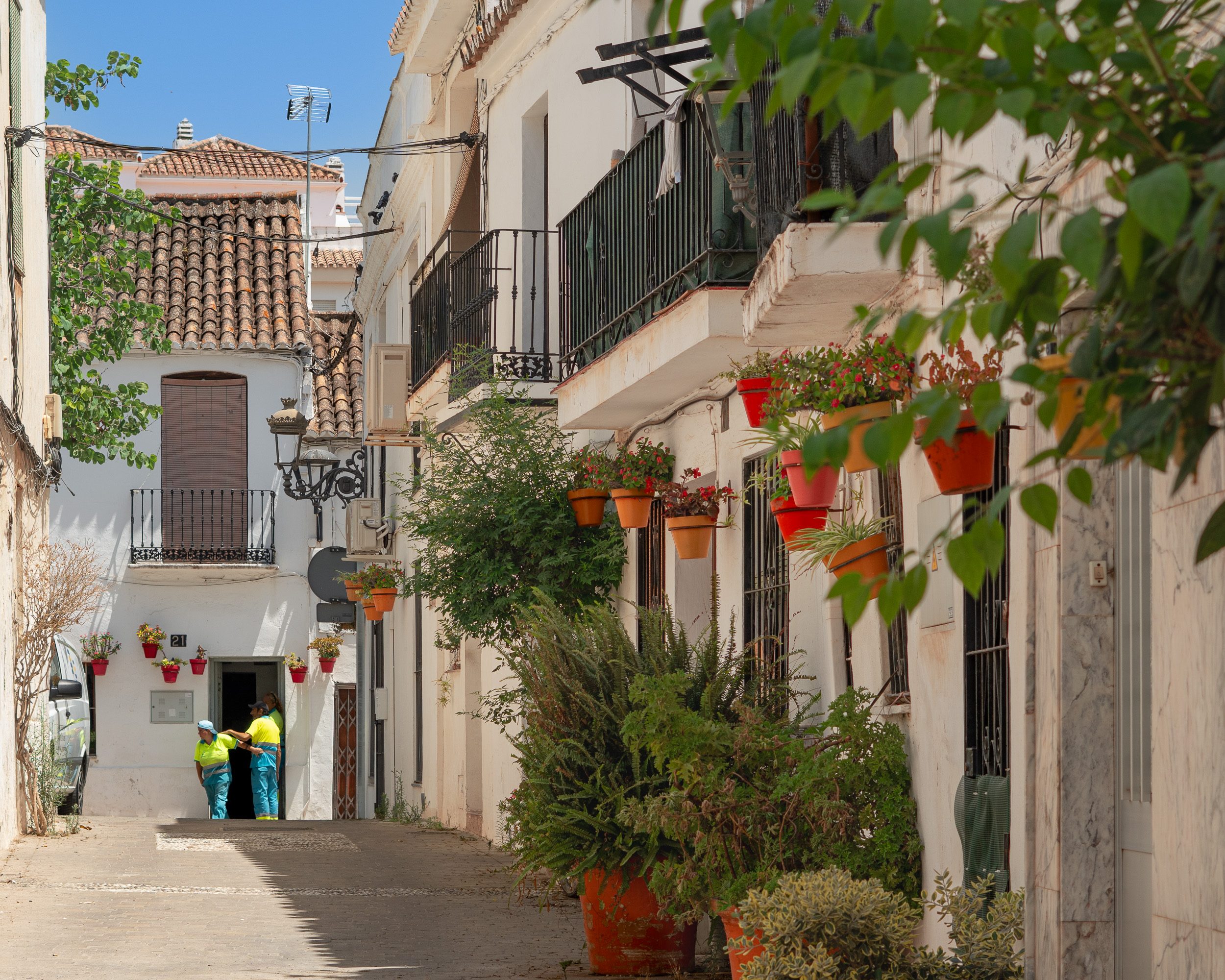
Estepona is often called the “Garden of the Costa del Sol” because of its many flowers, plants and cacti. Murals and other examples of urban art can also be found in parts of the old town. Together, they create an interesting contrast between traditional Andalusian architecture and contemporary art.
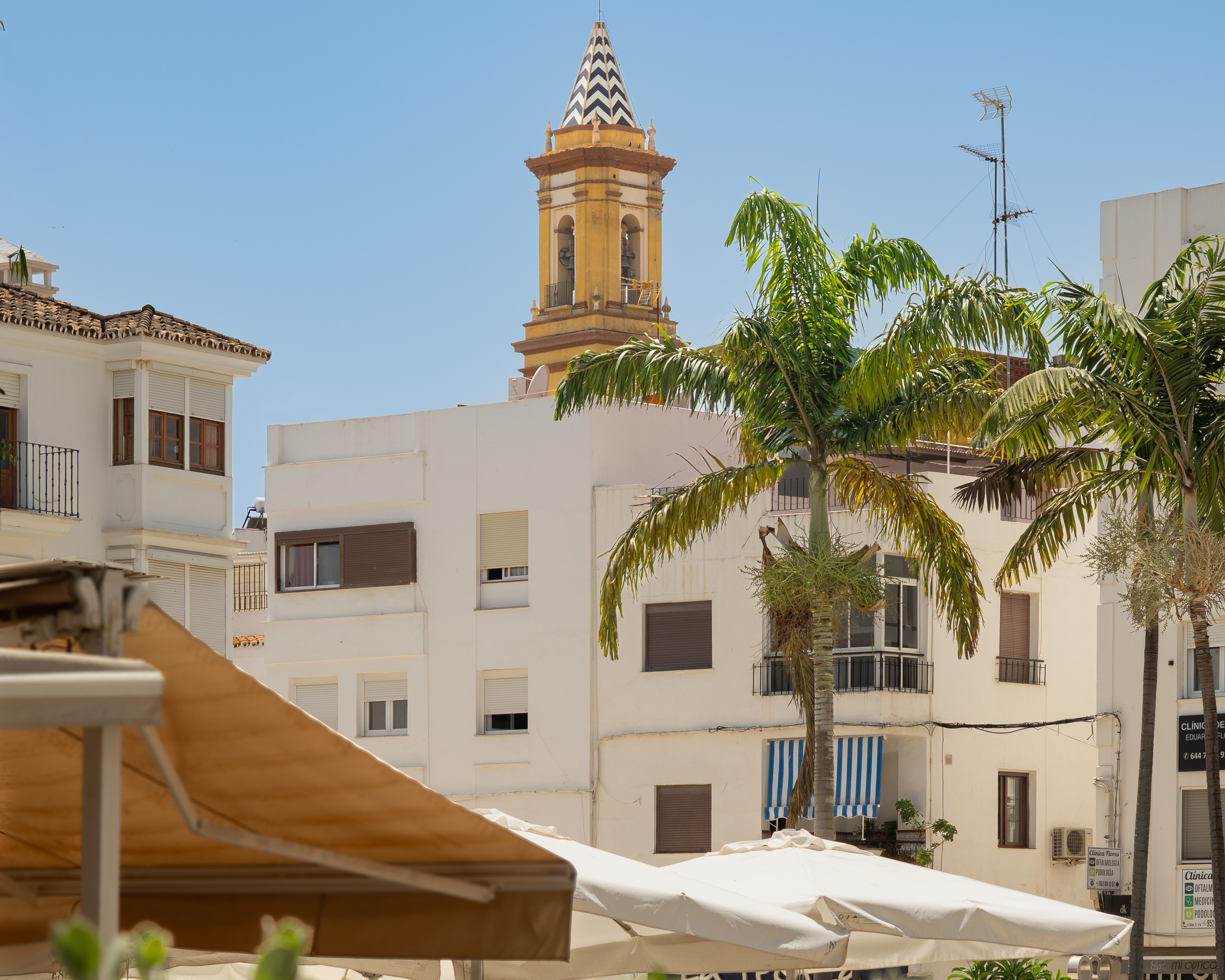
Strolling through Estepona’s old town is a very relaxing experience, thanks to the tranquil atmosphere created by the whitewashed houses—a setting that contrasts beautifully with the abundance of plants and flowers. Given its proximity to the sea, a gentle breeze often blows, offering a refreshing sensation when combined with the shade provided by the traditional Andalusian houses.
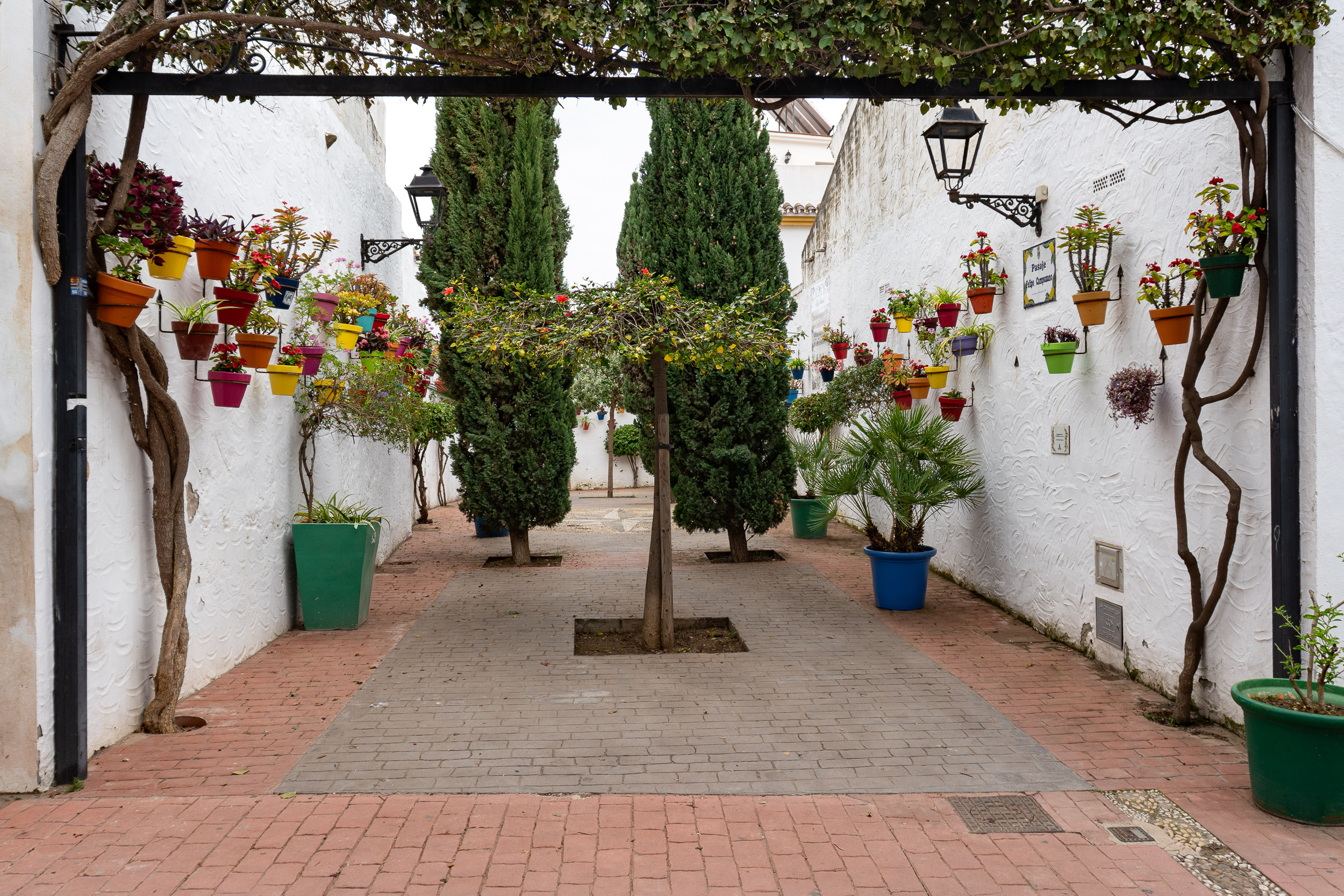

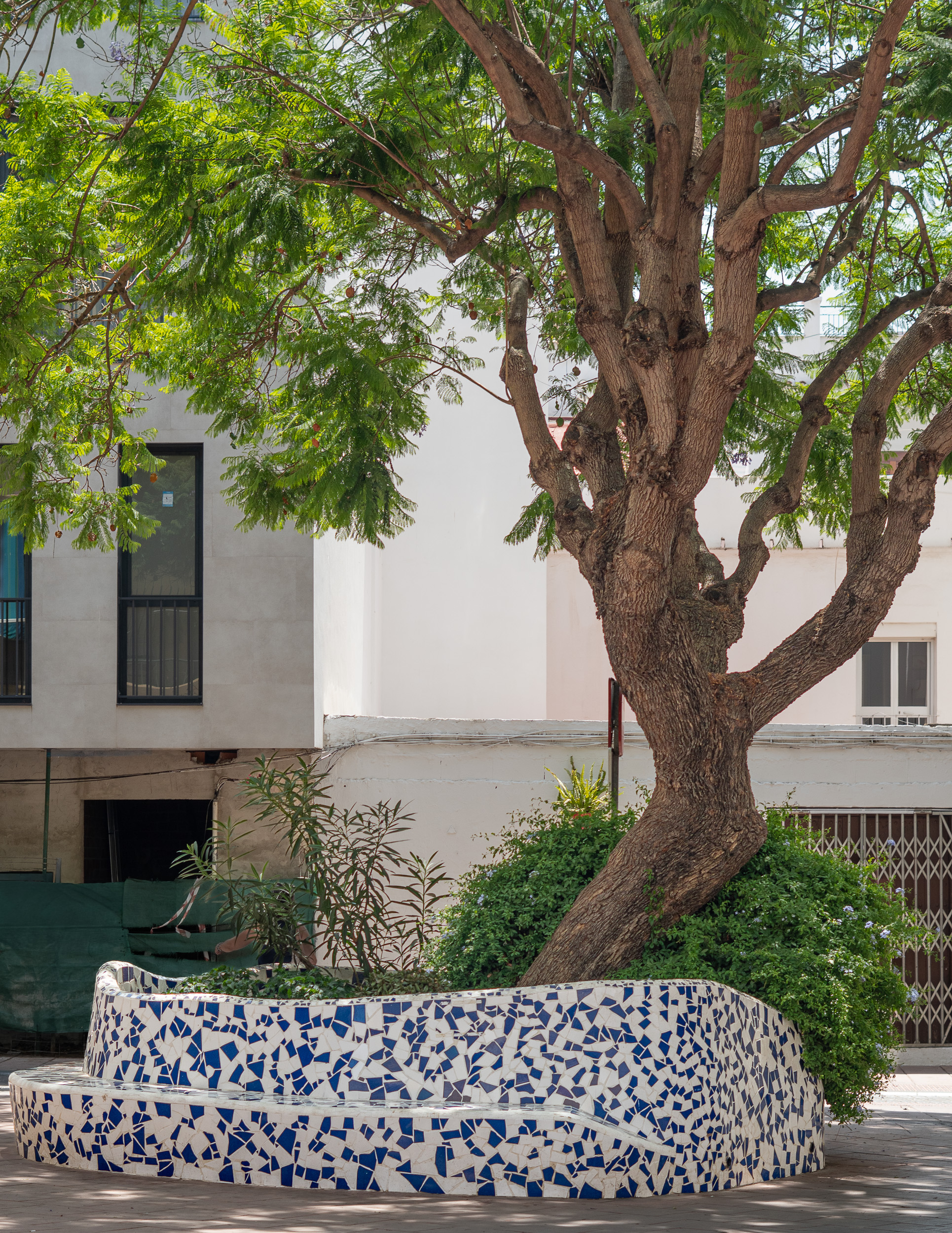
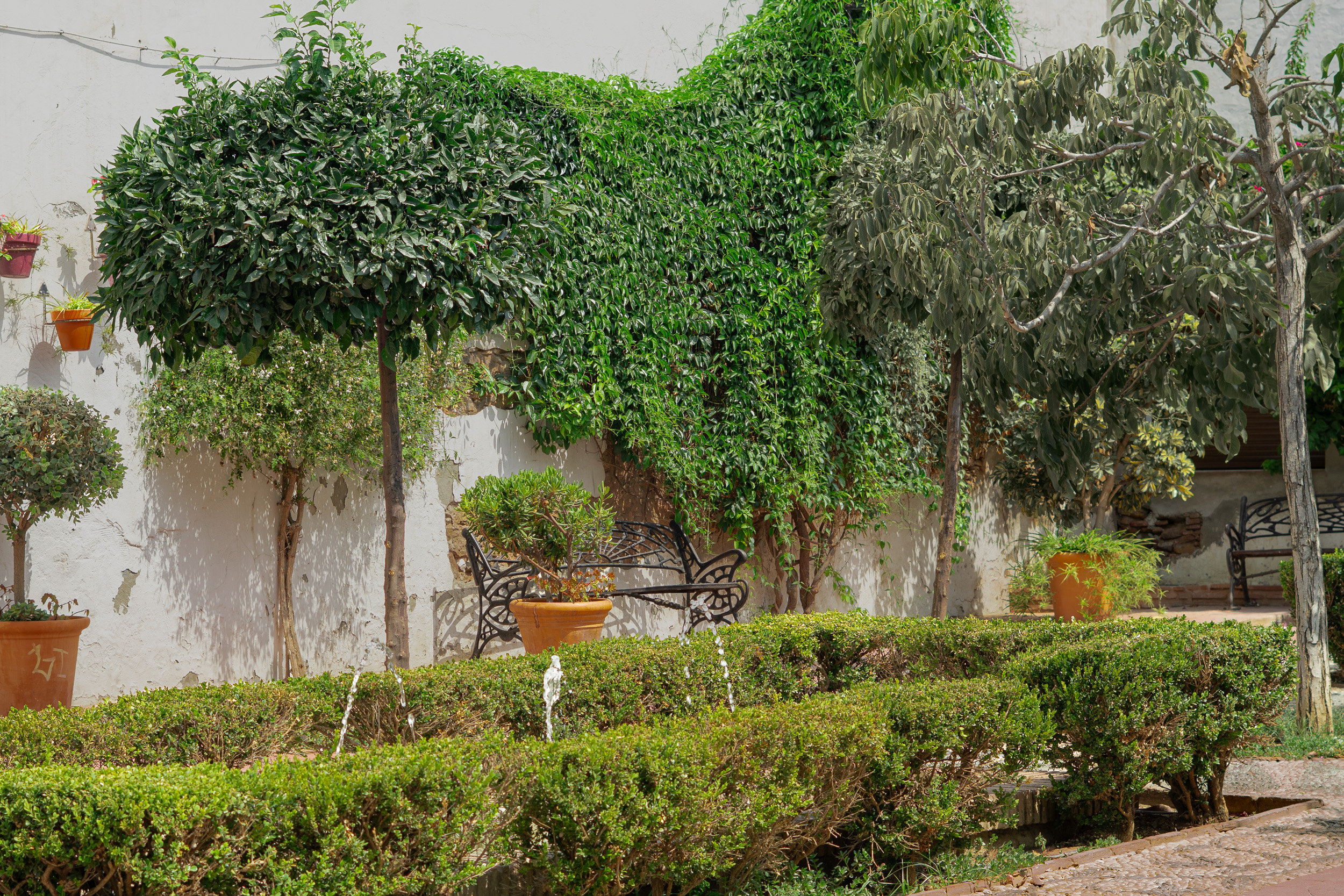
Above and below, you can see Plaza de Juan Bazán, next to Calle San Miguel. It is a charming, lushly planted square in Estepona’s old town. Benches line every side, allowing you to enjoy the shade at any time of day. Because I was using a 50mm lens, I couldn’t capture the entire square in a single shot. I therefore split it into two photos; this also allows the beautiful details to stand out more effectively.
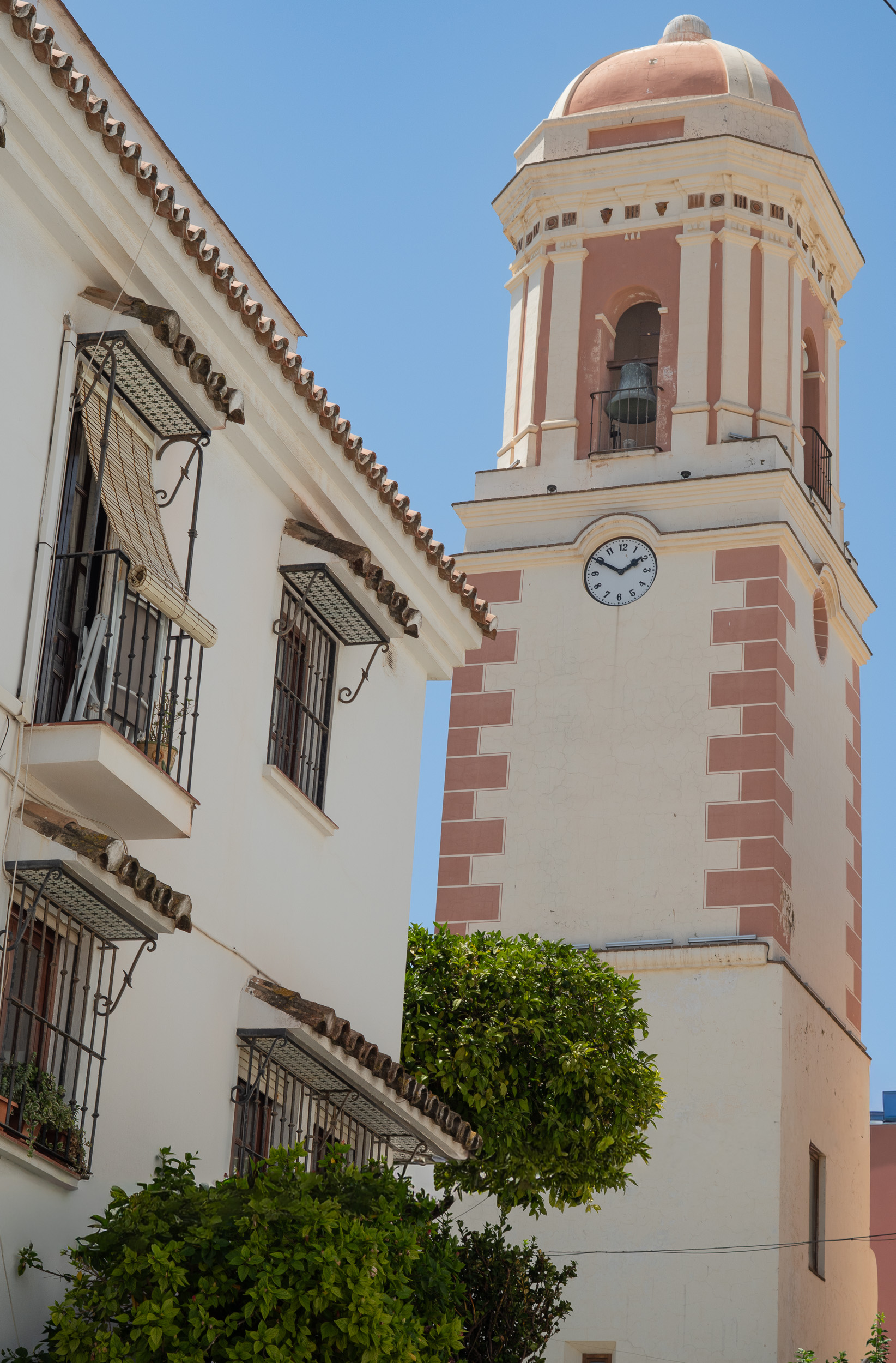
In the 16th century, it served as the tower for the very first, original Iglesia de los Remedios. During the devastating Lisbon earthquake of 1755, the old church collapsed completely, with the exception of the clock tower. An impressive clock mechanism was installed in the early 20th century. The sound of the bells still sets the rhythm of time in the streets of the old town.
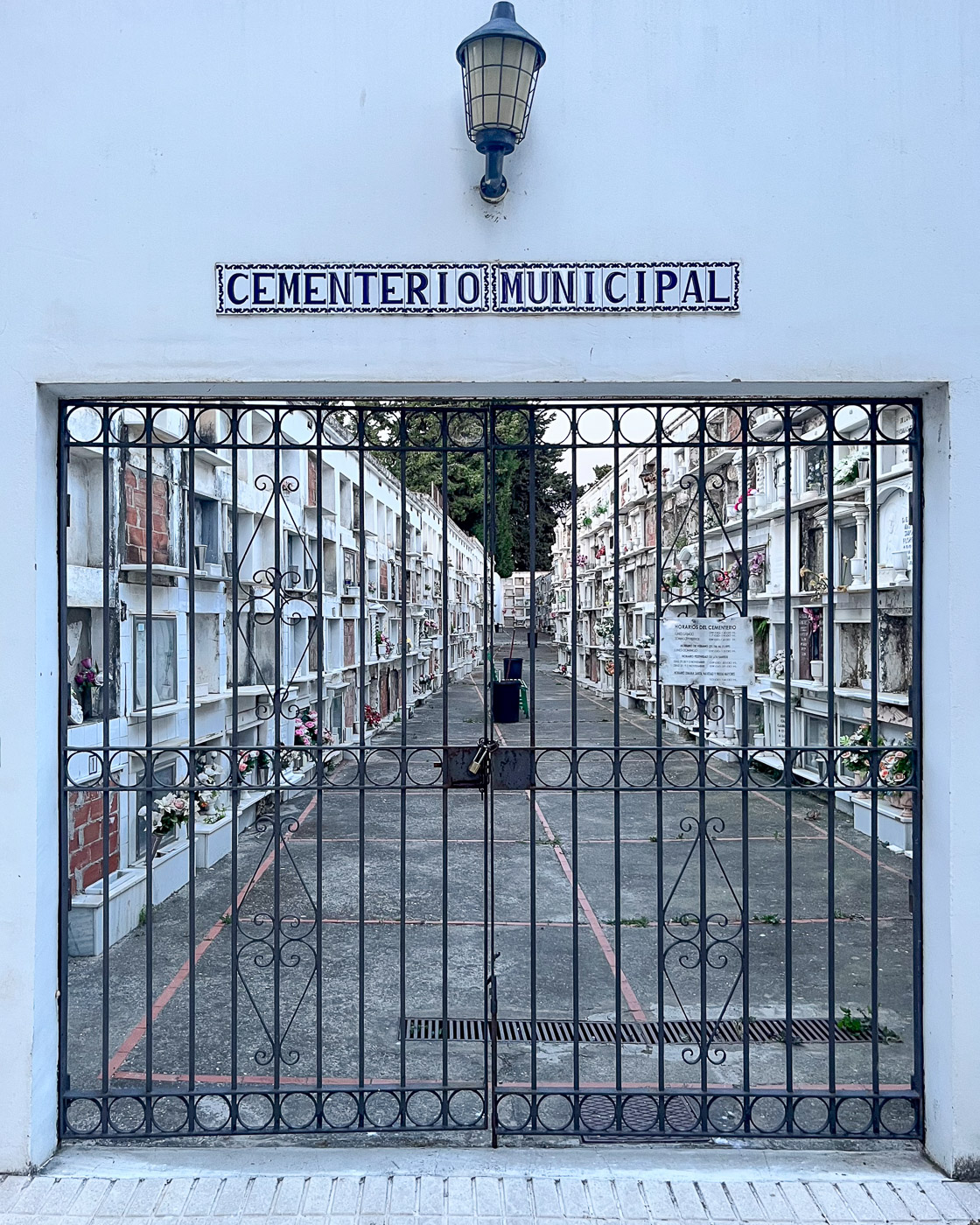
Below, you can see the entrance to the historic Estepona municipal cemetery. The old “Enalta” Municipal Cemetery is located at 1 Avenida de Andalucía.
Pedestrian shopping street Calle Terraza and the Orchidarium
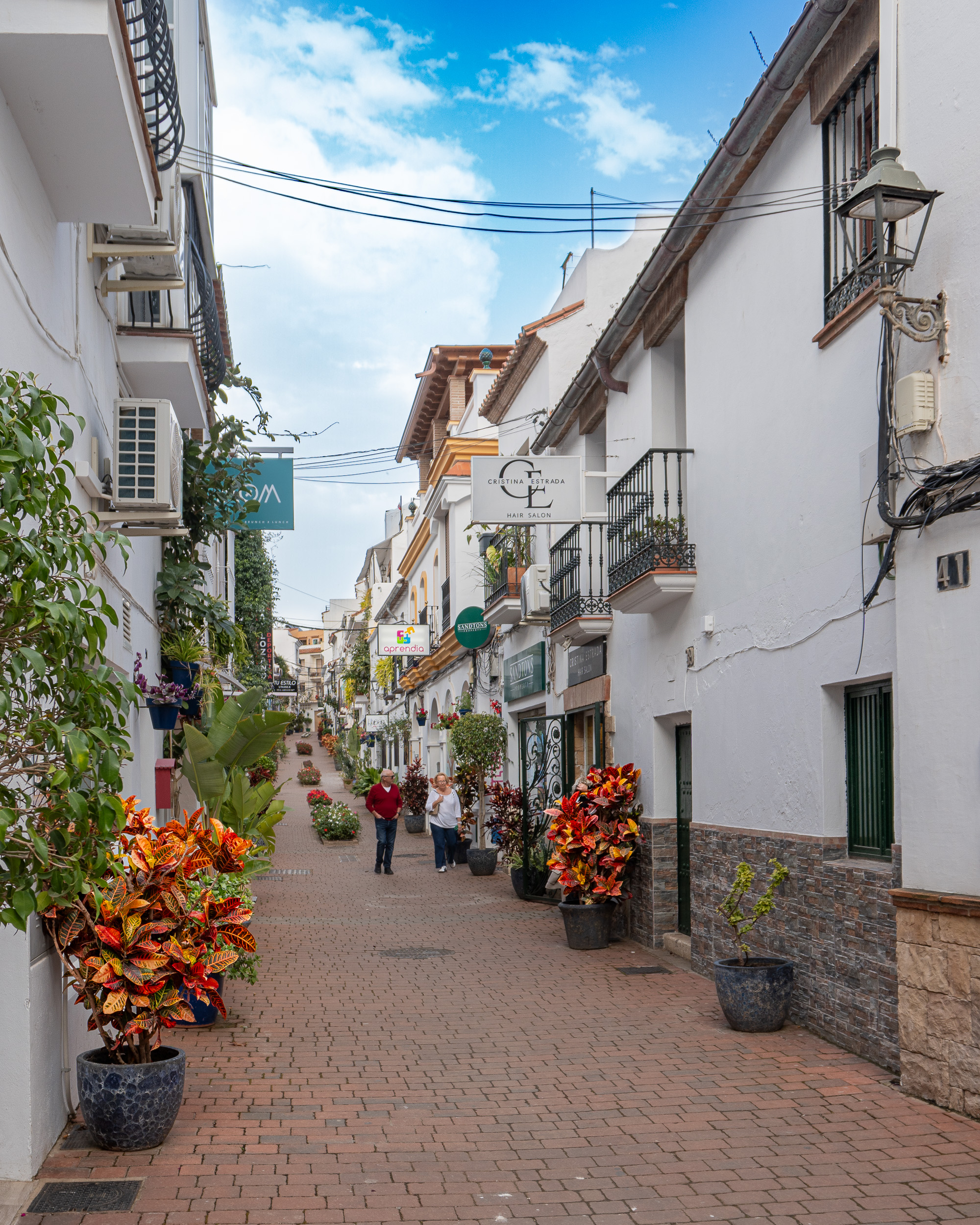
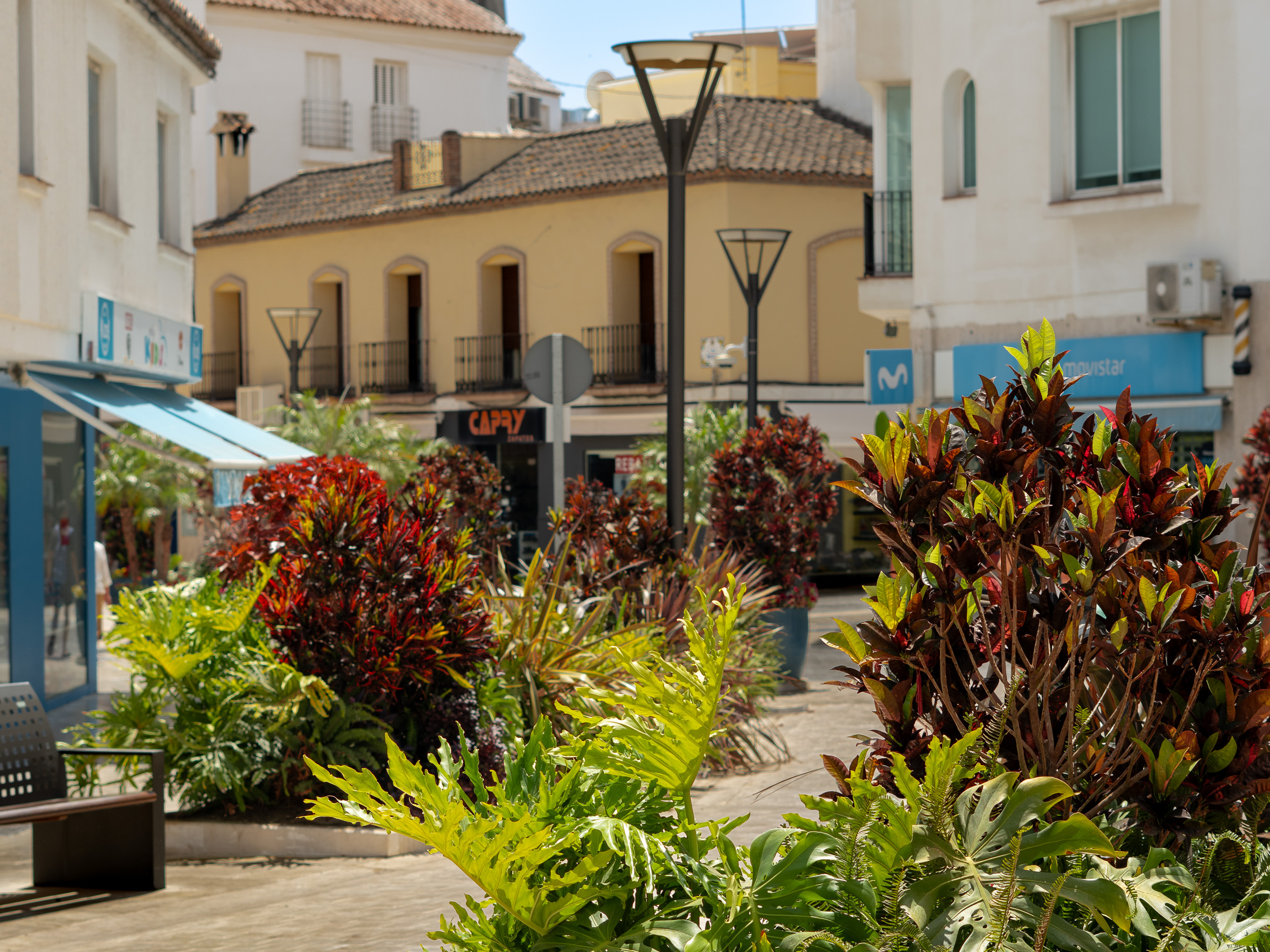
Calle Terraza (pictured below) is one of the most important and lively shopping and pedestrian streets in Estepona’s historic center. This street, which is approximately 600 meters long, has recently undergone a complete renovation and been made entirely car-free.
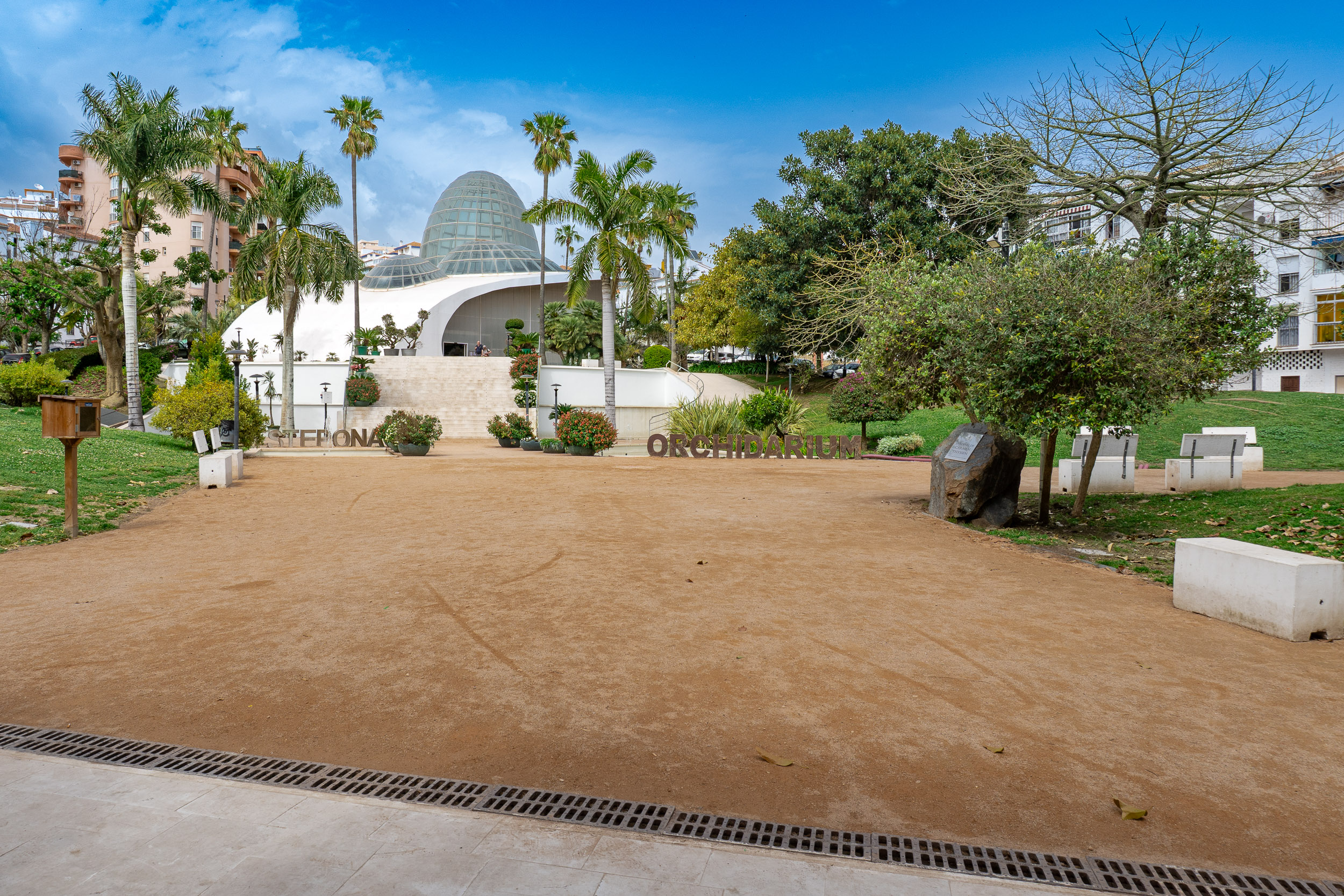
Opened in 2015, the Orchidarium is organised on two levels separated by a bamboo garden and includes a lake, a waterfall of more than 15 metres and three glass domes, the highest reaching around 30 metres. Inside, visitors can discover more than 5,000 plants and over 1,300 species of orchids from around the world, mainly recreating the warm habitats of South America and Southeast Asia, together with large vertical gardens.
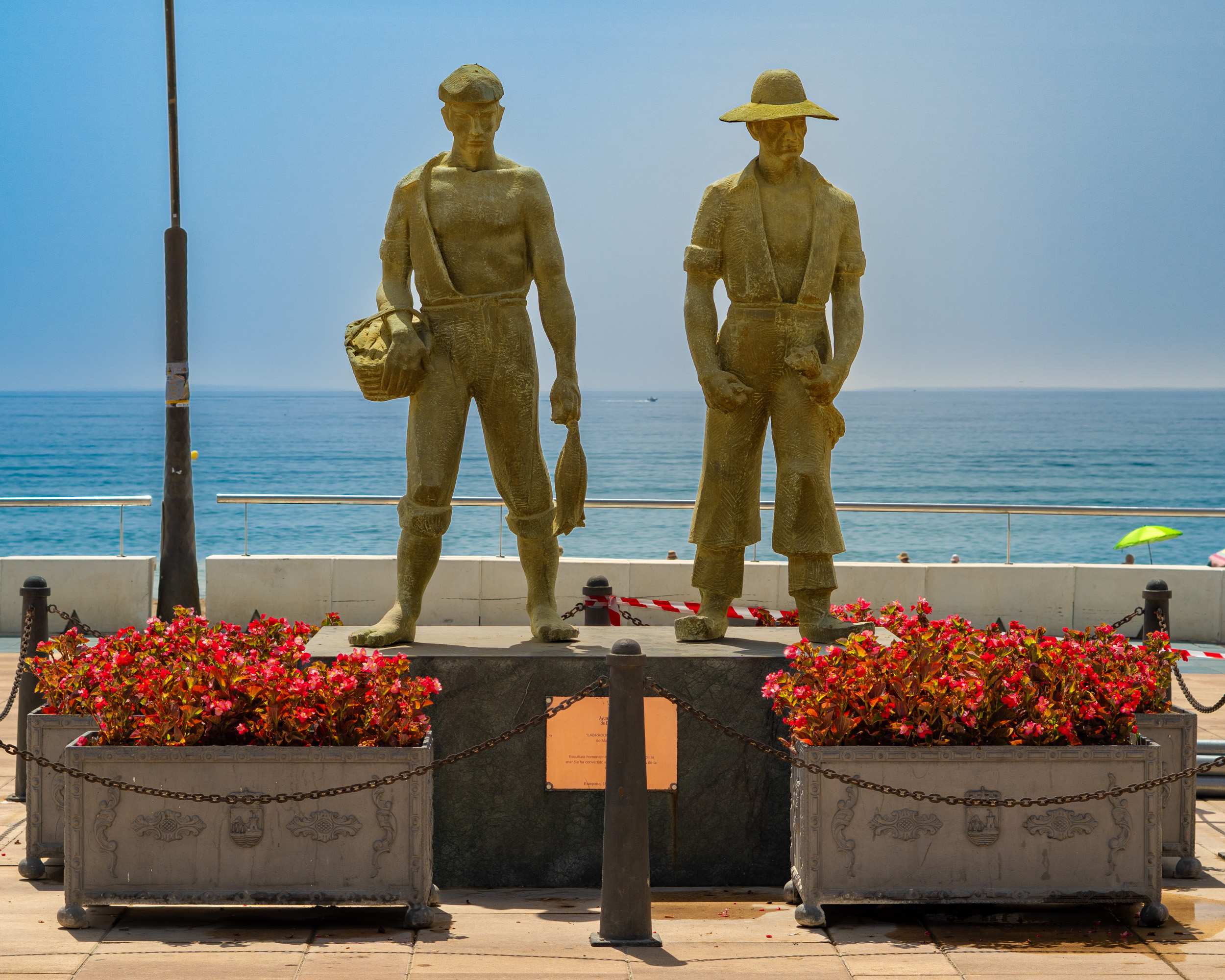
A former fishing village and the traditional Jábegas
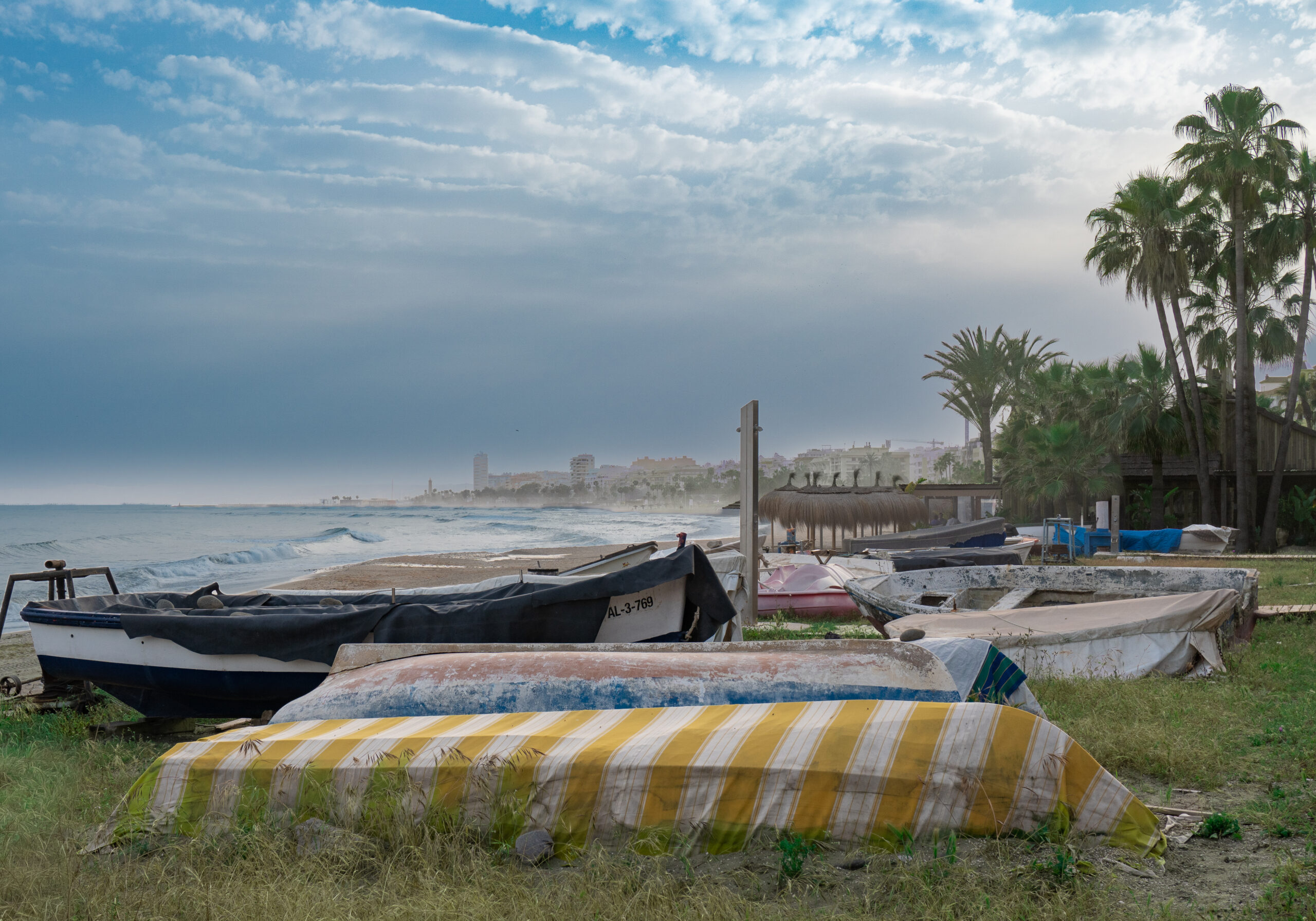
Below you see traditional fishing boats on the beach of Estepona. Before tourism transformed the town, Estepona was largely a working-class fishing village, and these brightly painted boats honour the generations of families who built their lives around the sea.
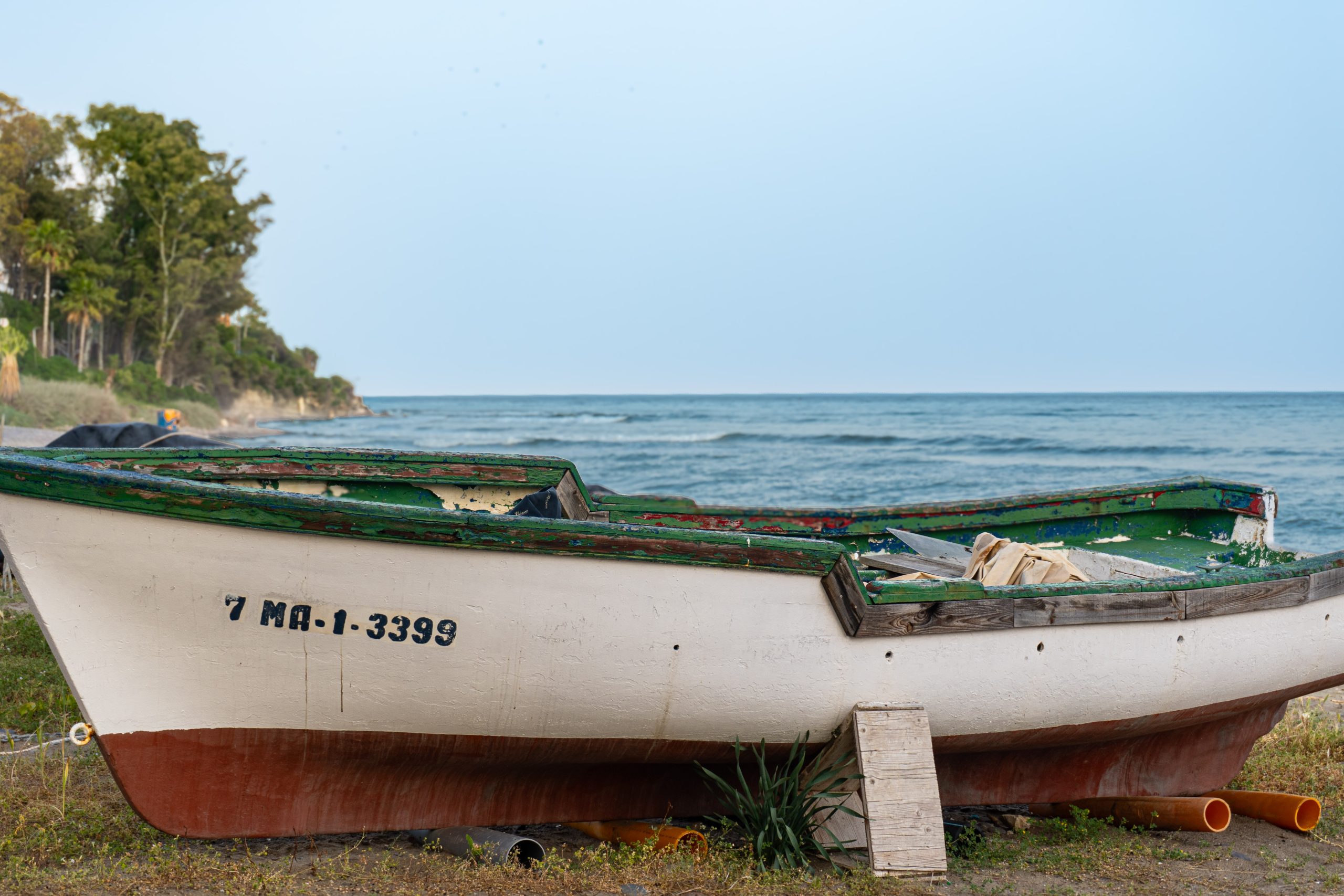
Traditional jábegas —recognizable by their long, narrow wooden hulls, pointed bows, and raised sterns—were historically used for net fishing close to the shore. These antique boats remain an important symbol of the maritime heritage of Málaga and Estepona.
Read also
Article: Estepona’s Housing Crisis