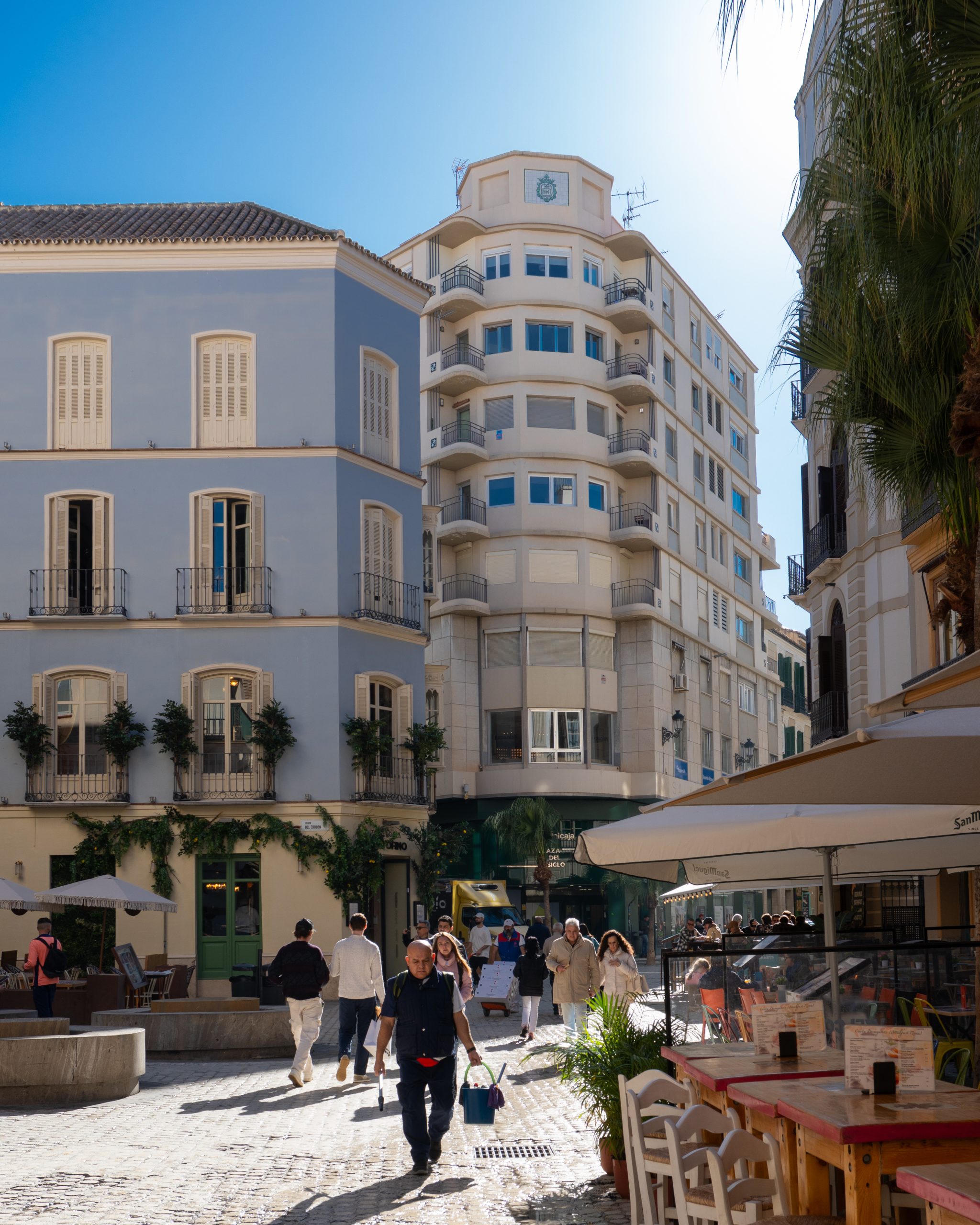
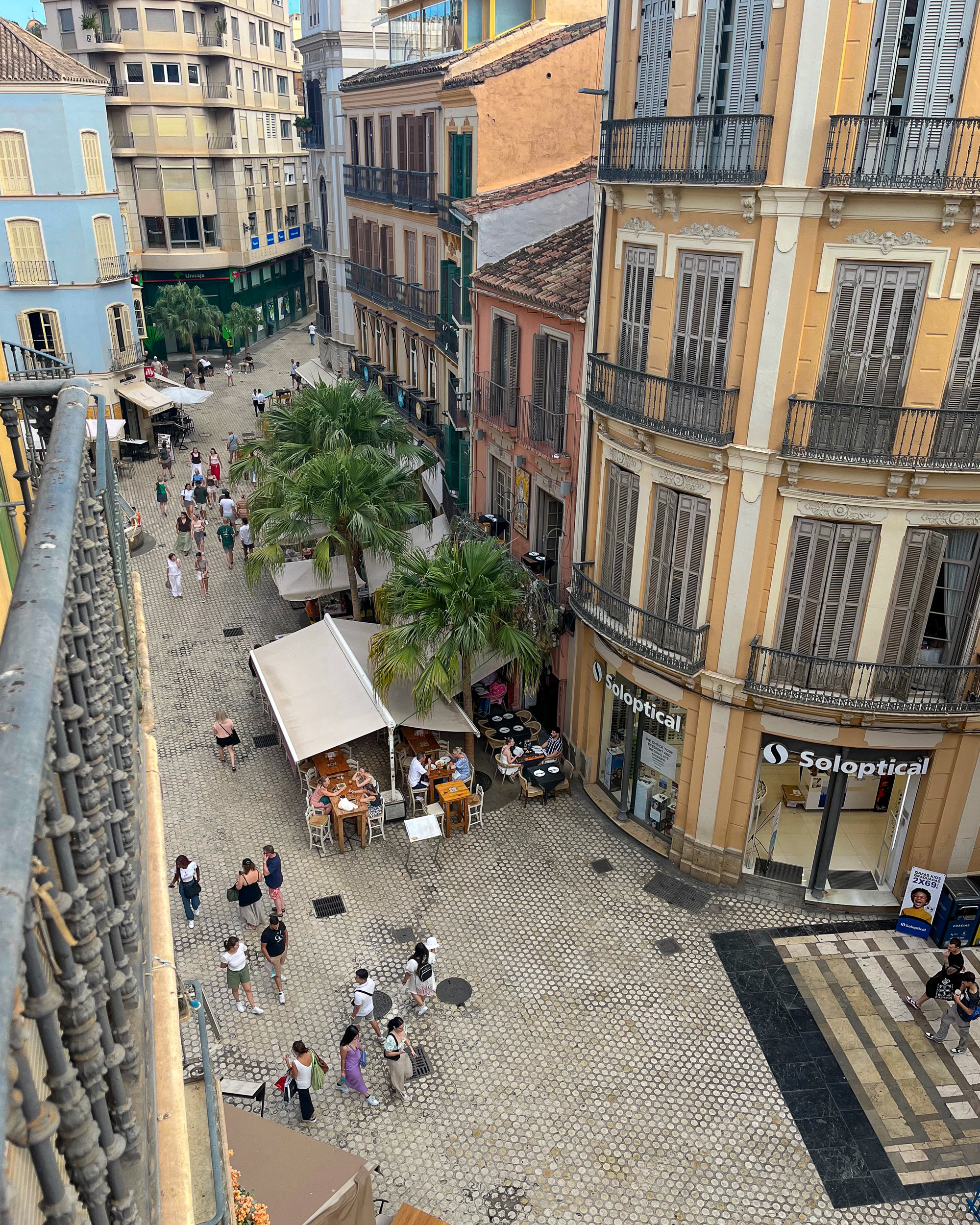
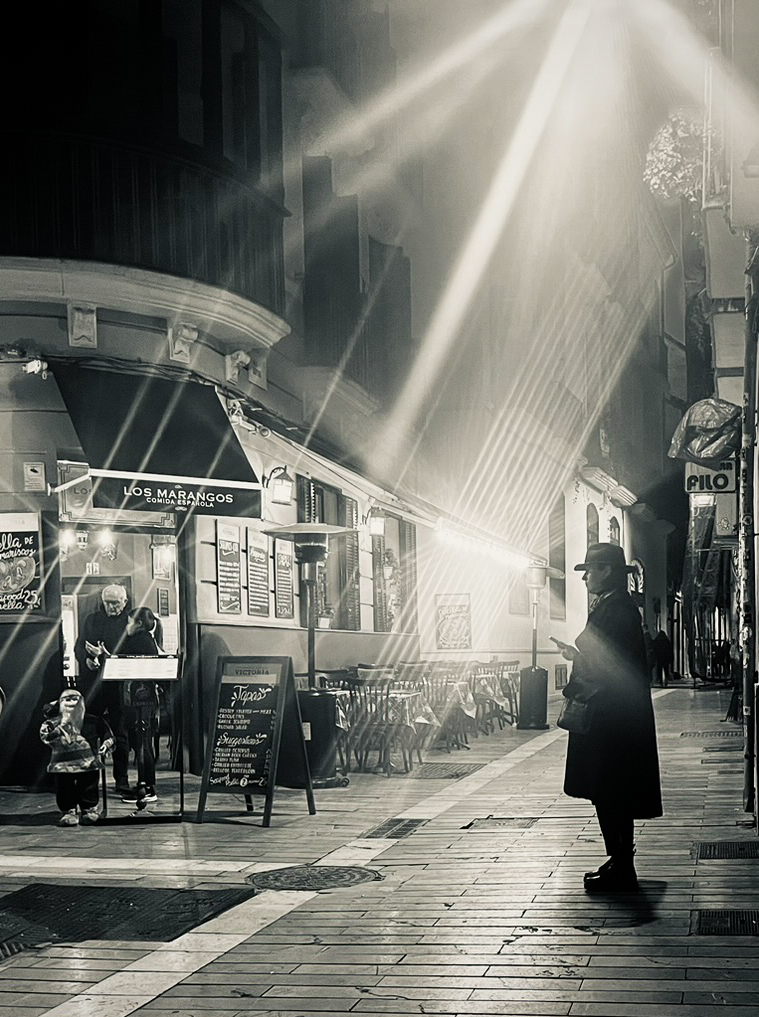
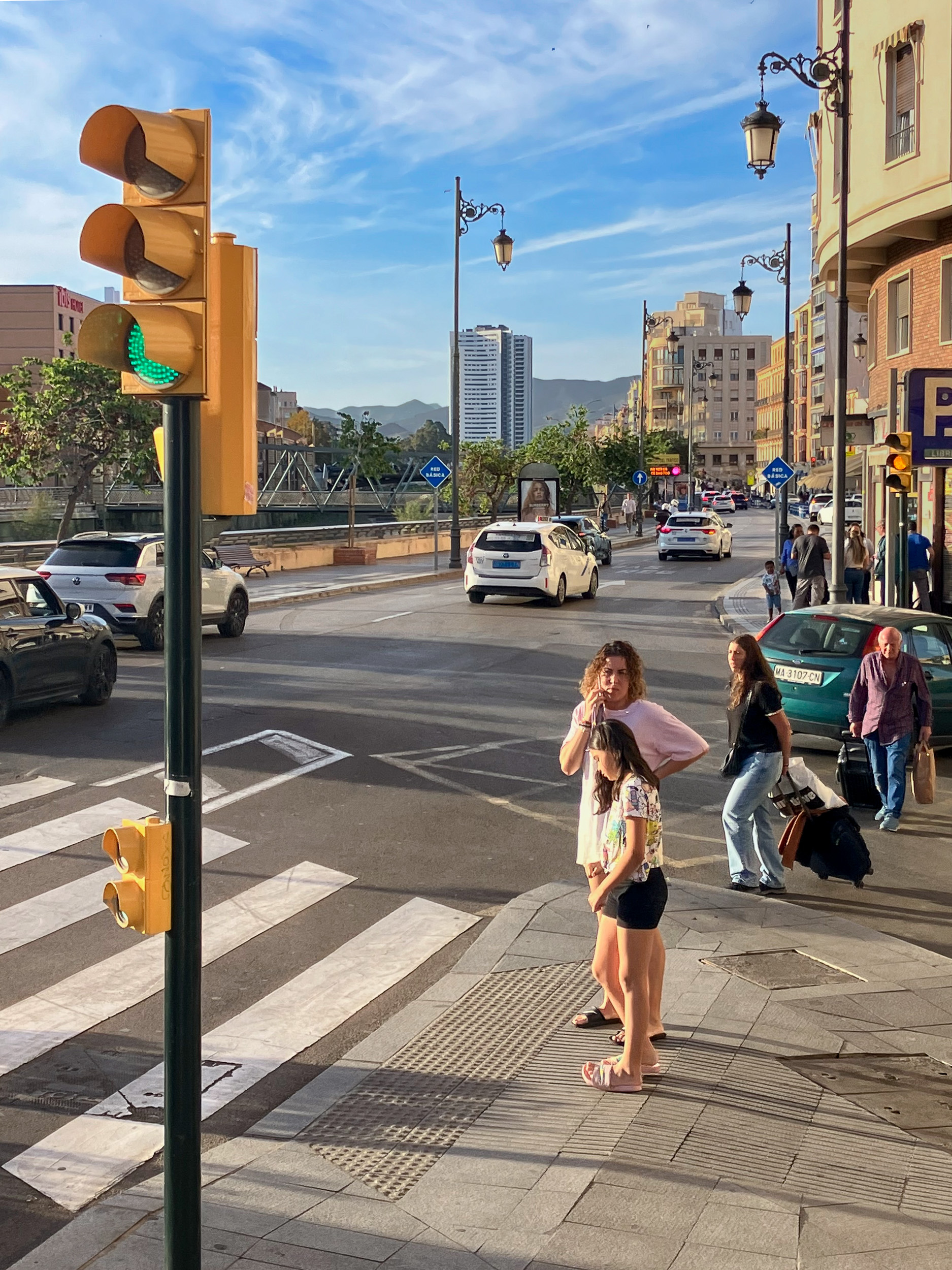
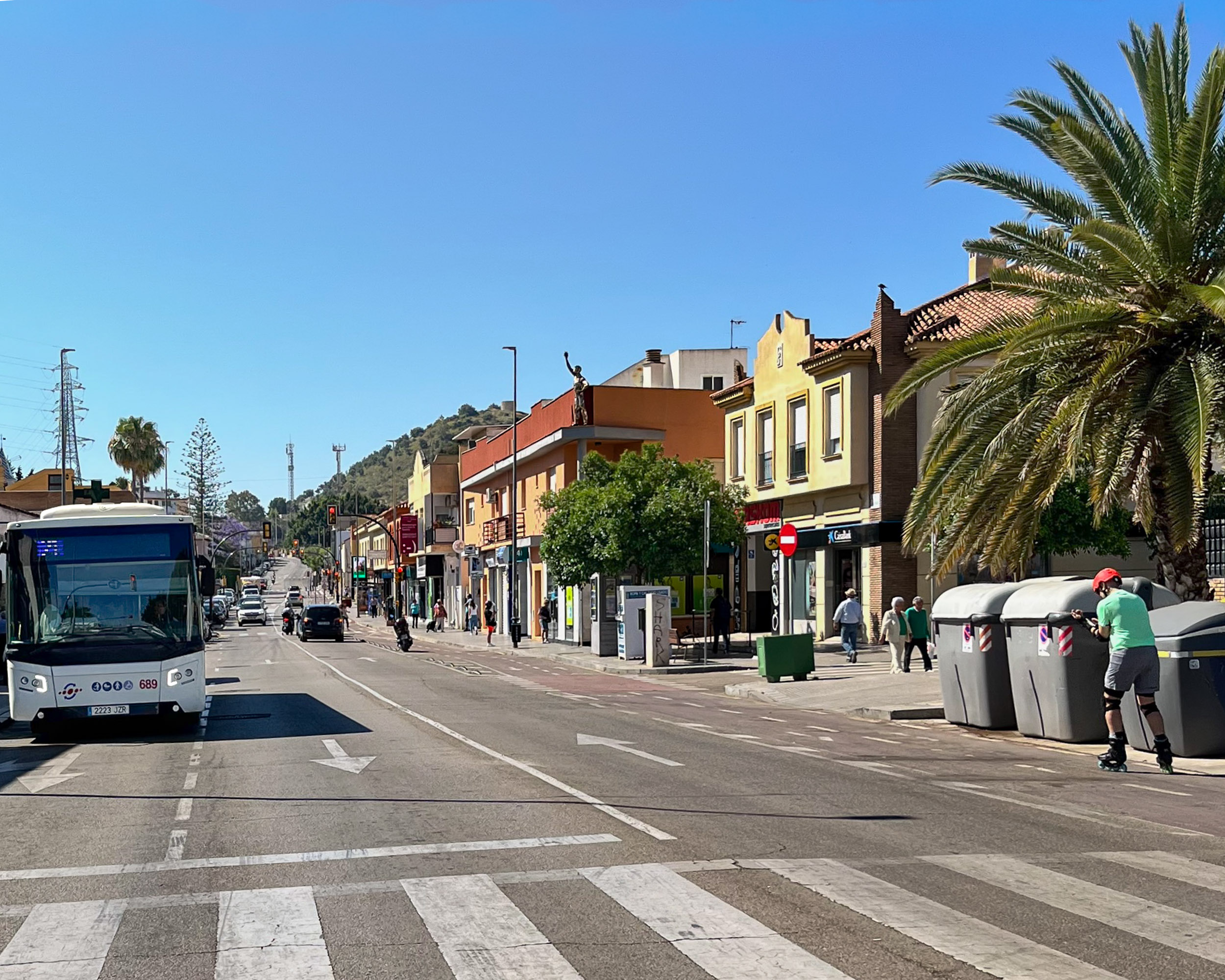
Urban photography of Málaga: a selection of photos capturing the street scenes, architecture, everyday life and the atmosphere from morning until late at night. You can also discover stunning photos of the cityscape, taken before and after sunset. This gallery contains images of Málaga’s historic city center, Cruz de Humilladero, the Huelin district, and the Bailén-Miraflores district. There is a separate page with pictures of the La Trinidad district and another dedicated to Málaga’s street art.
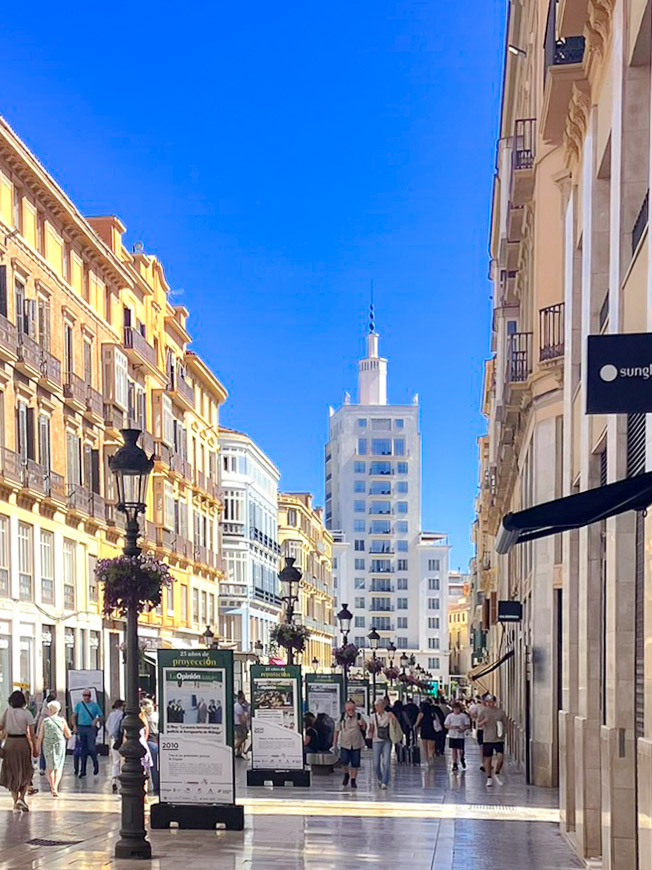
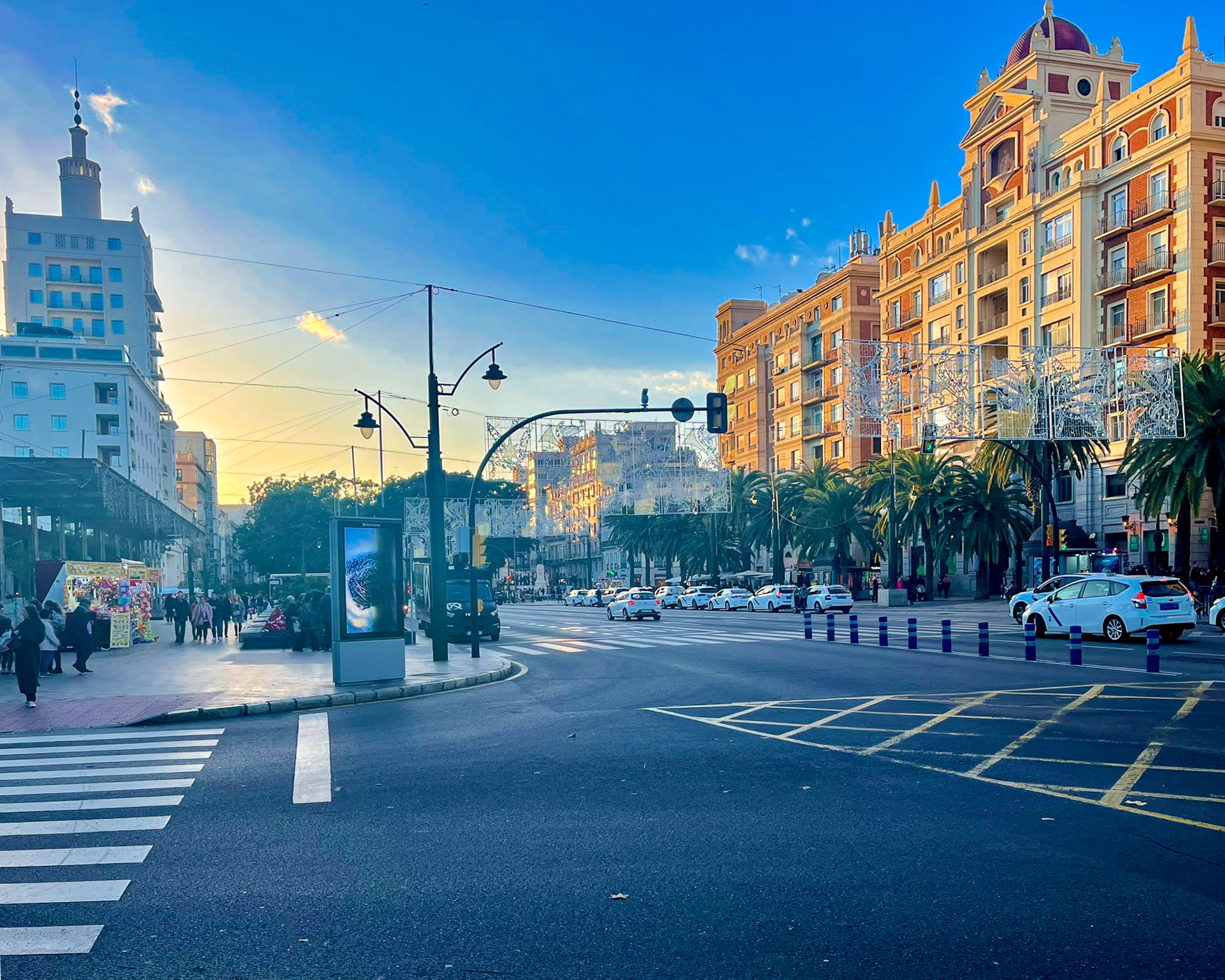
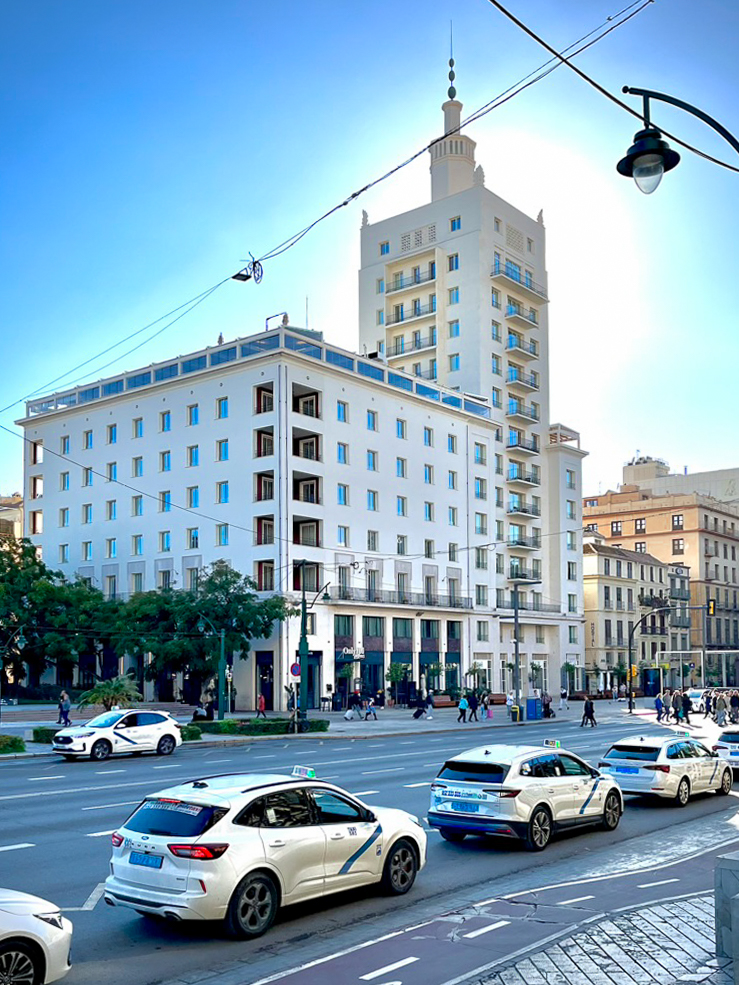
Calle Marqués de Larios in May with the Equitativa building in the background.Alameda Principal in Málaga with the Equitativa on the left and neoclassical buildings on the right.
More from Málaga: Port of Málaga gallery: waterfront, Palmera de las Sorpresas and sea views. Málaga music videos: flamenco guitar, street performance, piano improvisation and street dancers.
Calle Larios, La Equitativa and the Alameda Principal: ideal places for a stroll in Málaga city
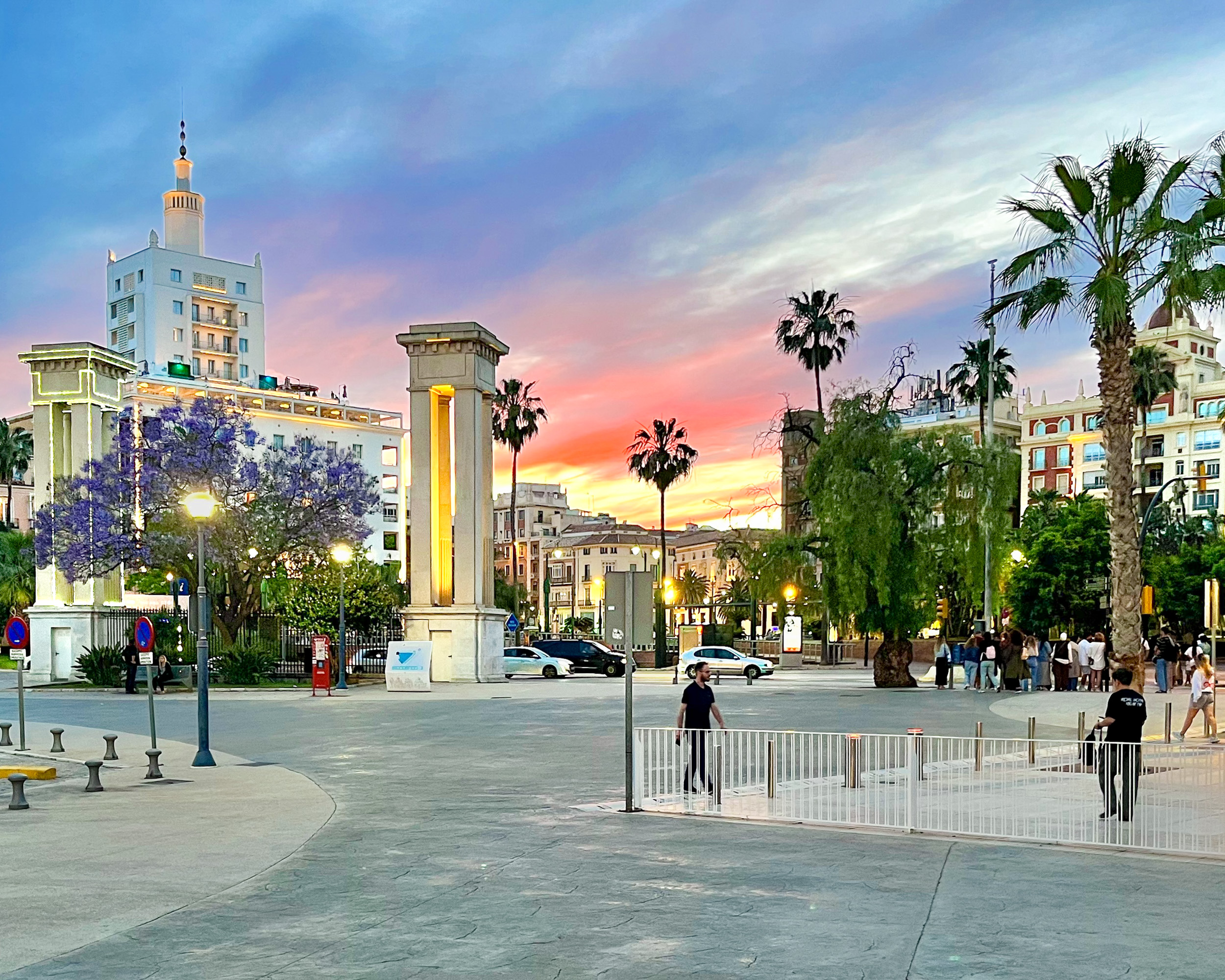
The La Equitativa building on the Alameda Principal in Málaga—home to the Only You Hotel and the Soho Boutique Hotel—and the Plaza de la Marina, viewed from Muelle Dos (Pier 2) at sunset.
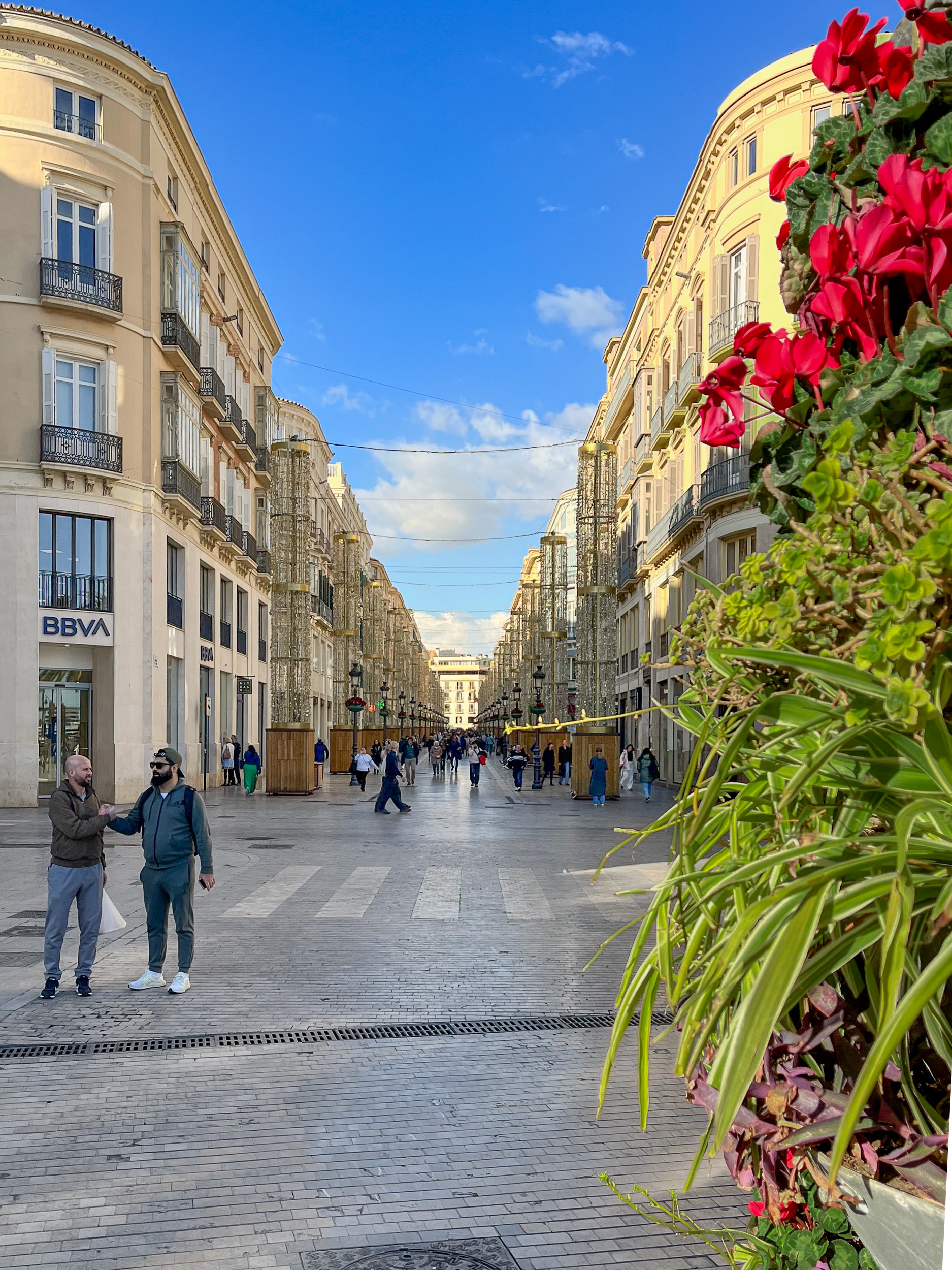
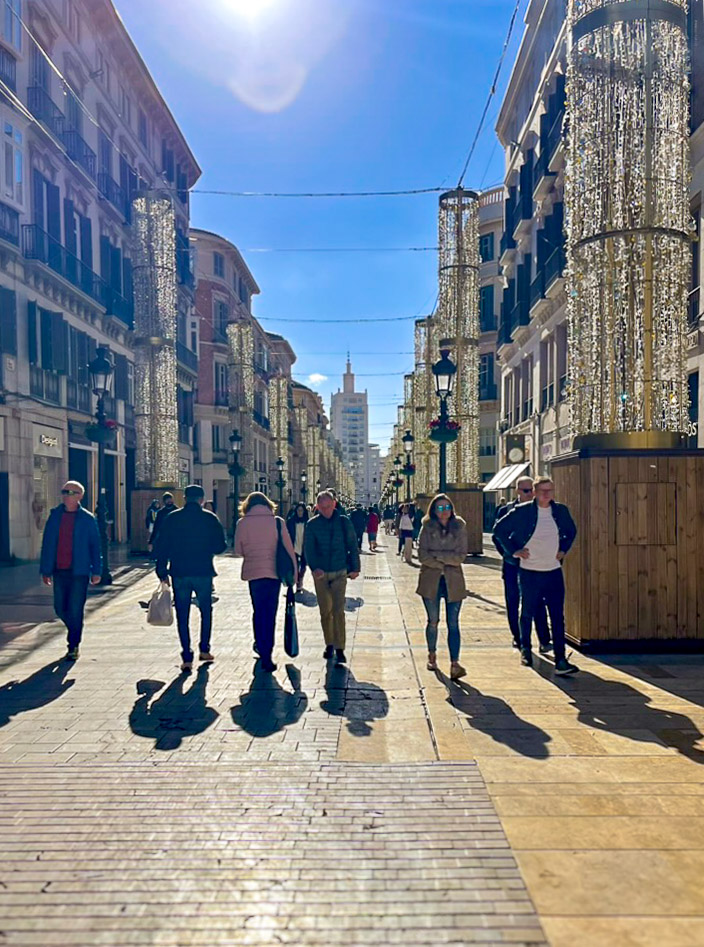
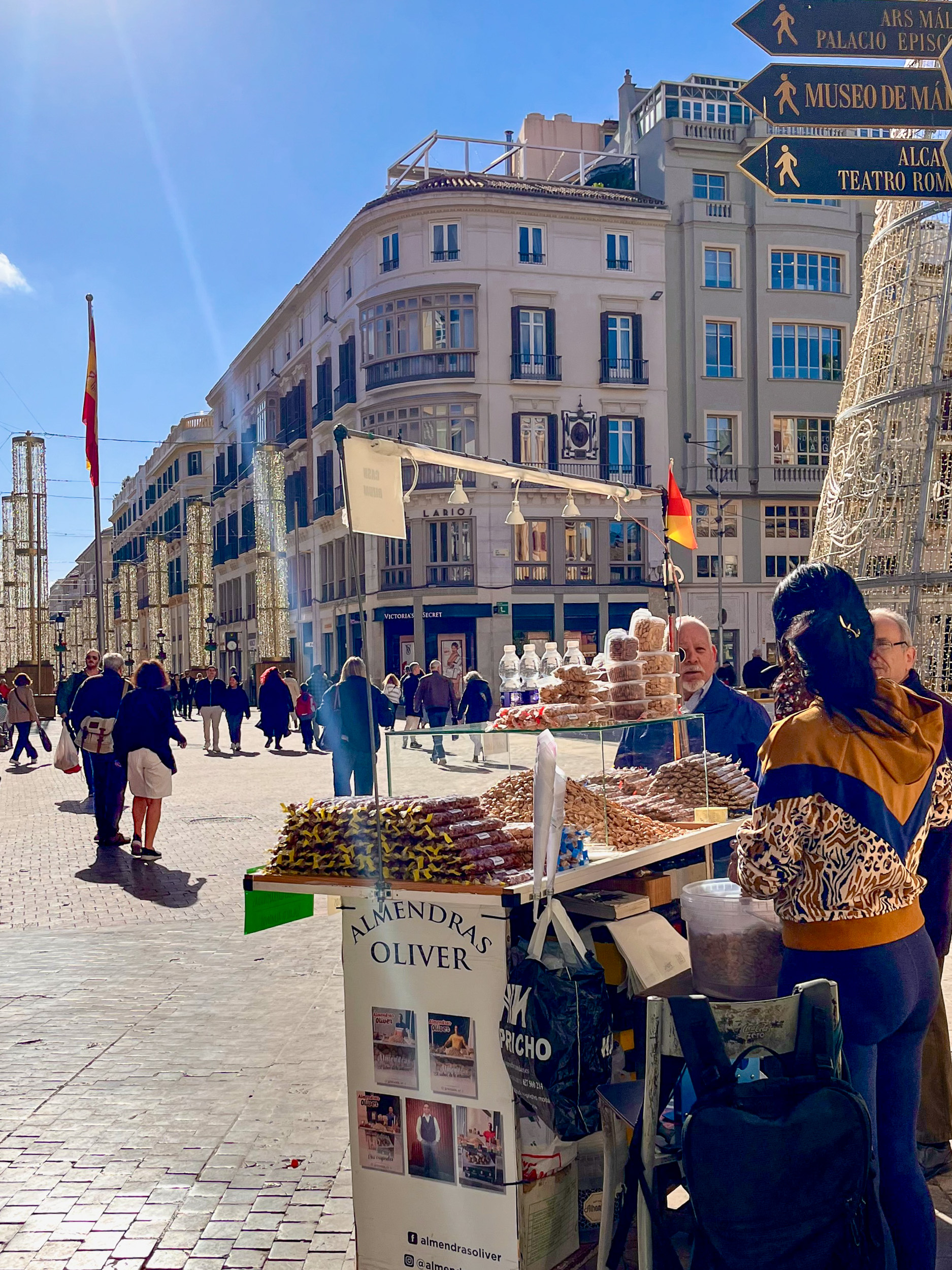
Calle Marqués de Larios is a pedestrian shopping street laid out in the 19th century. The street was designed to connect the Plaza de la Constitución and the Plaza de la Marina. If you follow the street south, you have a view of the La Equitativa building on the Alameda Principal.
Shopping street Calle Marqués de Larios in Málaga’s old city center seen from the Plaza de la Constitución.Shopping street Calle Marqués de Larios in January with the Equitativa building in the background.Calle Marqués de Larios in June with sunshades overhead.
In the summer, awnings are hung above the street to protect visitors from the bright sun. Cultural events often take place here, such as the procession during Semana Santa.
The La Equitativa building (pictured above) on Alameda Principal was erected on the site where the Larios family palace—destroyed during the Spanish Civil War—once stood. The insurance company La Equitativa acquired the plot and had the building constructed in two phases between 1951 and 1961. It combines the style of American skyscrapers with local decorative elements, such as the Neo-Islamic style tower topped by a yamur (a traditional Islamic spire finial). Today, this magnificent building houses the Only You Málaga (5-star) and Soho Boutique Equitativa (4-star) hotels. Furthermore, the rooftop terrace offers a stunning view of the city, the port, and the coastline.
Alameda Principal in Málaga with La Equitativa building and bus stop.
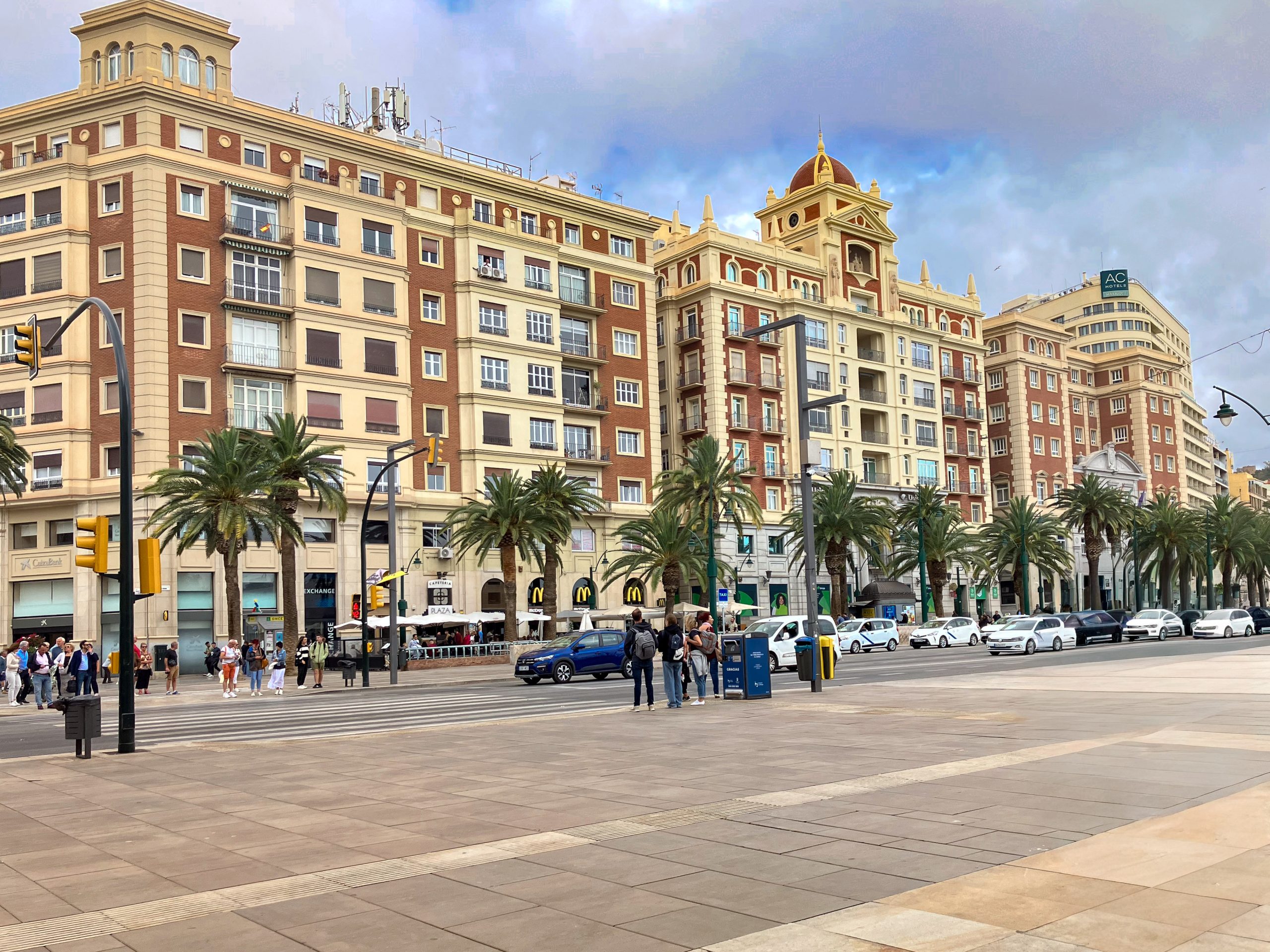
The Alameda Principal is one of Málaga’s main transport corridors, with many bus lines, taxi stops and nearby access to the metro. It connects the historic centre with different parts of the city and the surrounding area. It is also a great street for a leisurely stroll. It has very wide sidewalks and benches shaded by large trees.
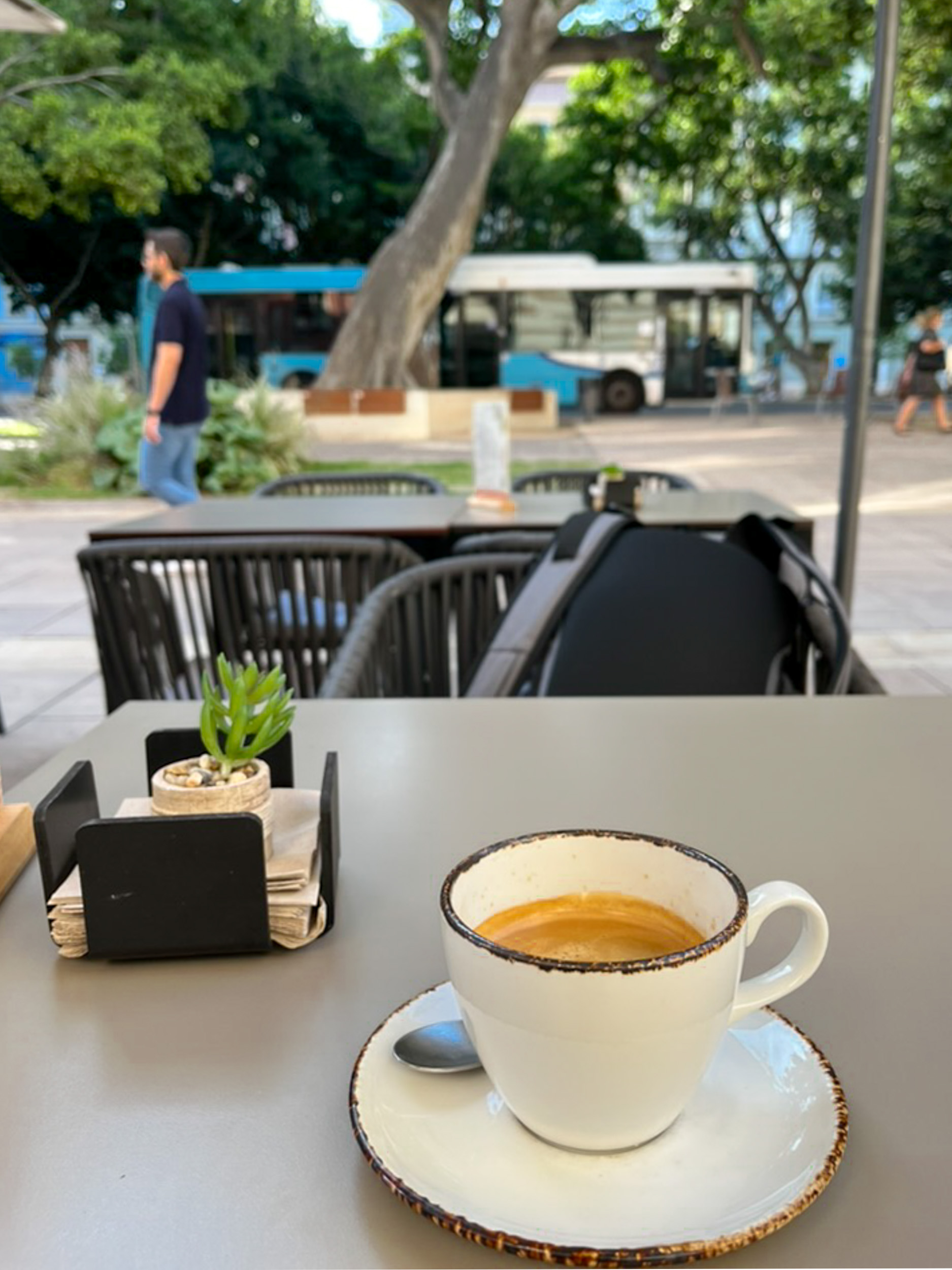
The wide, tree-lined boulevard makes it a pleasant place to have a coffee:
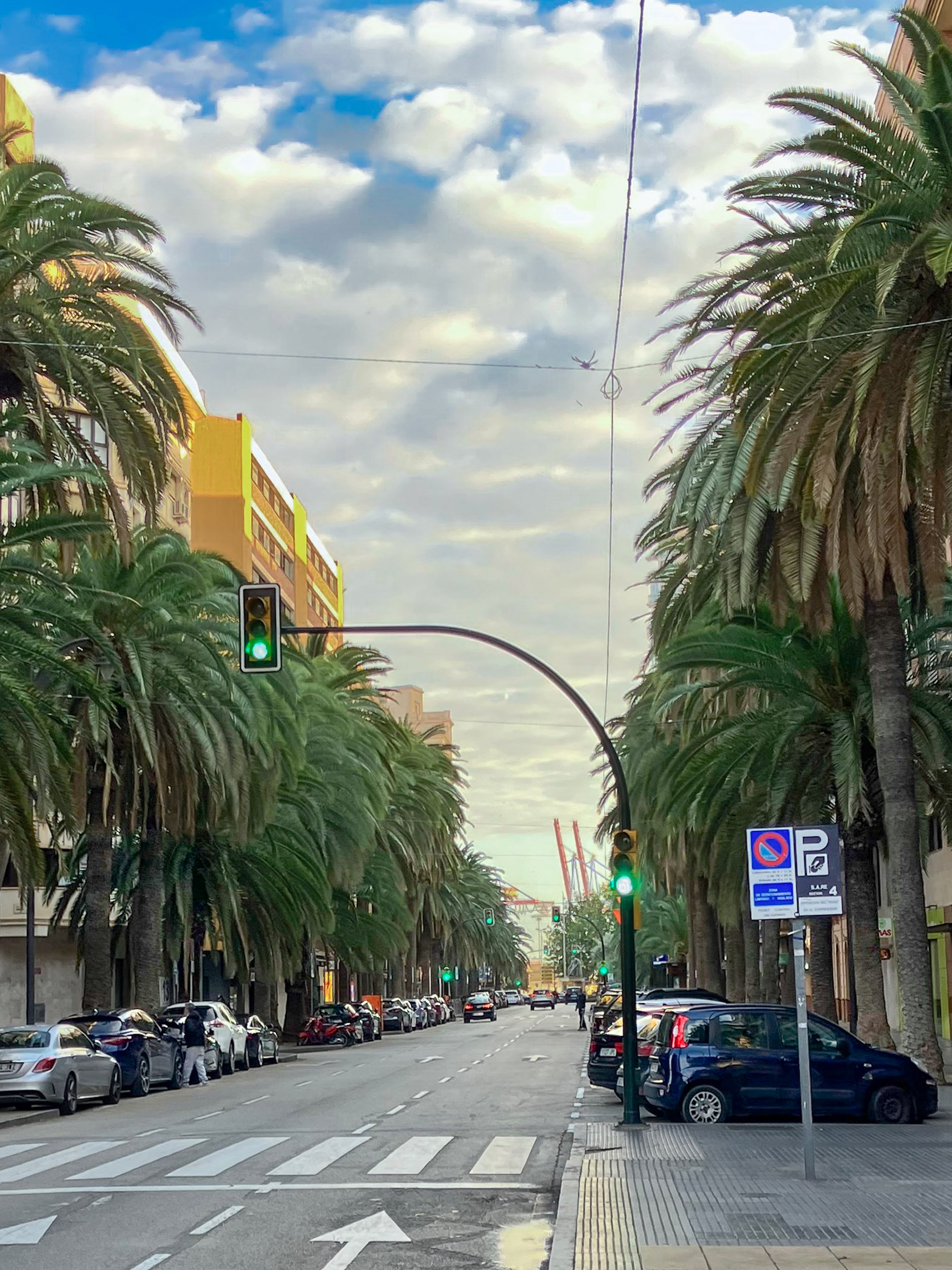
A coffee on a terrace on the Alameda Principal.Alameda de Colón, a street adjacent to the Alameda Principal in the Soho neighbourhood that leads to the industrial port (Muelle de Heredia). In the background, you can see the port cranes.Neoclassical buildings on the Alameda Principal, next to the pedestrian shopping street Calle Marqués de Larios.
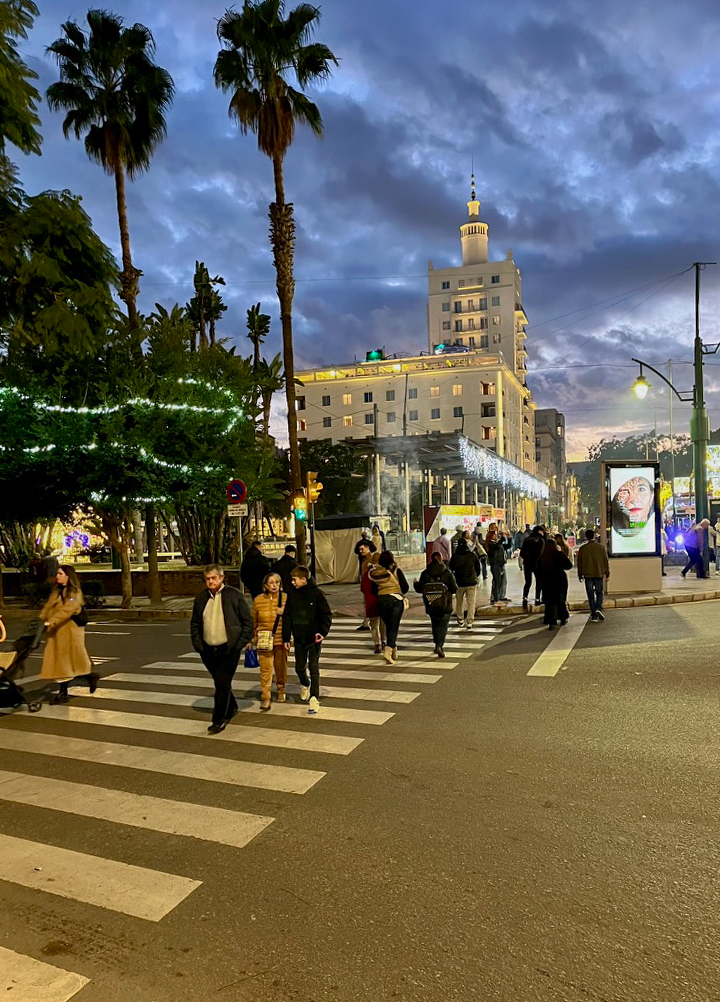
Calle Larios an the Equitativa building in the evening and at night
The main shopping street looks different after sunset, when the façades, La Equitativa and the flow of people create a more atmospheric side of Málaga’s historic centre.
La Equitativa building in Málaga, home to Only YOU and Soho Boutique hotels, at sunset.
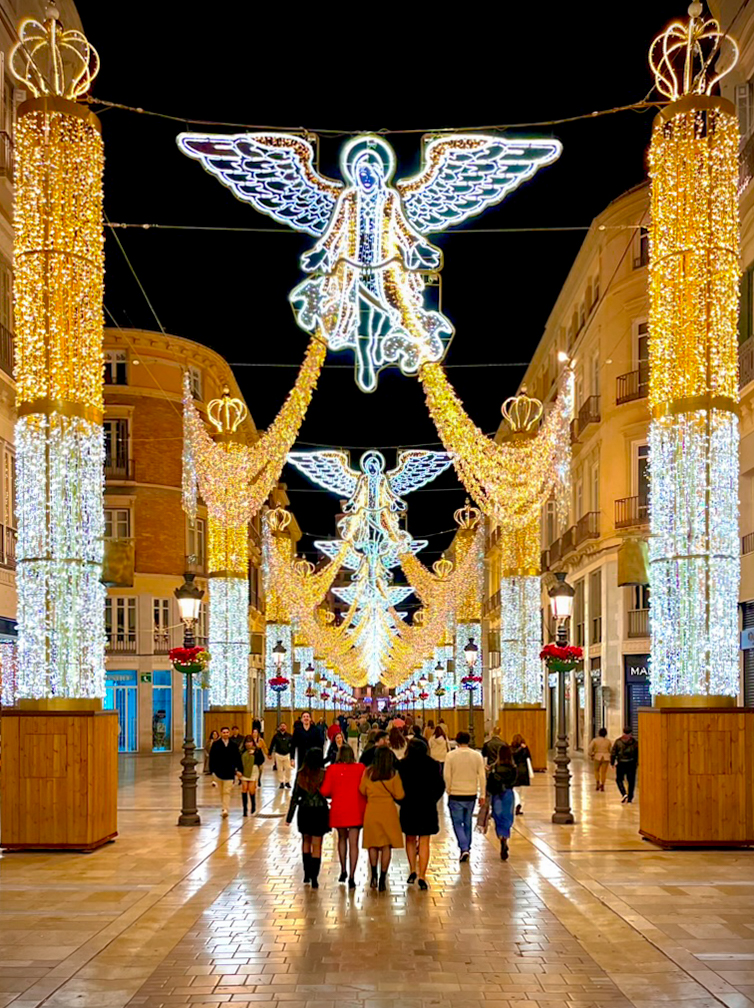
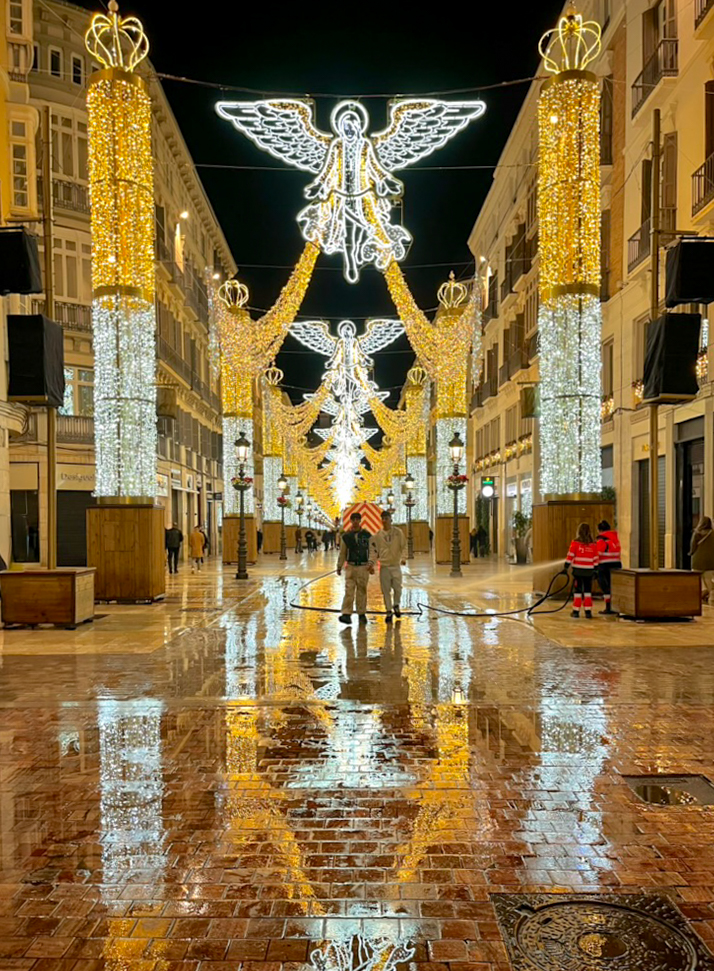
Around the Christmas period, the Calle Marqués de Larios is beautifully decorated with Christmas lights.
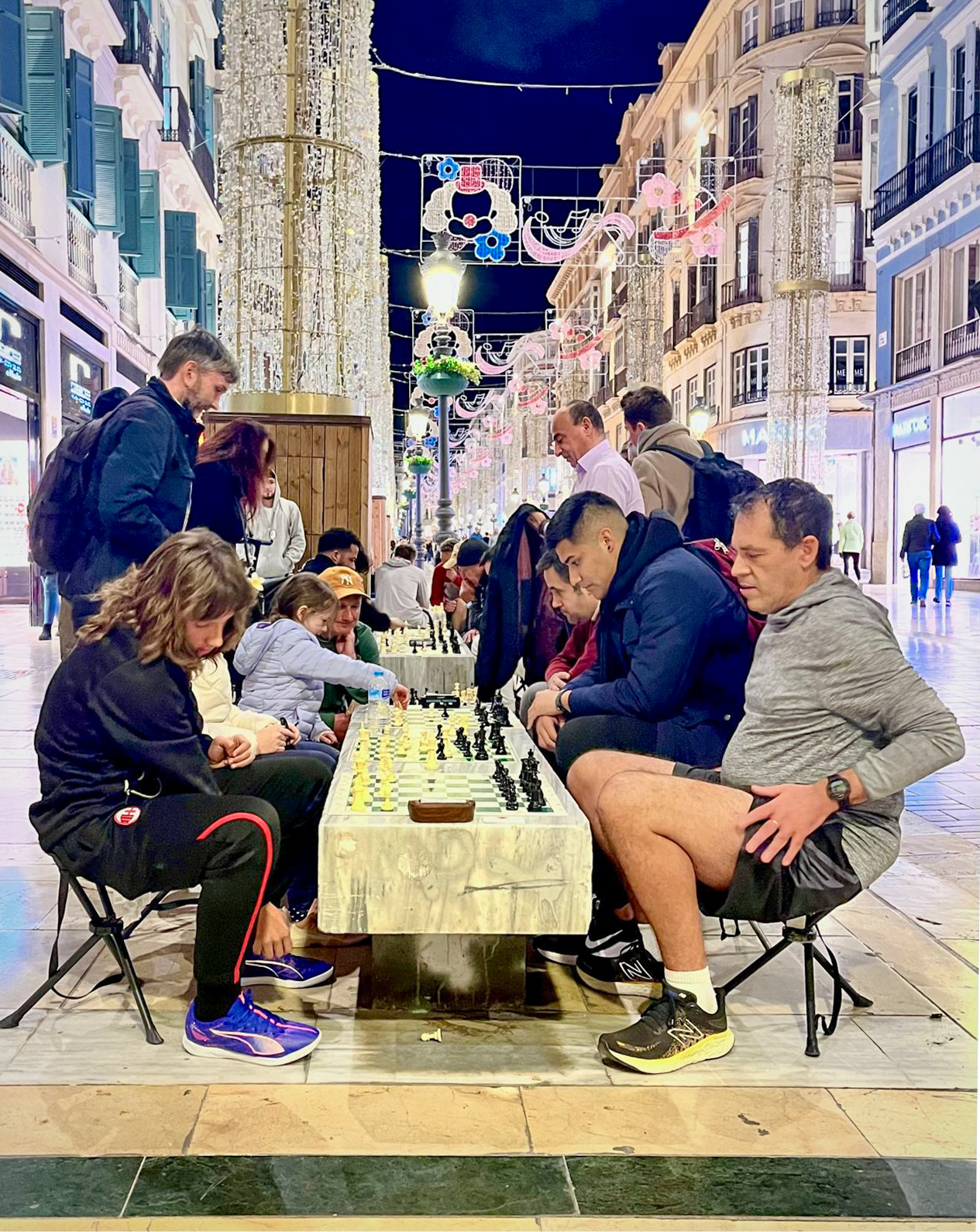
Calle Marqués de Larios in Málaga’s old city center with Christmas lights and decorations.The Marqués de Larios shopping street at night during cleaning operations.Calle Marqués de Larios in Málaga’s old city center with people playing chess at the blue hour.The Equitativa building, on the Alameda Principal in Málaga’s historic center, at night during the Christmas season at the blue hour.
Paseo del Parque: over 100 years of subtropical natural beauty in Málaga city
Paseo del Parque is an 800-meter-long subtropic park located between Plaza de la Marina and Plaza de General Torrijos. It was laid out in the 19th century and contains numerous species of (sub)tropical plants, the species names of which are indicated on signs.
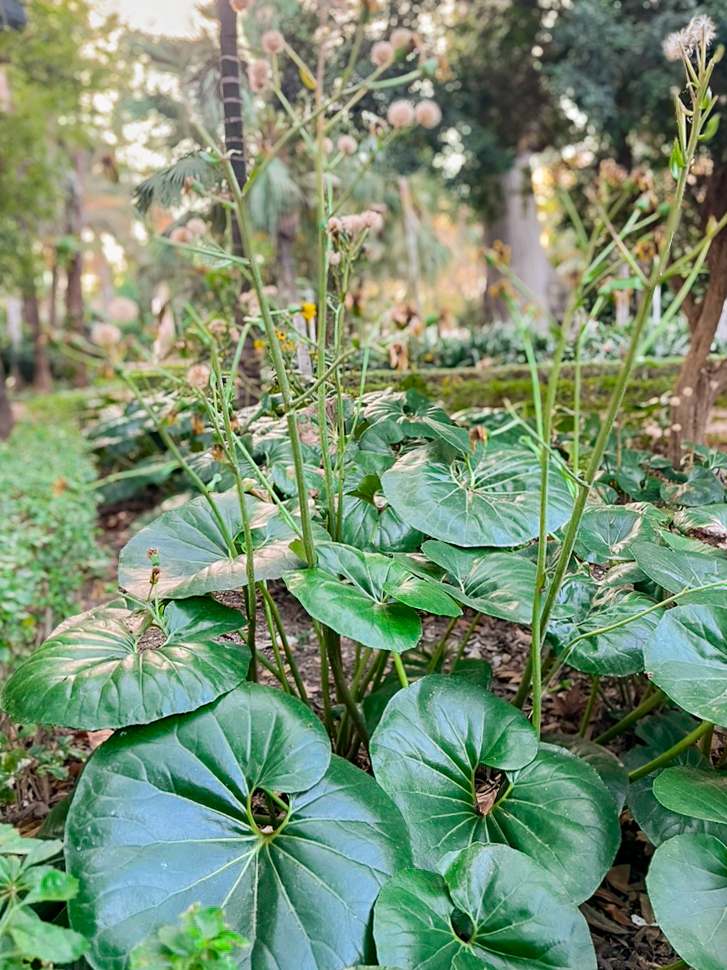
The japonicum giant lily (Farfugium japonicum) or the Giant Leopard plant.
The park features benches, playgrounds, a walking promenade, and fountains such as the Fuente de Neptuno, adorned with colourful tiles. It also contains several sculptures and an open-air theater where free concerts are regularly held.
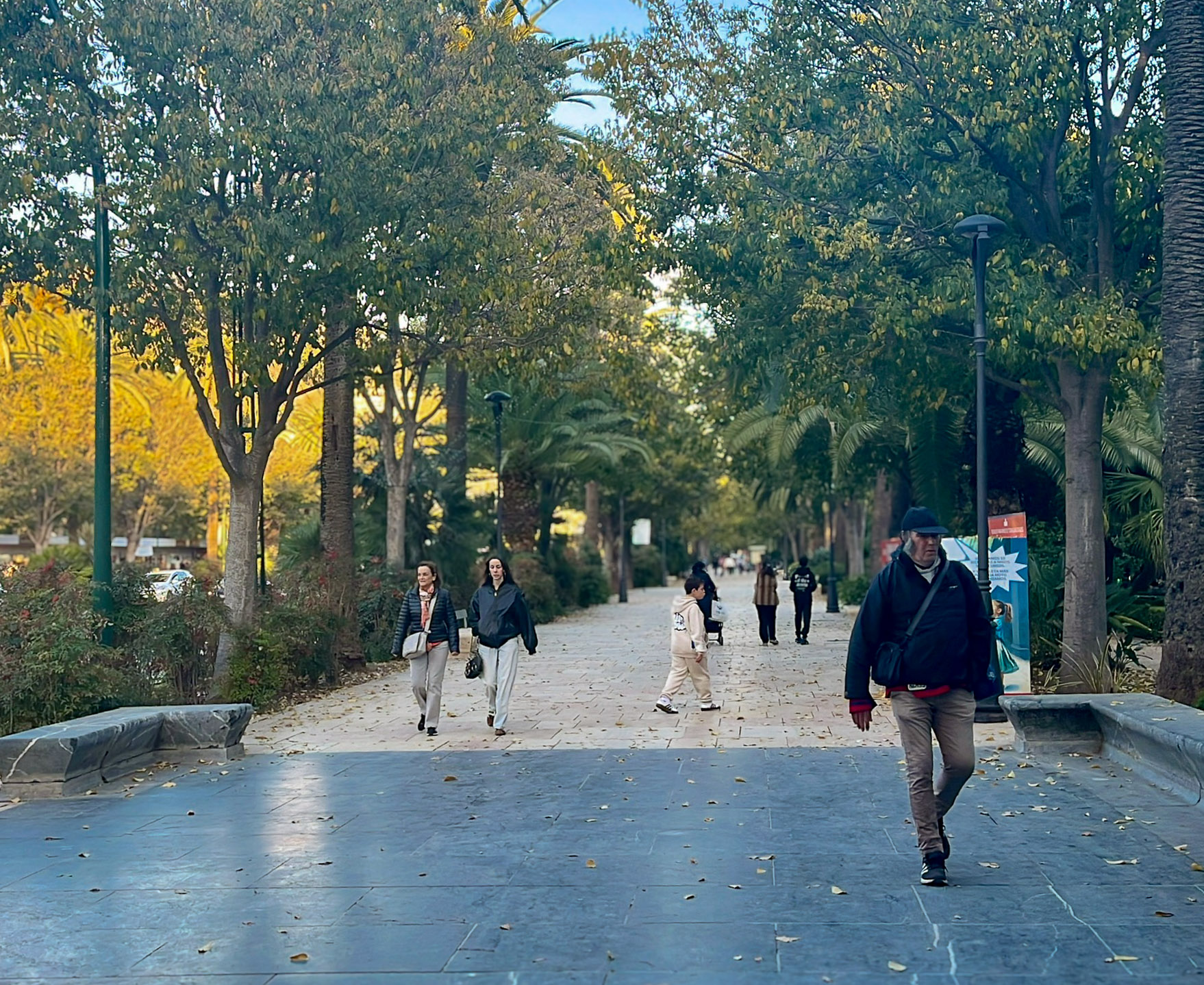
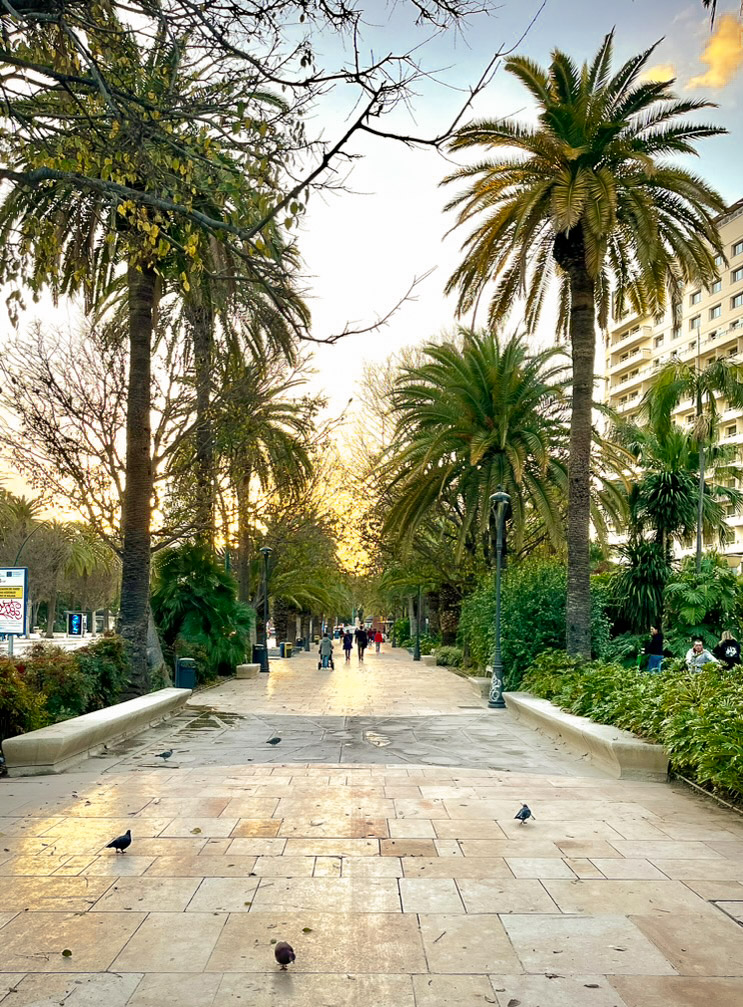
Málaga’s Paseo del Parque promenade in December.
The park offers a welcome respite from the heat during the summer season, with plenty of shaded areas, and is located just a few hundred meters from the coast, ensuring a fresh sea breeze is usually present.
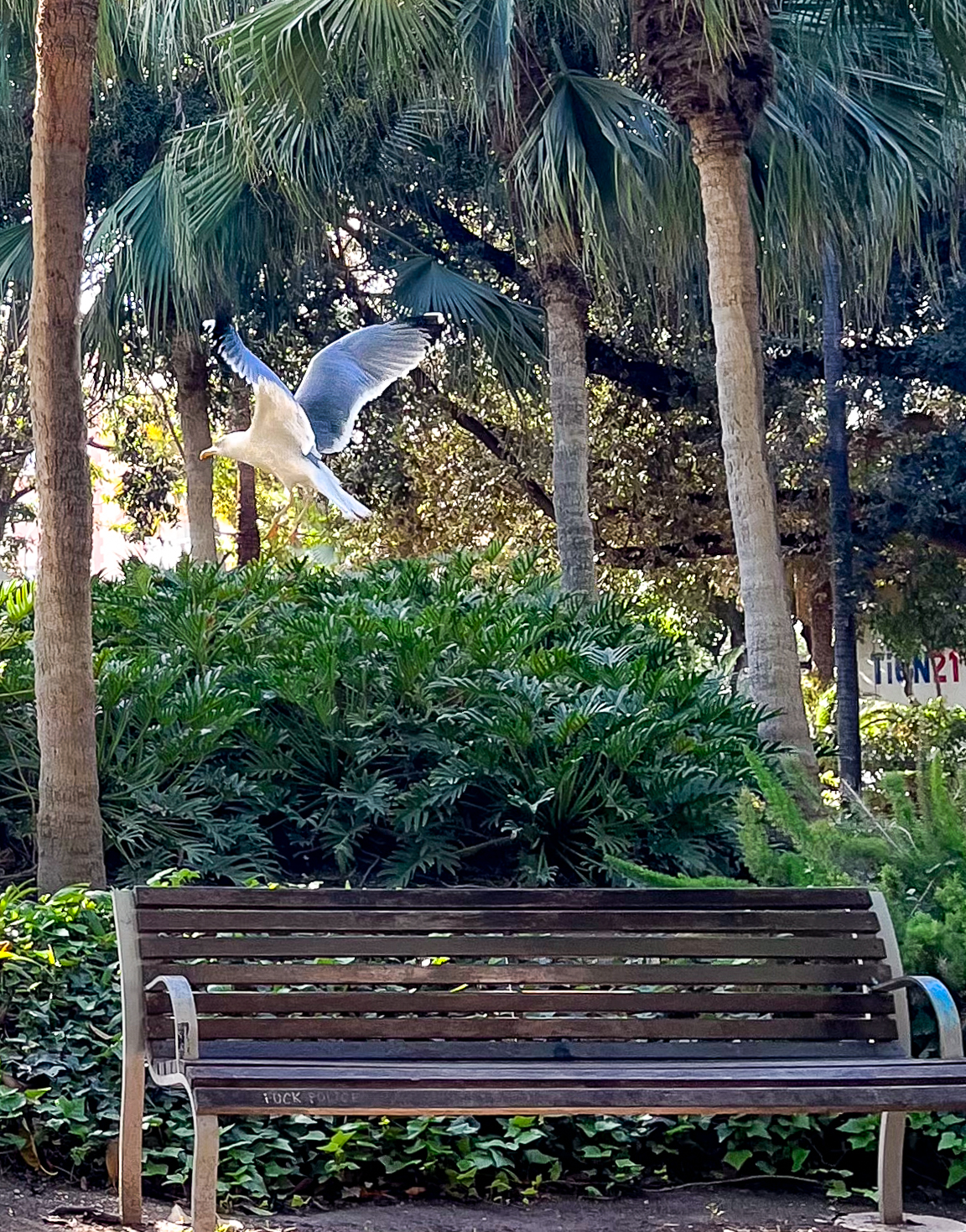
Seagull taking off in Málaga Park on Paseo del Parque.Málaga’s Paseo del Parque promenade in January.Málaga’s Paseo del Parque in the city center at night.
The Paseo del Parque is a very pleasant place for a walk, in any season and at any time of day.
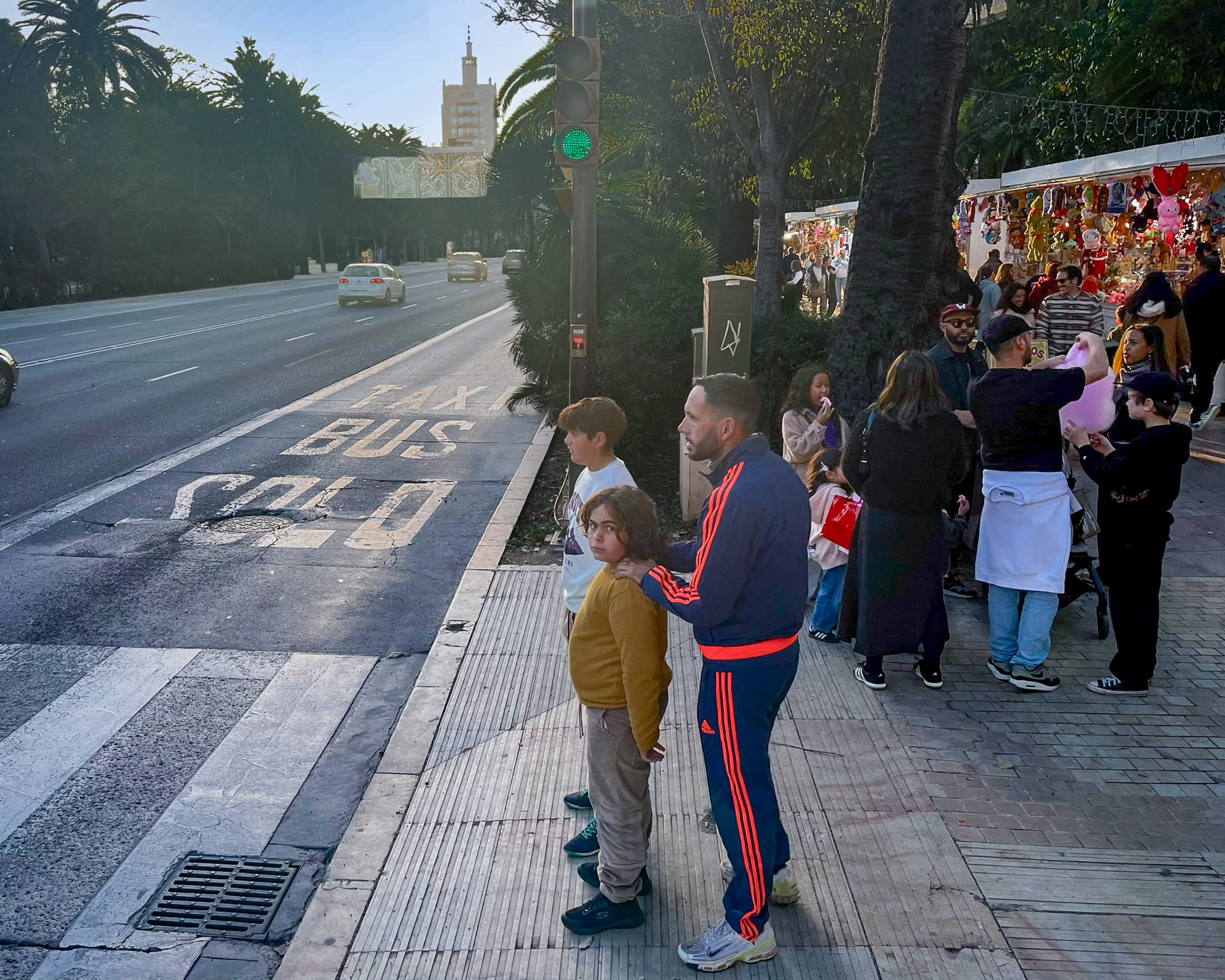
Around the Christmas season, there is a Christmas market on the Paseo del Parque. Numerous stalls offer jewelry, handmade artisanal goods, collectibles, and other gift ideas.
Málaga Christmas market at Paseo del Parque.Málaga Christmas market at Paseo del Parque.
Paseo del Parque is also the name of the main tree-lined boulevard/street that runs right alongside it. On the opposite side of the park stands Málaga’s City Hall on Avenida de Cervantes.
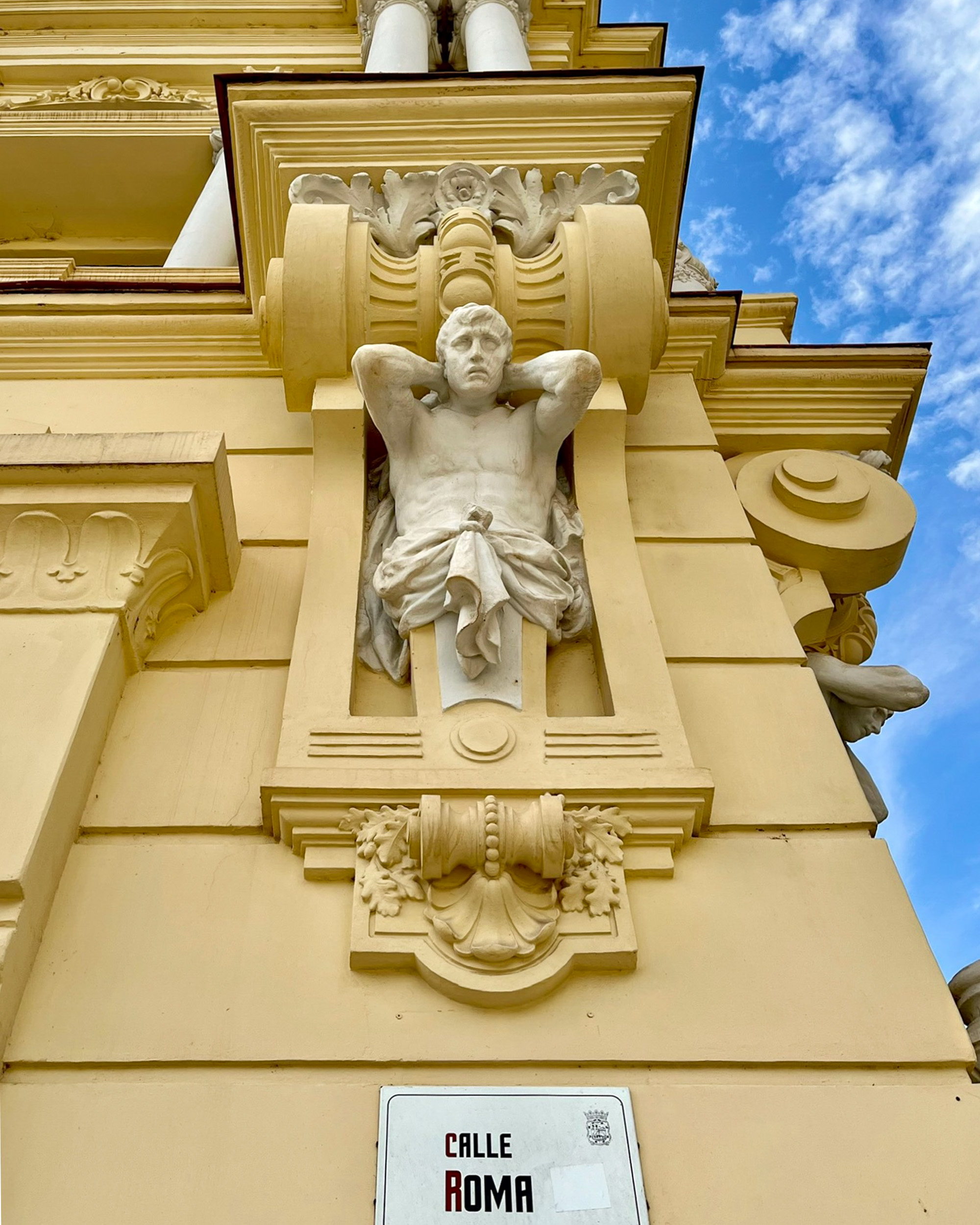
Málaga City Hall across from Paseo del Parque on Avenida de Cervantes, built in a Neo-Baroque style with distinctive Modernist details.Statue on the side of Málaga City Hall.
For more pictures about Parks in Málaga City’s districts, see also the gallery Nature in The City.
The Alcazaba and the Roman theatre: two ancient monuments
The history of the city dates back to the 7th century BC, when the Phoenicians settled on the left bank of the Guadalmedina River. It became one of the most important centers of the region, named Malaka. Málaga was also important during the Roman era. One of the sights from that period is the Roman theater beneath the Alcazaba fortress.
The Alcazaba of Málaga is a Moorish fortress built in the 11th century, overlooking the historic centre of the city. Its name is derived from the Arabic word ‘al-casbah’, which means citadel.
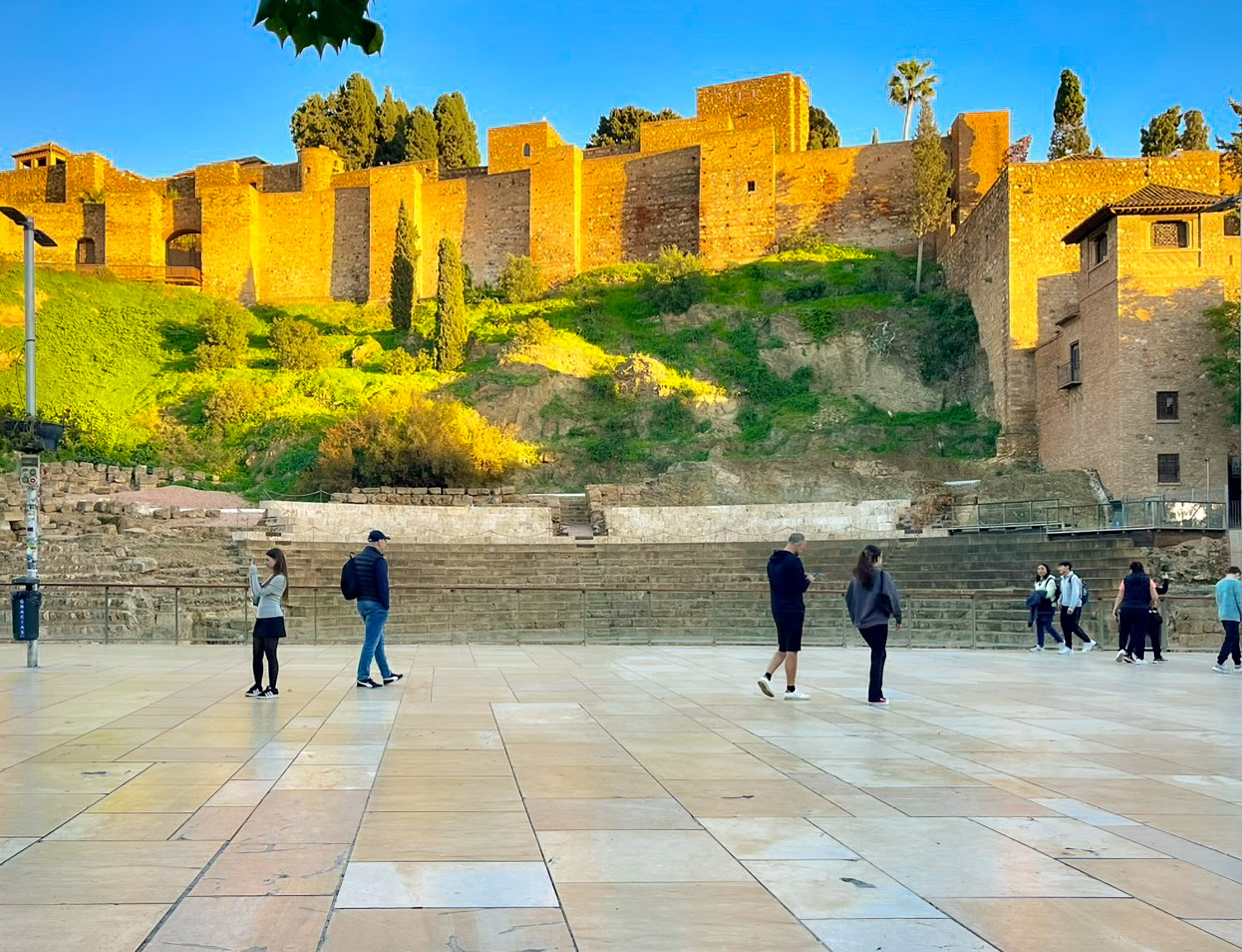
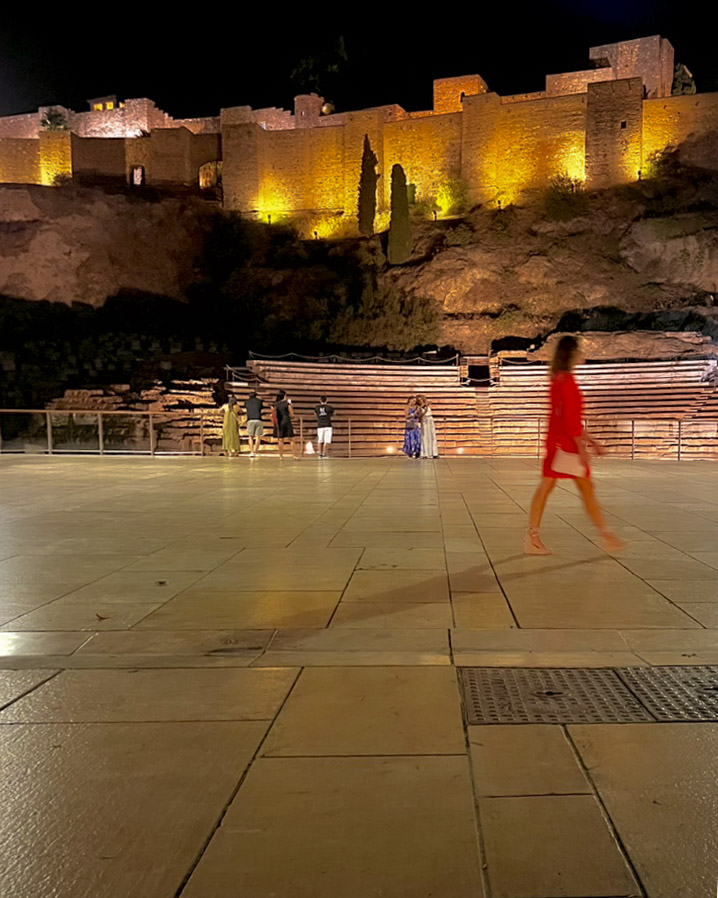
The Alcazaba and the Roman theatre on the Calle Alcazabilla in Málaga’s old city centre, at sunset.
At the foot of the Alcazaba – on the Calle Alcazabilla, lies the Roman Theatre, rediscovered in the 20th century after centuries of being hidden beneath the ground. Parts of the Roman theater were used as foundations for the construction of the Alcazaba. Together, they reflect the layered history of Málaga, from Roman times to the era of Al-Andalus. Today, both are among the city’s most visited landmarks.
The Alcazaba and the Roman theatre on Alcazabilla Street in Málaga’s old city centre at night.Málaga’s illuminated Alcazaba at night seen from Avenida de Cervantes next to Paseo del Parque.The illuminated Alcazaba and roman theatre at night seen from Calle Alcazabilla.Street artist working on Calle Alcazabilla (in front of the Roman theatre and the Alcazaba).
Plaza de la Merced: where Pablo Picasso was born and ideal to take a break
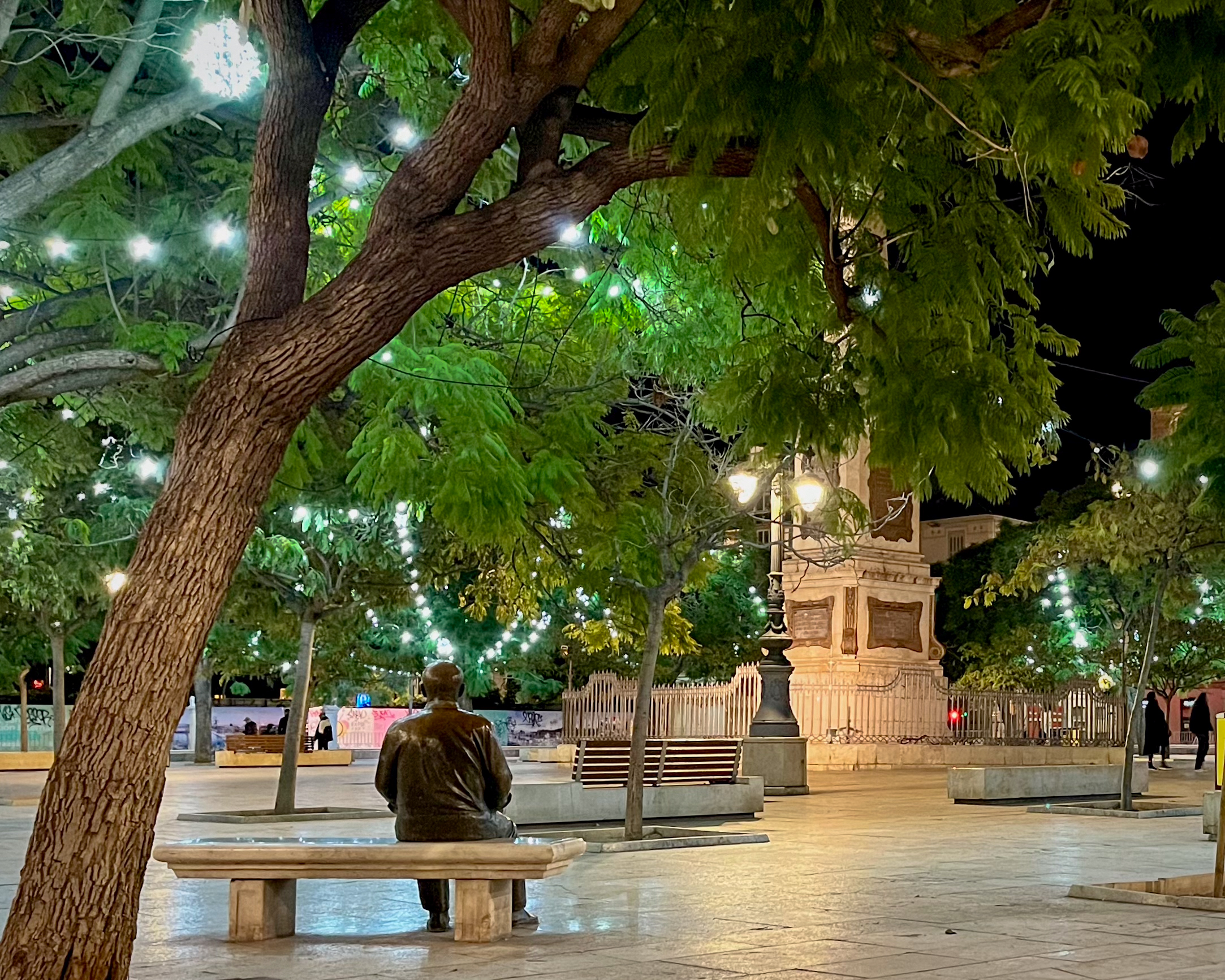
Plaza de la Merced is one of Málaga’s most famous squares, lined with cafés, terraces and historic buildings. Pablo Picasso was born in 1881 at number 15 of the square, in the Casa Natal de Picasso (birthplace of Picasso), where a seated statue of the artist stands nearby today. The first floor of the house now forms a museum, displaying family photographs, personal objects such as his mother’s earrings, childhood items including shoes and toys, and paintings by his parents that may have influenced some of his later work. Pablo Picasso left Málaga at the age of eight when his father got a job in Barcelona.
Picasso statue on Plaza De la Merced close to his birthplace (Casa Natal de Picasso).
In the centre of the square stands the Torrijos Monument, an obelisk dedicated to General Torrijos and his 48 companions, who attempted to overthrow King Ferdinand VII. After the failed uprising, they were executed on the beach of Málaga and buried beneath the monument.
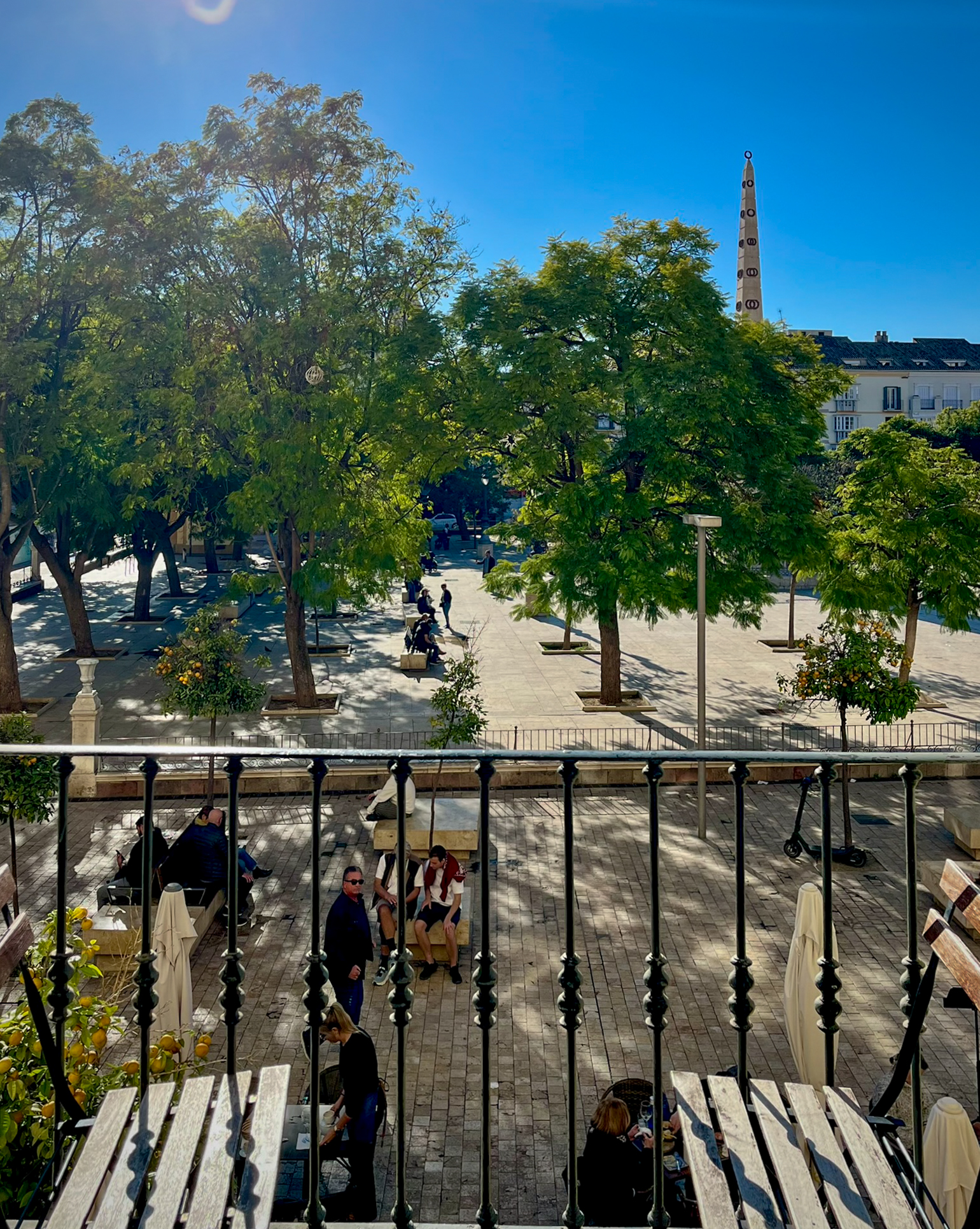
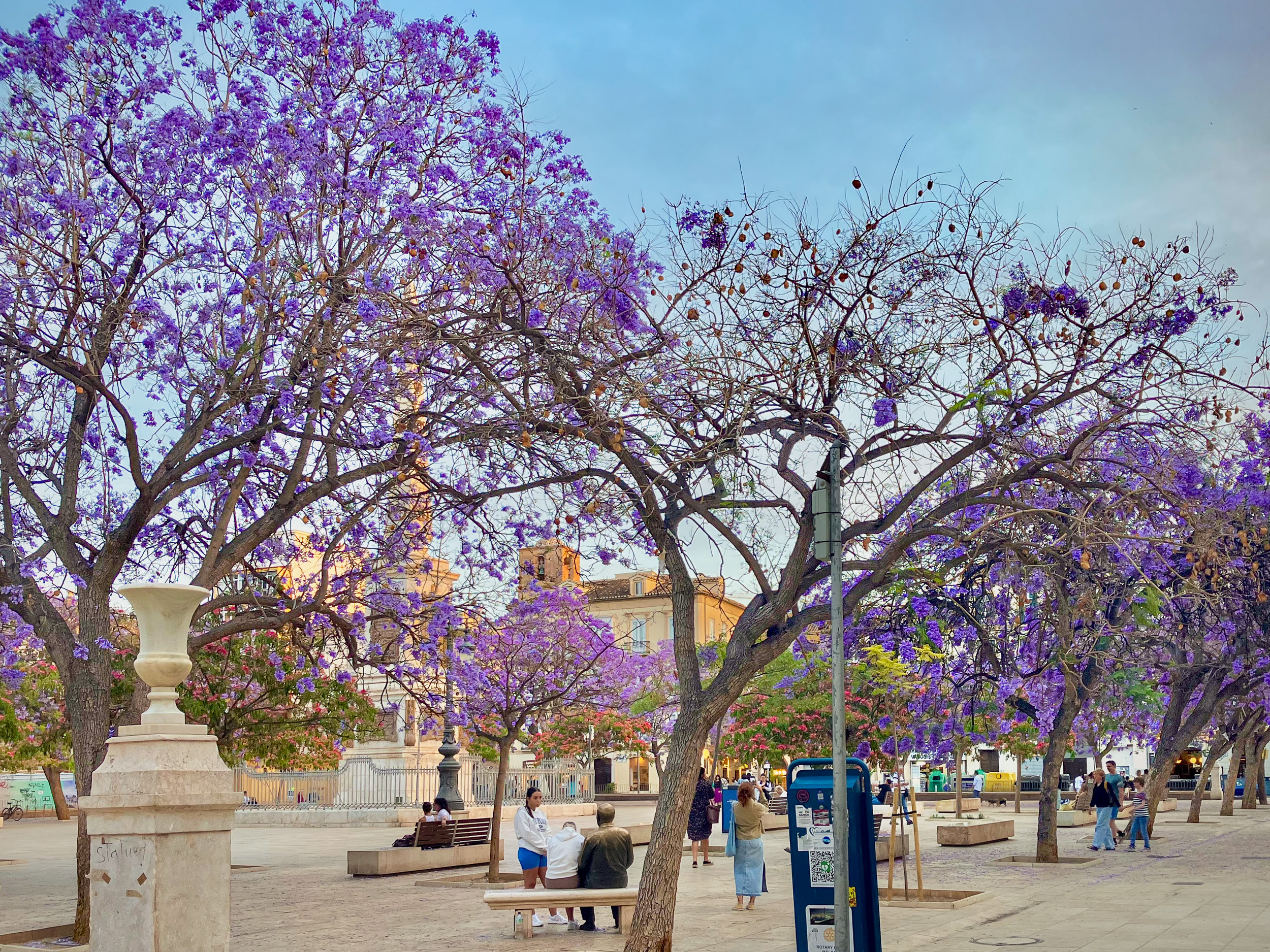
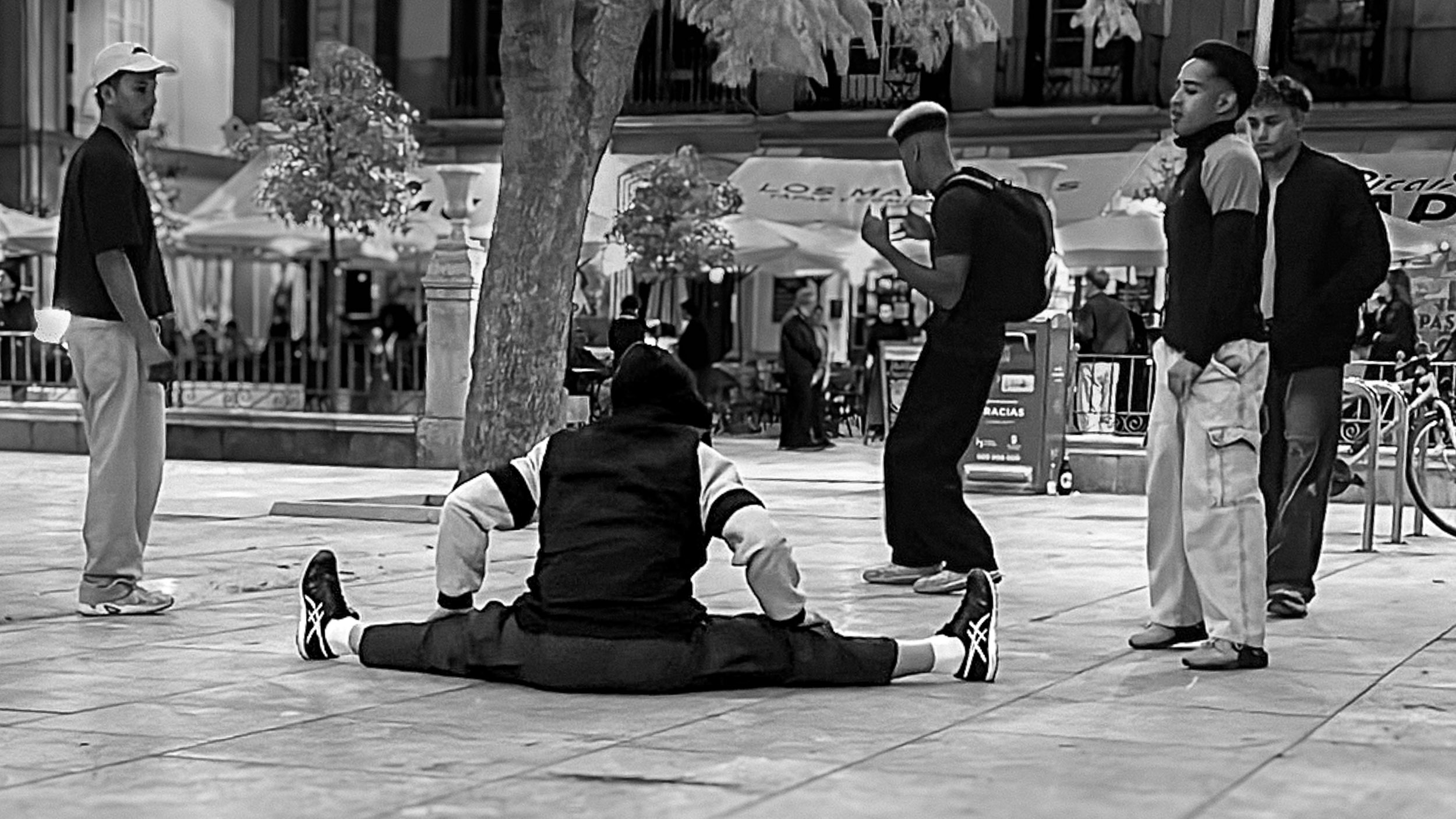
View of Plaza de la Merced in Málaga’s old city center from a balcony.In May, the jacaranda trees around the plaza bloom in bright purple colours. Street dancers on the Plaza de la Merced warming up and practicing for a dance performance. Street performers, restaurants and late-night terraces give the square a lively atmosphere.Plaza de la Merced in Málaga’s historic city center at night on Christmas Eve, featuring the statue of Pablo Picasso.View from the balcony of a historic building on Plaza de la Merced.
Málaga’s Cathedral and beautiful pictures of the old city centre
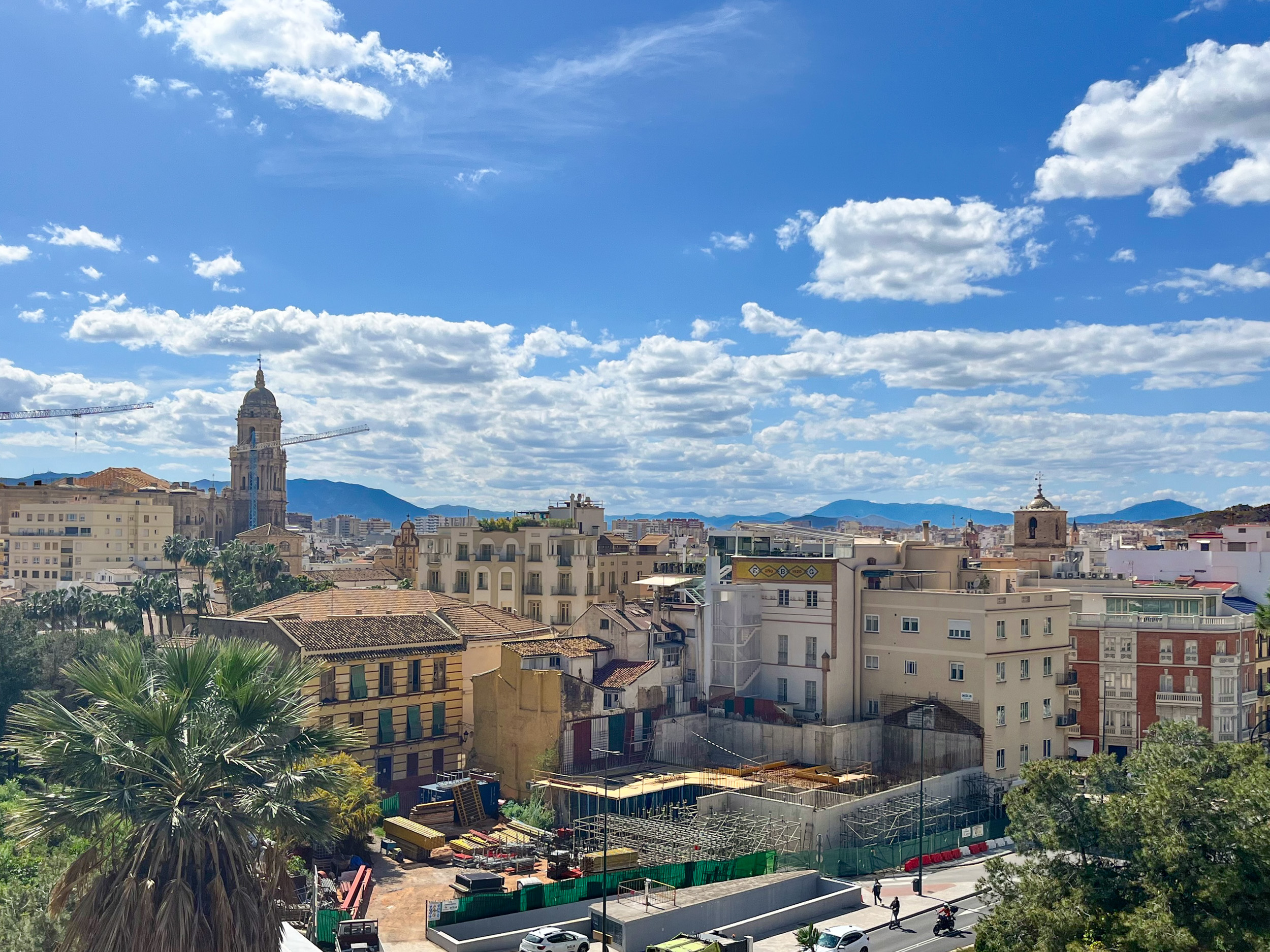
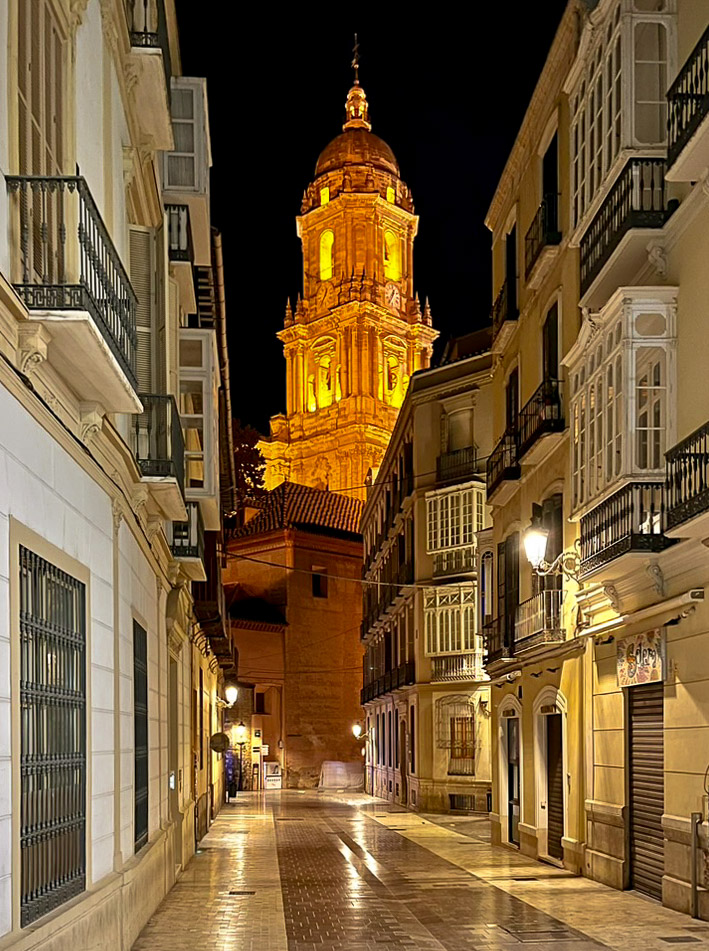
The old city centre an Málaga Cathedral, seen from the walking trail Sendero al Monte Victoria, which starts near Plaza de la Merced (on Calle Macizo de la Llana).Illuminated tower of Málaga Cathedral at night.
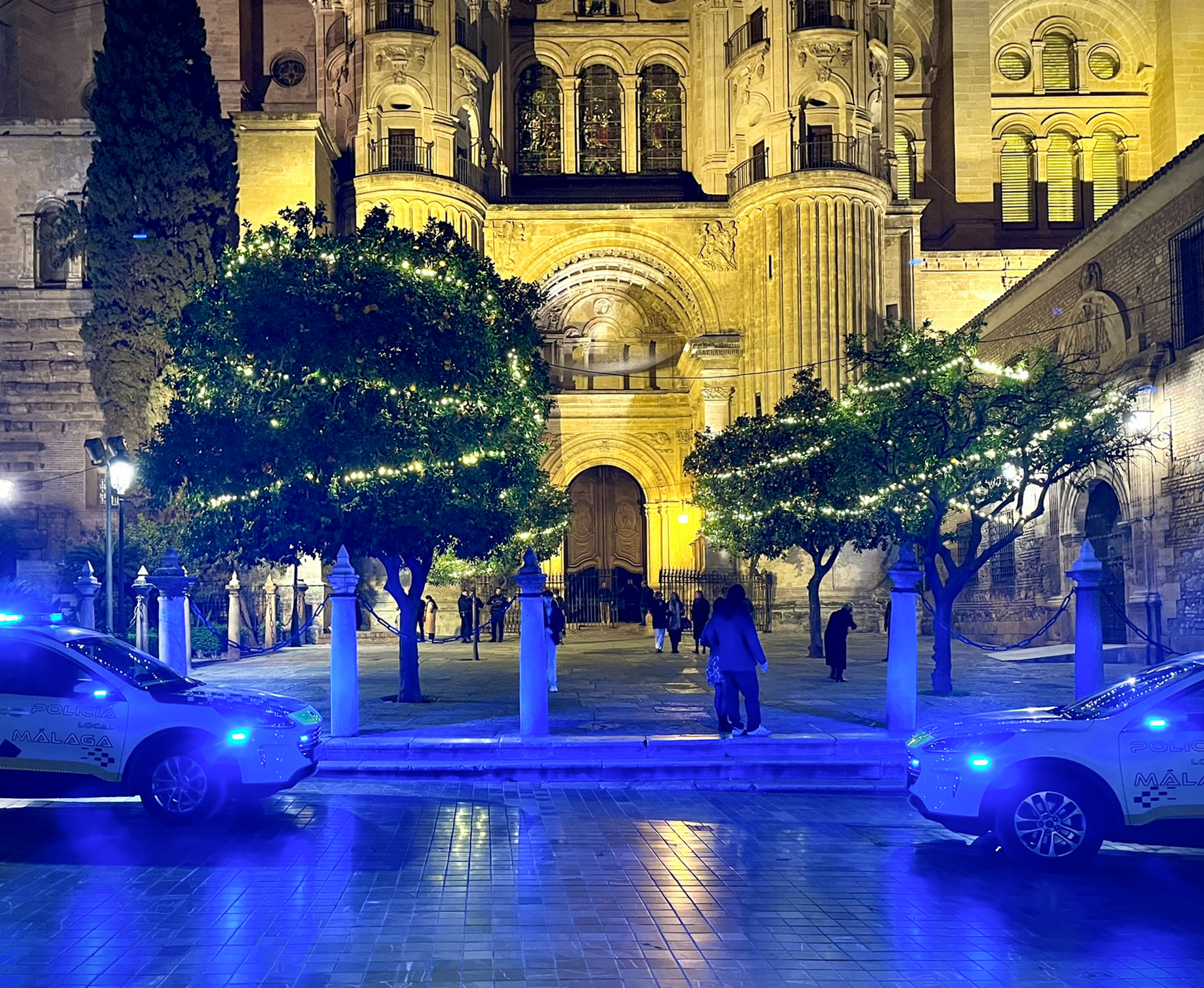
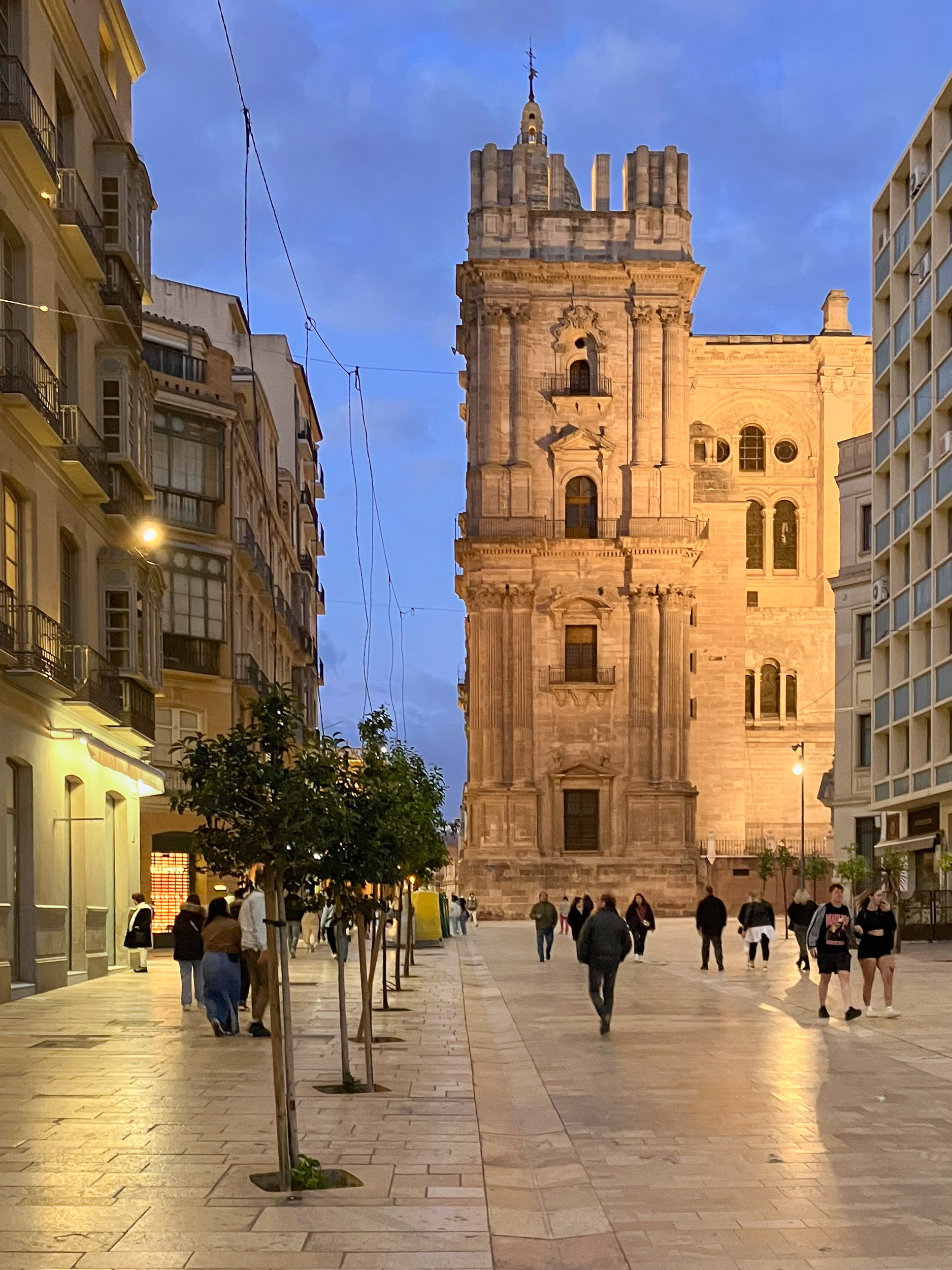
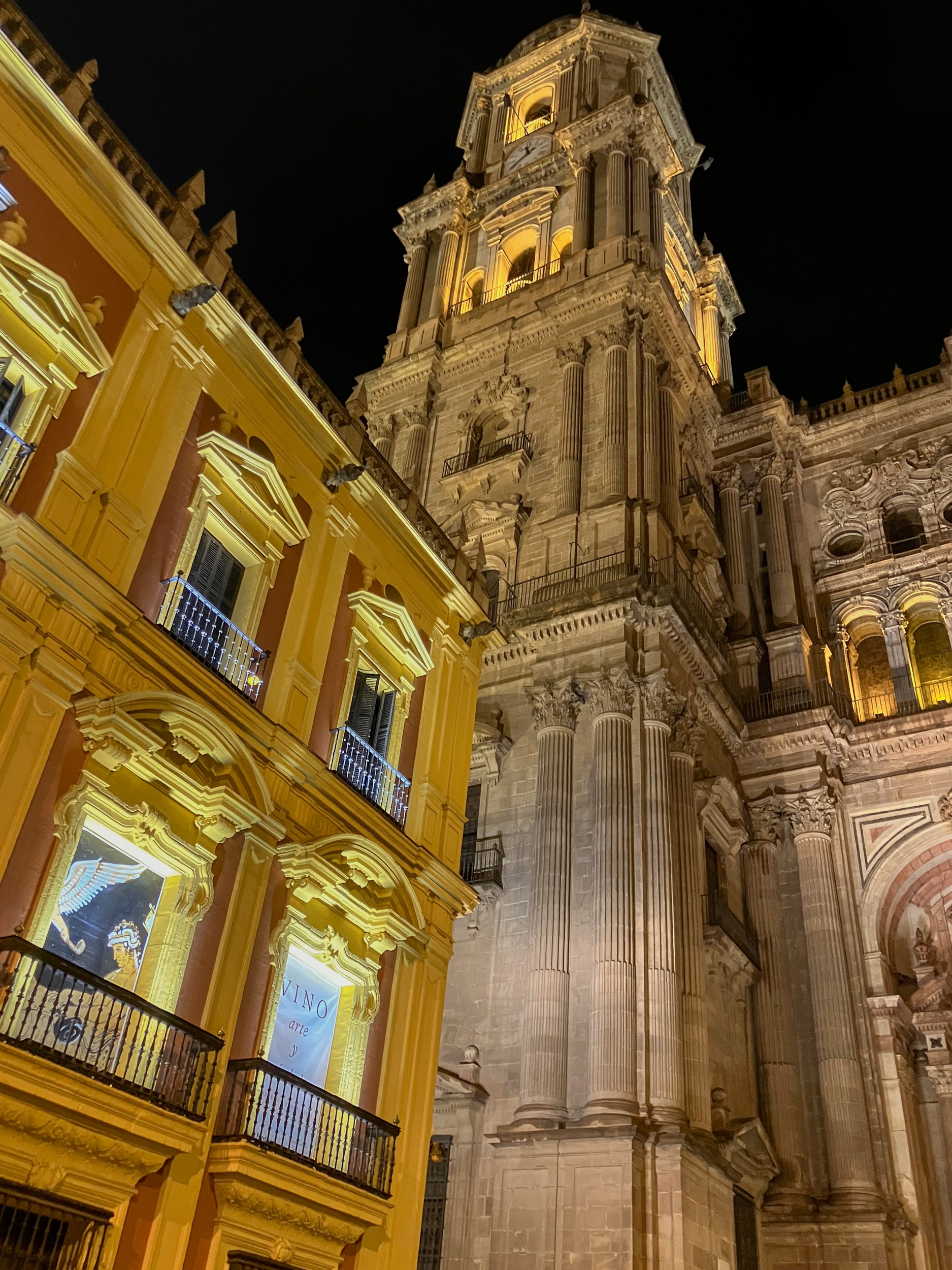
The Cathedral of Málaga, whose full name is Santa Iglesia Catedral Basílica de la Encarnación, is also nicknamed “La Manquita” (the one-armed woman). Due to a lack of funds, the southern tower was not built. Construction of the cathedral, in Renaissance style with Gothic features, began in 1528, and additions followed over the subsequent centuries until it was completed in 1783.
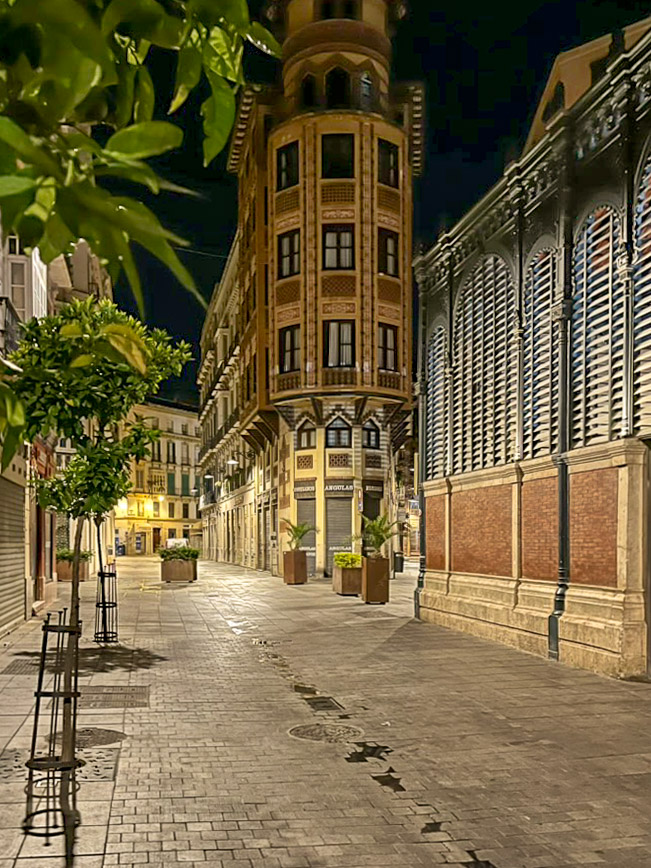
The cathedral on Christmas Eve during the Christmas service, with the blue lights of police cars in the foreground.Málaga Cathedral from Molina Lario Street, with its unfinished south tower (“the one-armed woman”) at the blue hour.The completed tower of Málaga Cathedral at night.Glass facade of Mercado Central de Atarazanas at night seen from Calle Olózaga.Mercado Central de Atarazanas at night seen from Calle Sagasta.
The Mercado de Atarazanas was built in the second half of the nineteenth century with an iron and glass structure. The rear facade with the signal window was built in 1973 by the Atanza brothers and contains 108 panels. The market hall contains all kinds of stalls with local delicacies such as fish, cheese, fruit, vegetables, and olives.
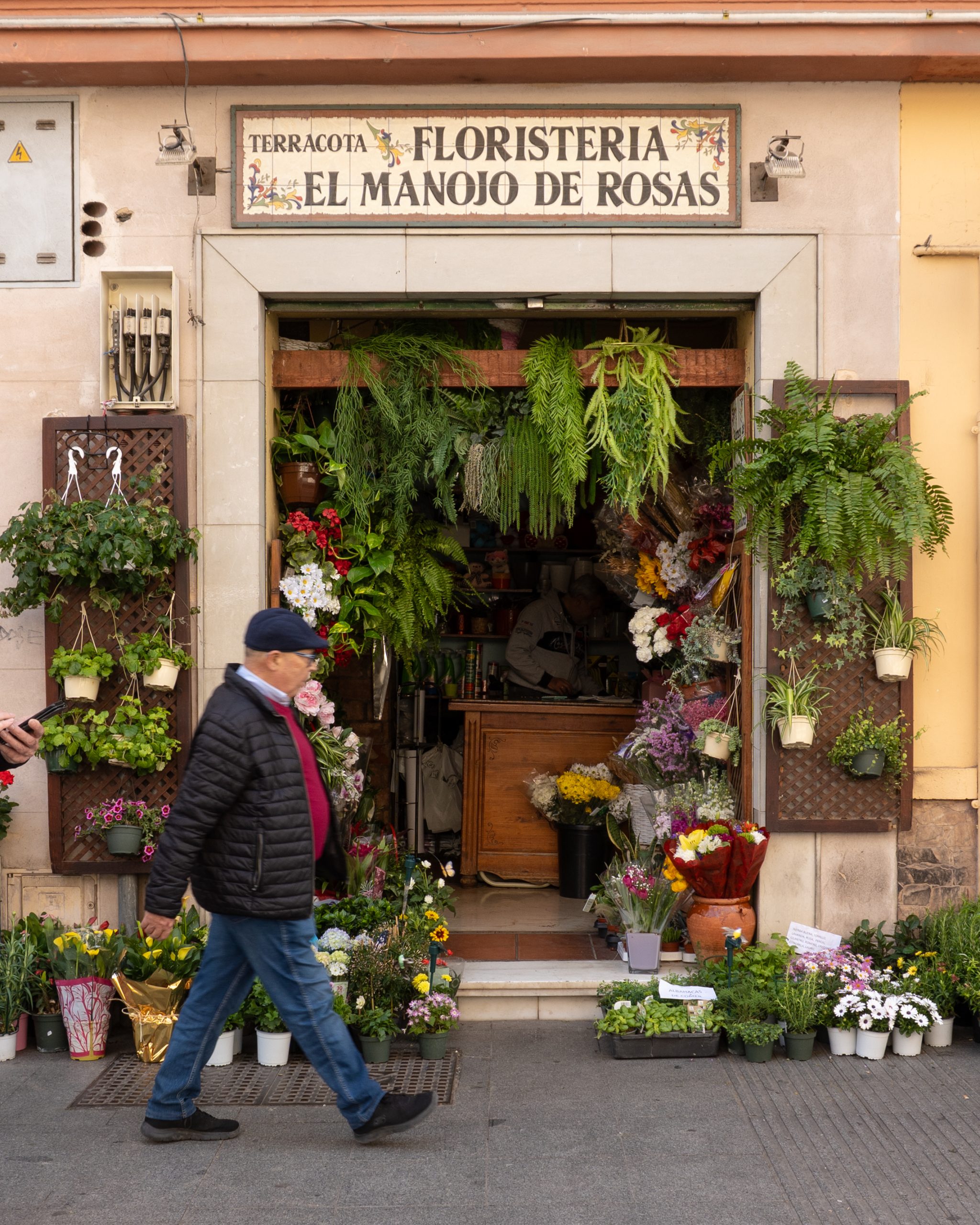
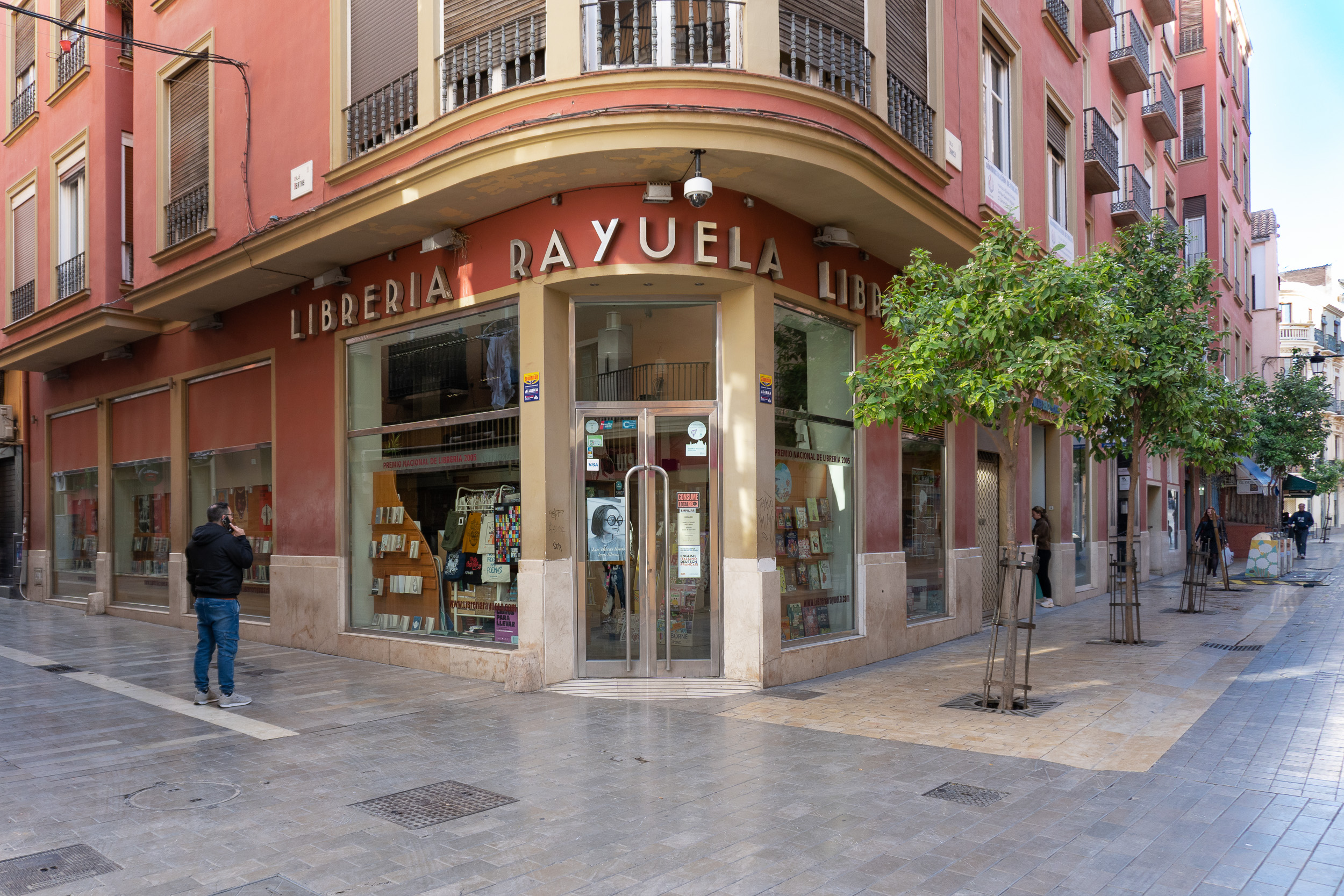
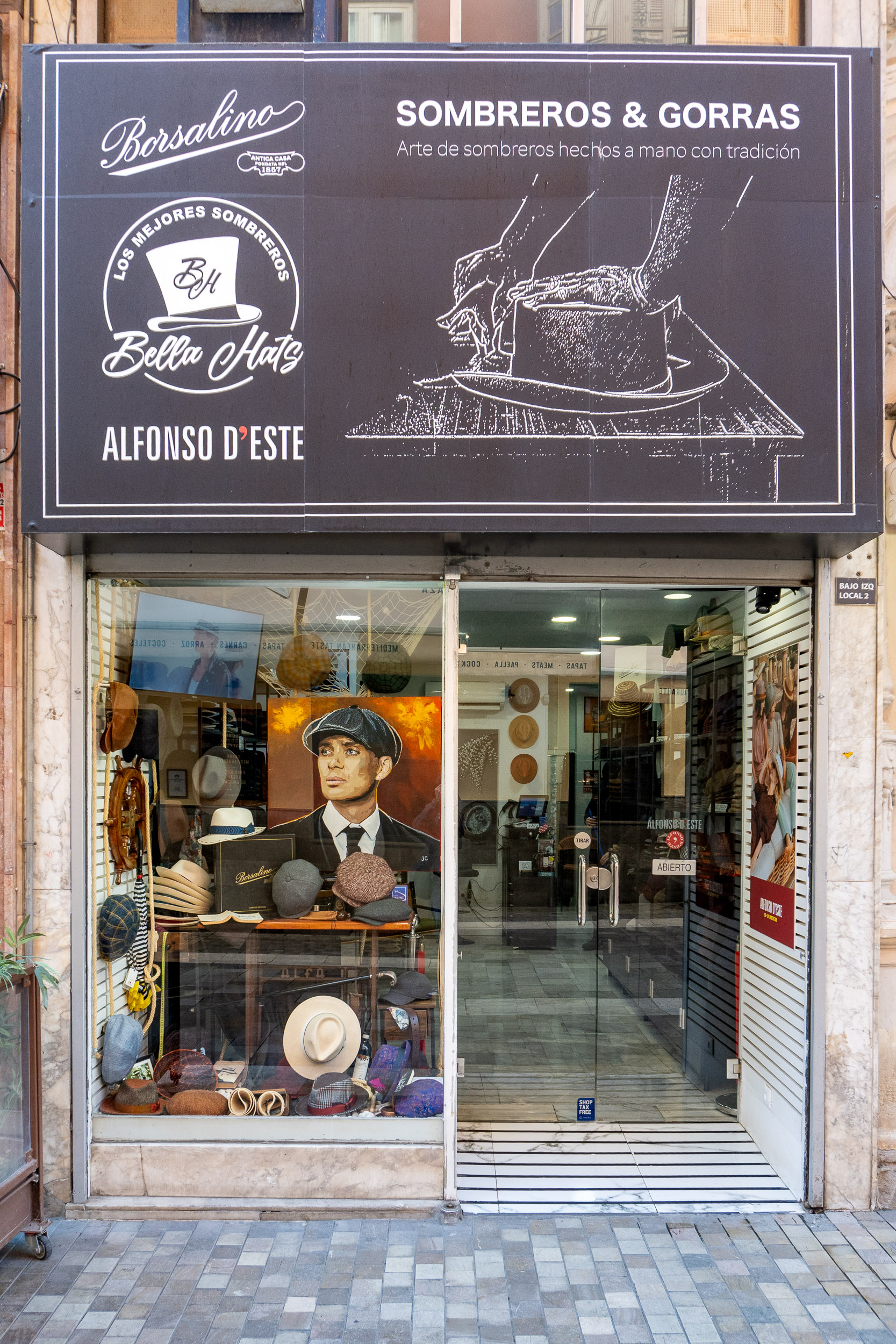
charming flower store “Floristería Terracota. El Manojo de Rosas” on Calle Atarazanas in the Centre District, in front of the Mercado central de Atarazanas.In Málaga’s historic center, you can still find many antique shops, such as “Antigüedades Los Remedios” on Calle Beatas.Málaga is also home to many excellent bookstores offering both new and second-hand books. One example is Librería Rayuela on Calle Cárcer, at the corner of Calle Beatas in the historic city center.Also typical of Málaga are traditional hat shops selling handmade hats, such as Bella Hats on Calle Calderería.Calle Granada, one of the oldest, busiest, and most pedestrian streets in the historic center of Málaga. Calle Granada viewed from a balcony.
Calle Granada is an atmospheric street, full of restaurants and terraces. It is approximately 500 meters long and runs from the Plaza de la Constitución to the Plaza de la Merced.
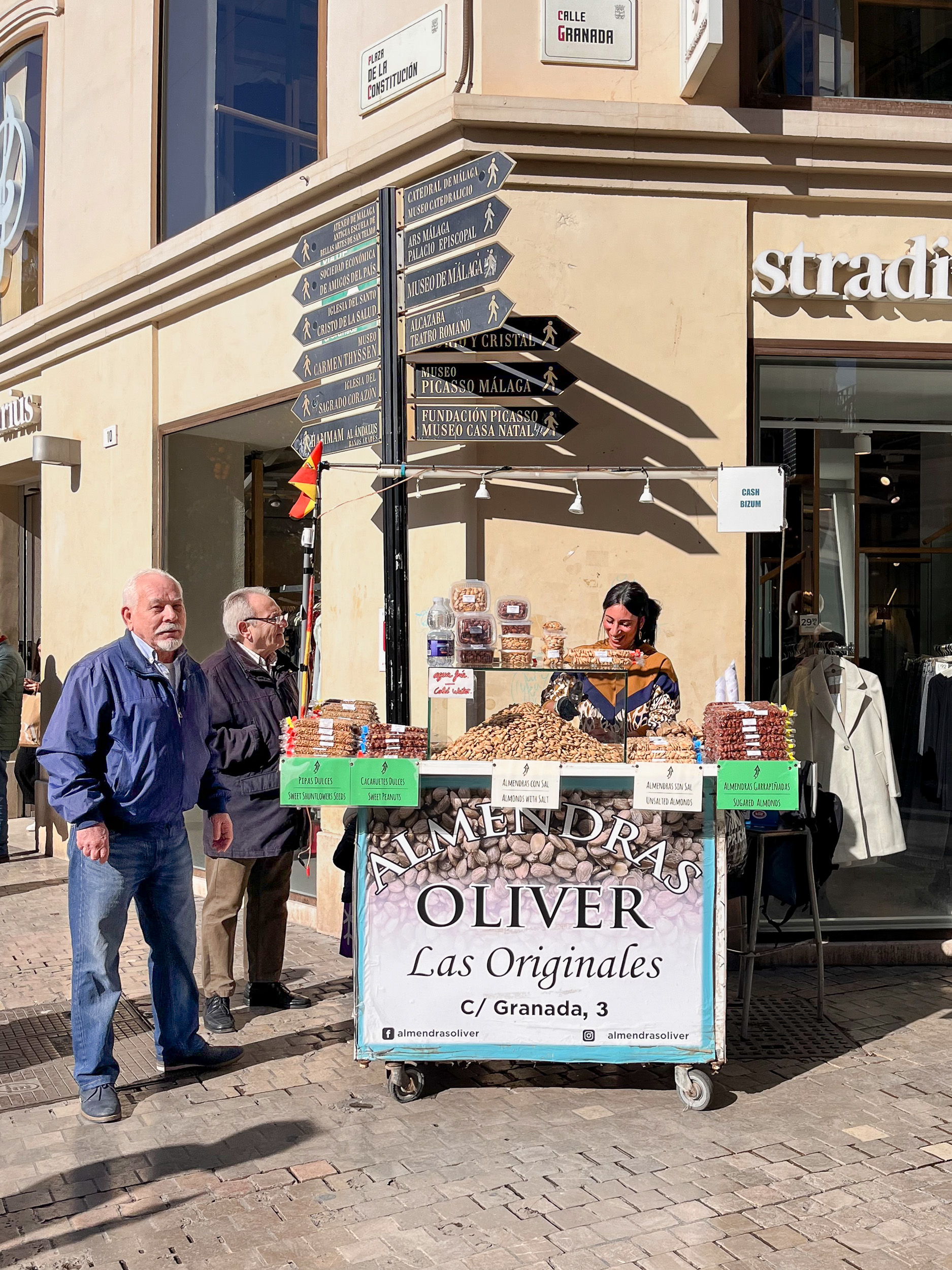
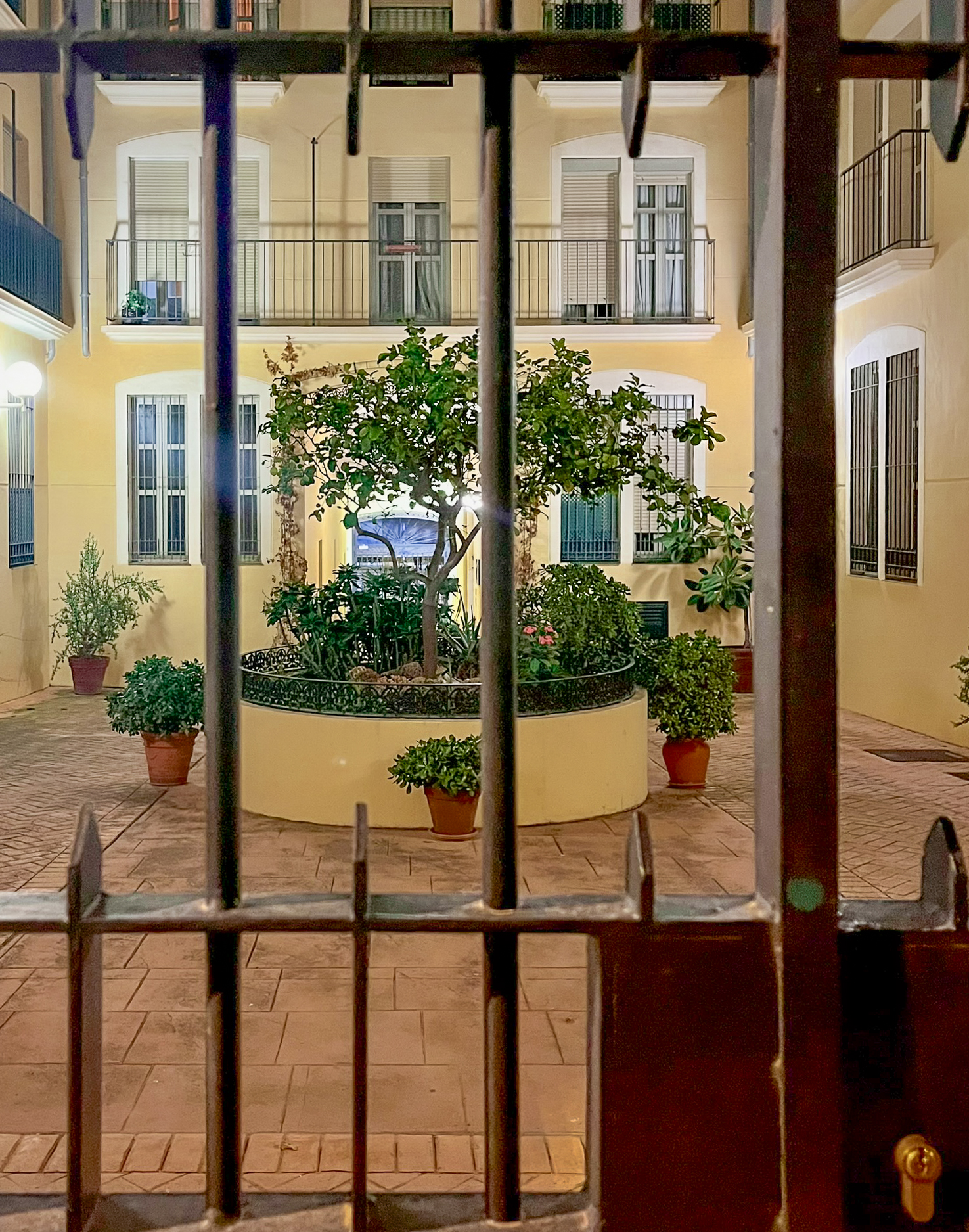
There are stalls selling almonds at various locations around the city. Almendras Oliver on the corner of Calle Granada and Plaza de la Constitución.Andalusian patio in Málaga at sunset.Andalusian patio in Málaga at night.
A patio is characteristic of residential homes in Southern Spain. It is designed to withstand the intense Mediterranean heat and serves as the private and social heart of the home. Roman and Moorish influences are combined to create shade, combined with natural beauty.
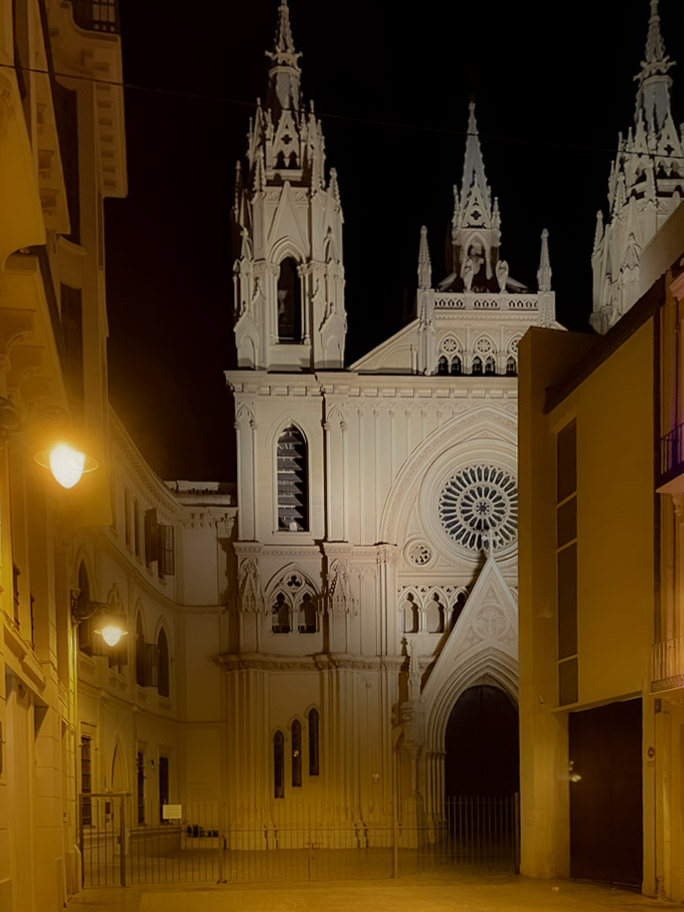
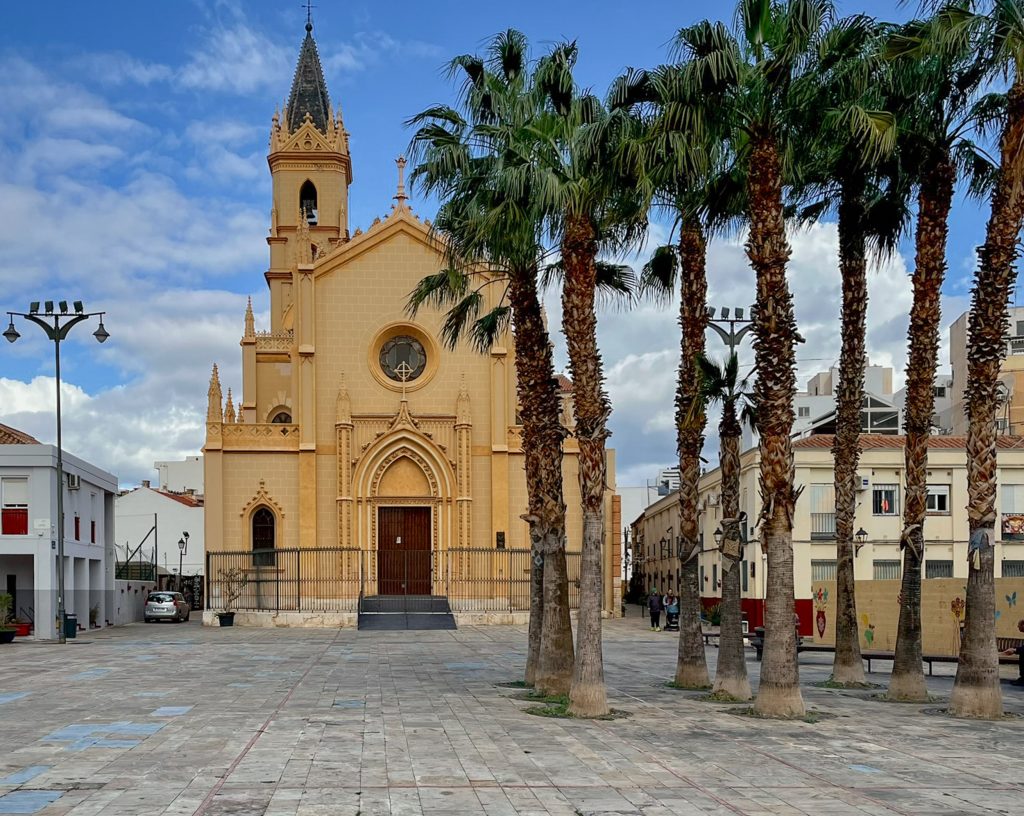
Iglesia Sagrado Corazón on the Plaza de San Ignacio in the old city center.Calle Beatas, an atmospheric street in the historic center of Málaga. The street is located just 50 meters from the Museo Picasso and is known for its traditional architecture, many restaurants, and the interactive music museum.In autumn and winter, roasted chestnut stalls appear in Málaga. In this photo, you can see a stall at the end of Calle Carretería, next to the Tribuna de los Pobres. The steps lead down to the Guadalmedina River.
Other neighbourhoods in Málaga: El Perchel and Cruz de Humilladero
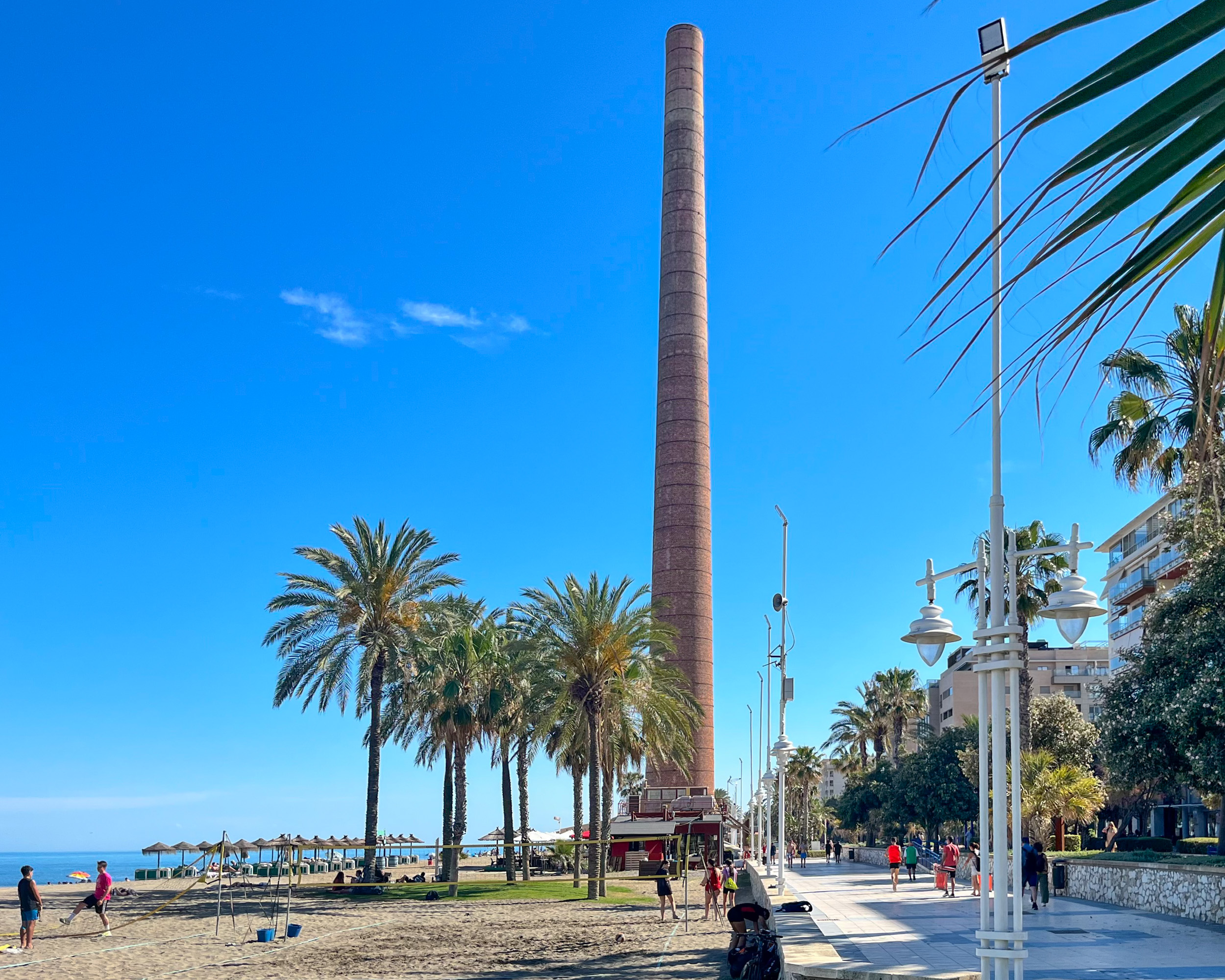
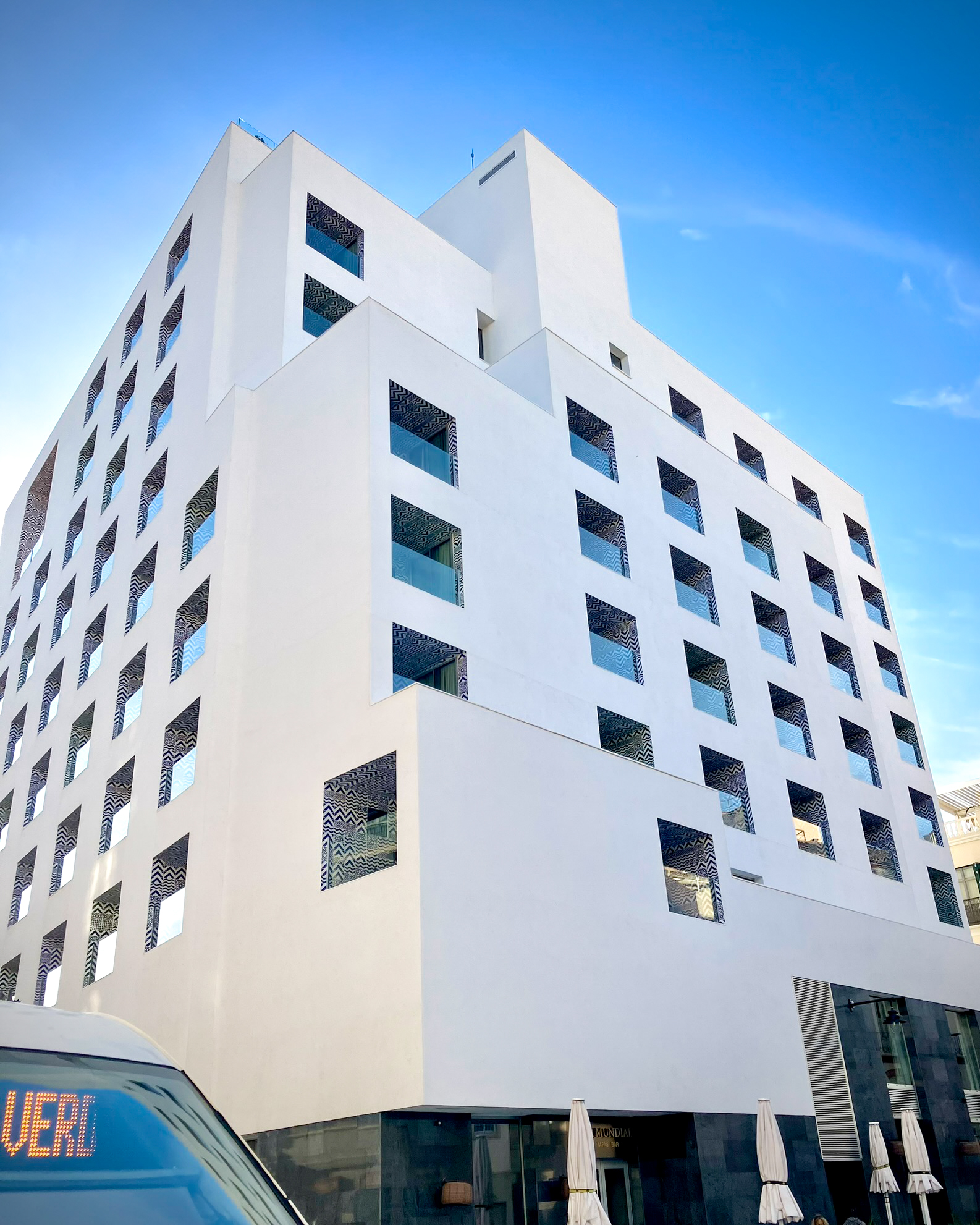
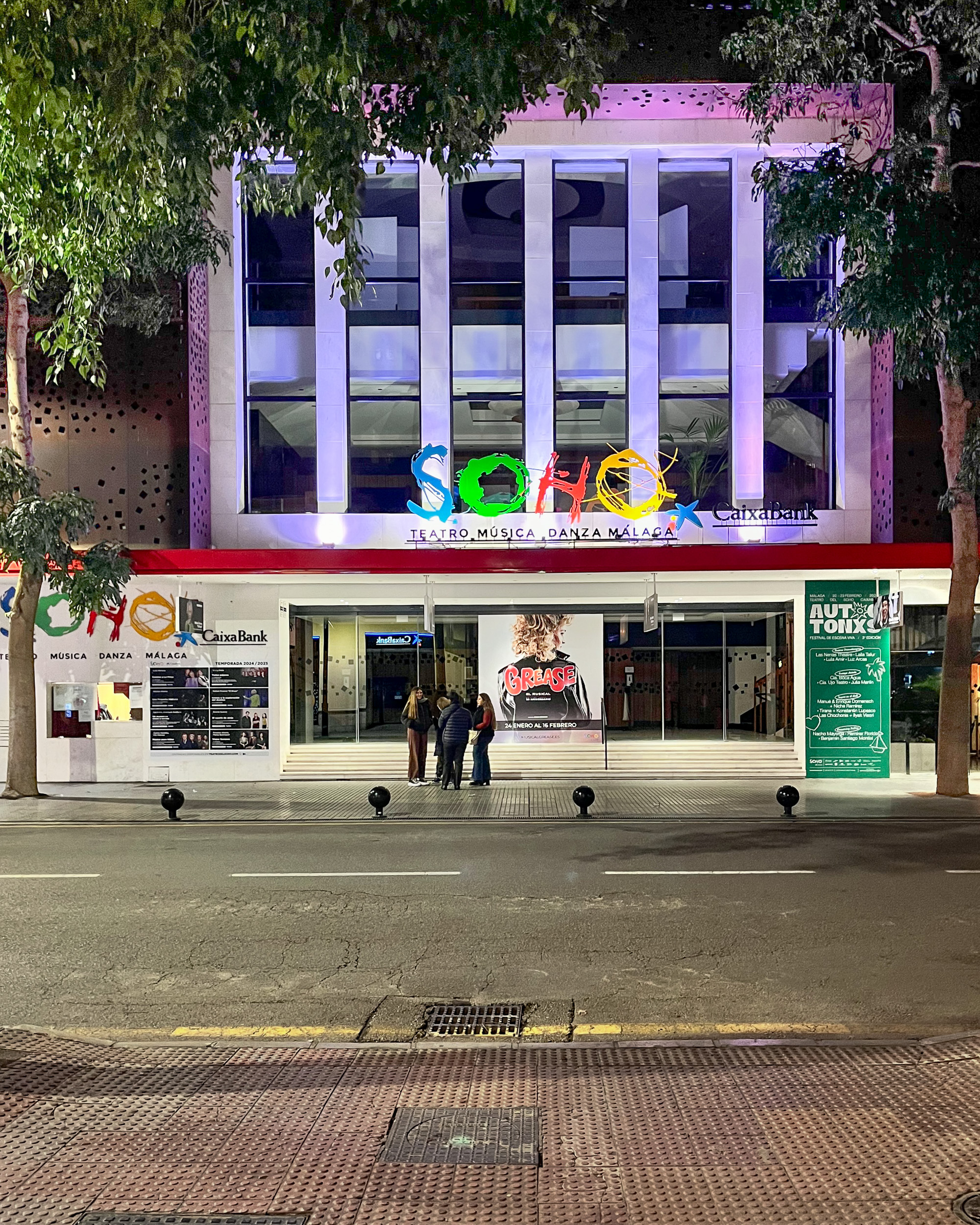
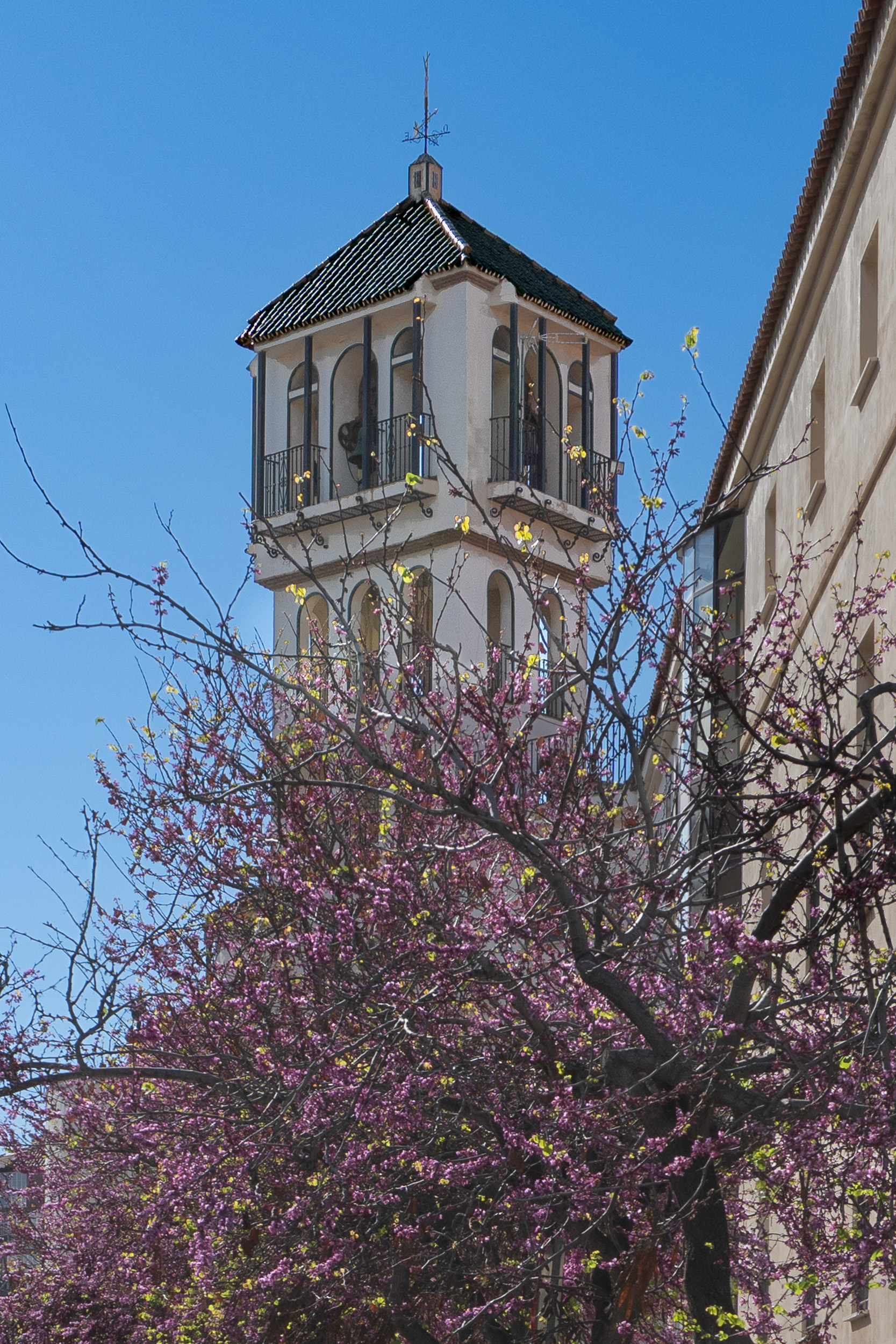
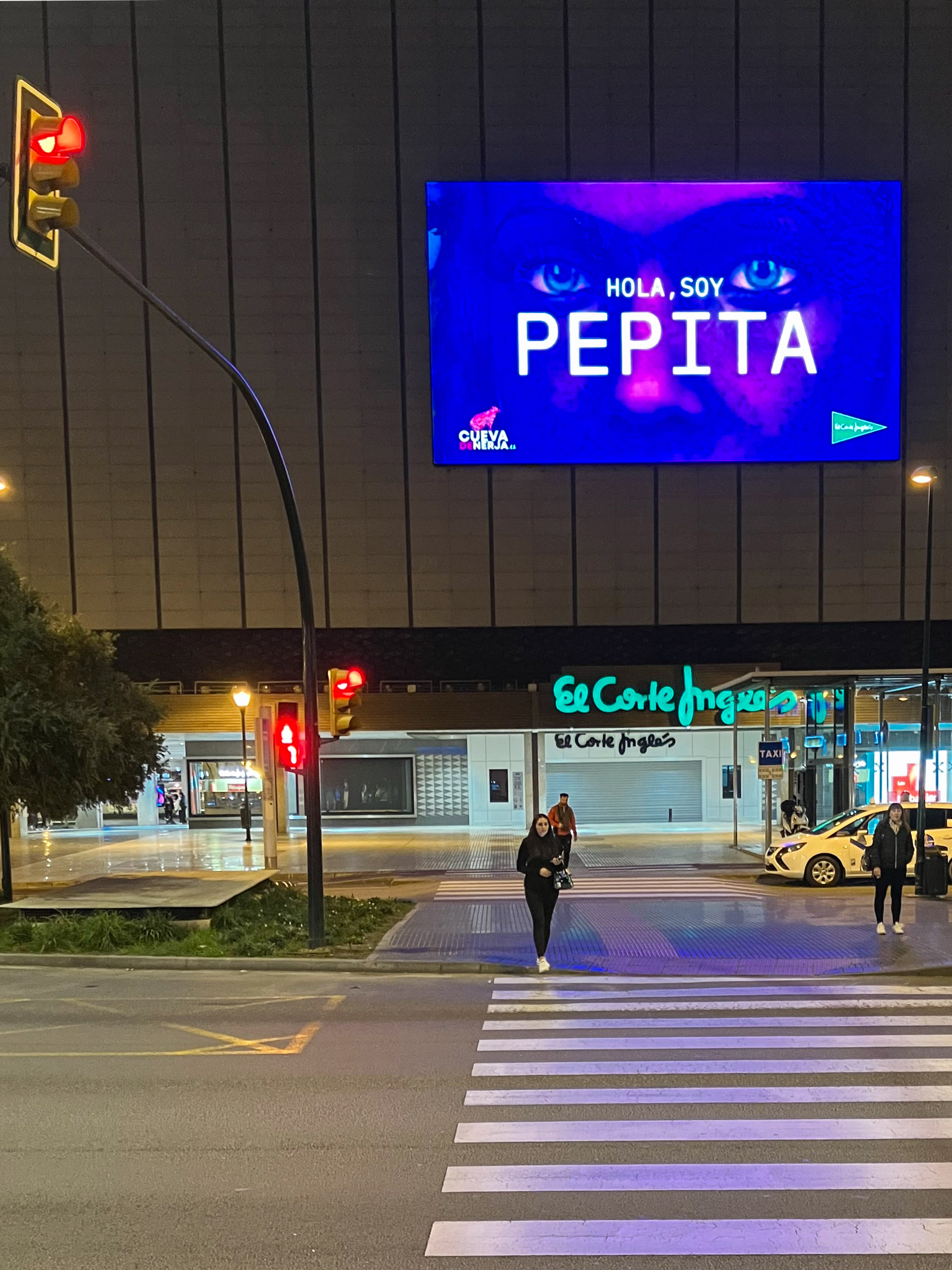
The Los Guindos chimney, also known as Torre Mónica, located next to San Andrés Beach in the Huelin district of Málaga. It was part of the Los Guindos industrial lead smelter.The 4-star H10 Croma hotel, located on Calle Prim and completed in 2022, next to the Guadalmedina River and near the historic center.H10 Croma Hotel on Calle Prim in District Málaga-Centro, next to the Guadalmedina river.The Pasillo de Santa Isabel on the right bank of the Guadalmedina River, located at the edge of the historic center. Across the Guadalmedina River, on the left bank, you will find the neighbourhoods of El Perchel and La Trinidad.Teatro del Soho CaixaBank at Calle Córdoba 13 in the Soho district. The theatre is a personal project of the well-known Spanish actor Antonio Banderas (born in Málaga).Detail of the Campus Tecnológico de Málaga building. It is located at Plaza de la Legión Española 1 in Málaga’s city center, in the El Perchel neighbourhood.Also in the El Perchel neighbourhood on Calle San Jacinto, stands the bell tower of the Basilica of La Esperanza. In the foreground, you can see beautiful purple-flowering Judas trees.Main building of the El Corte Inglés department store on Avenida de Andalucía in the centre district.Main building (Edificio 1) of the Corte Inglés department store on Avenida de Andalucía at night.
A little further down the road stands the second building on Calle Hilera, and there is also a Corte Inglés branch in the Teatinos university district.
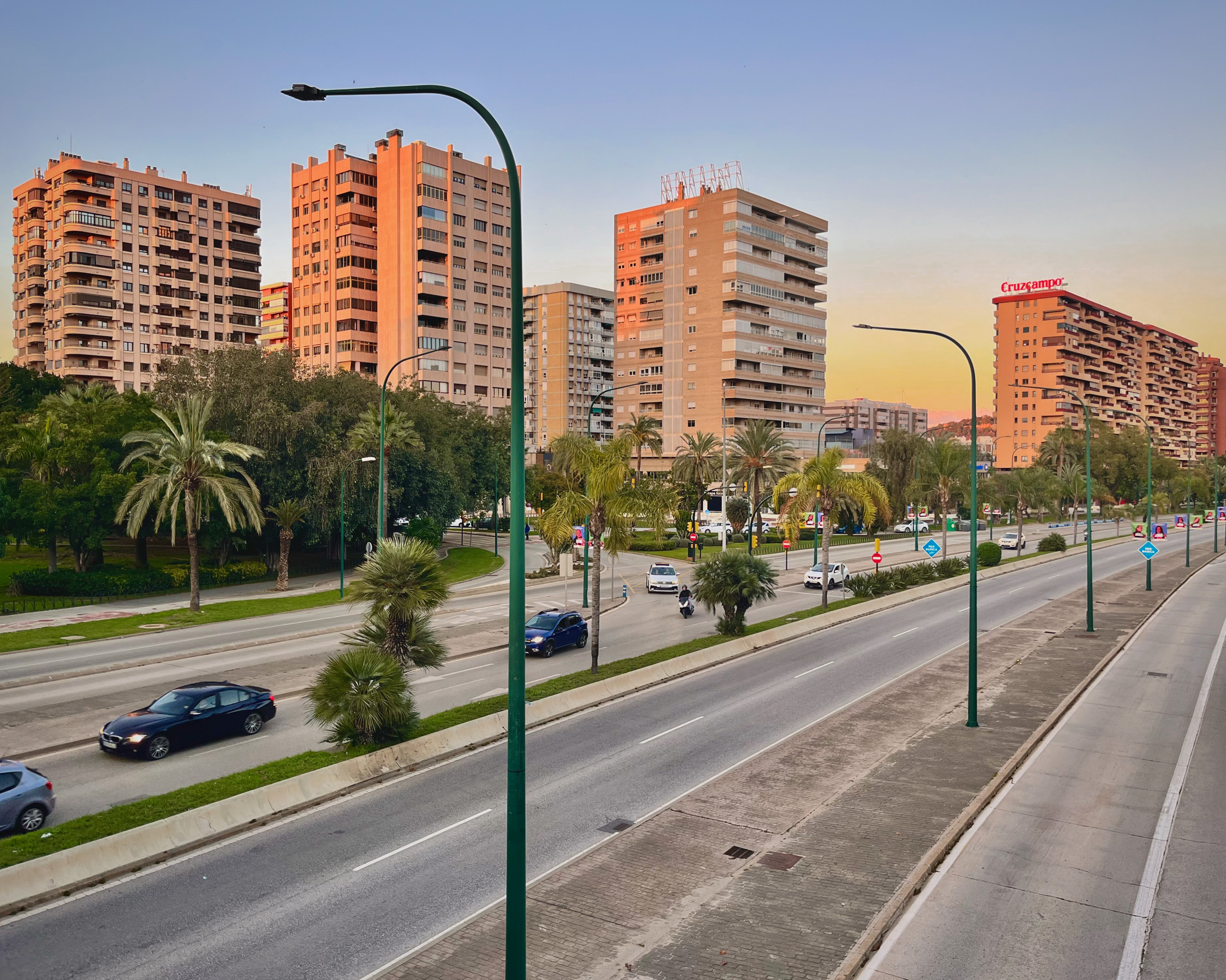
The Avenida de Andalucía in Málaga during the golden hour.The Avenida de Andalucía in Málaga at sunset.
The Avenida de Andalucía is a 1,900-meter-long avenue that runs through the western part of Málaga. It is also known as the “Alameda Extension.” It continues westward, entering the Cruz de Humilladero neighbourhood.
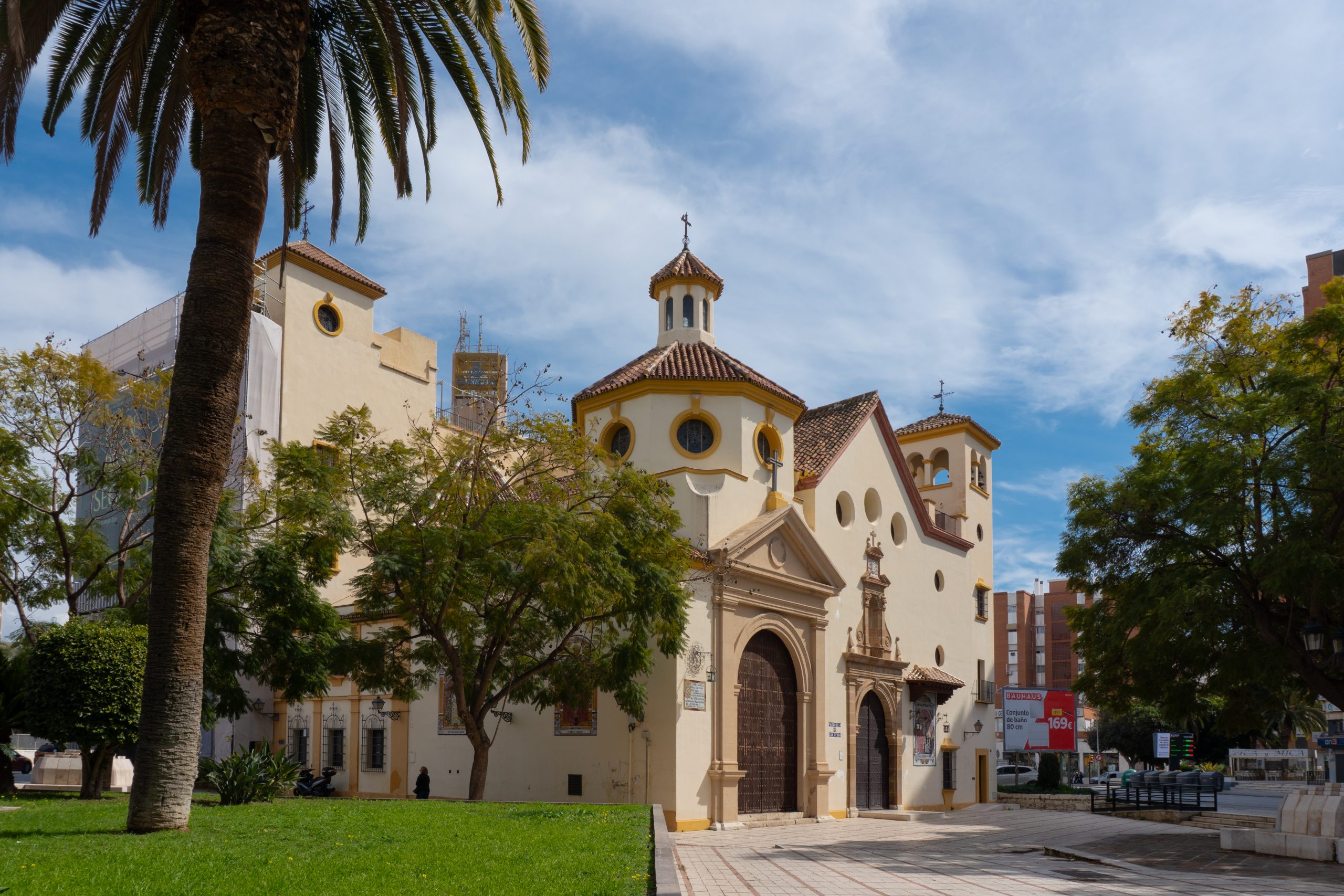
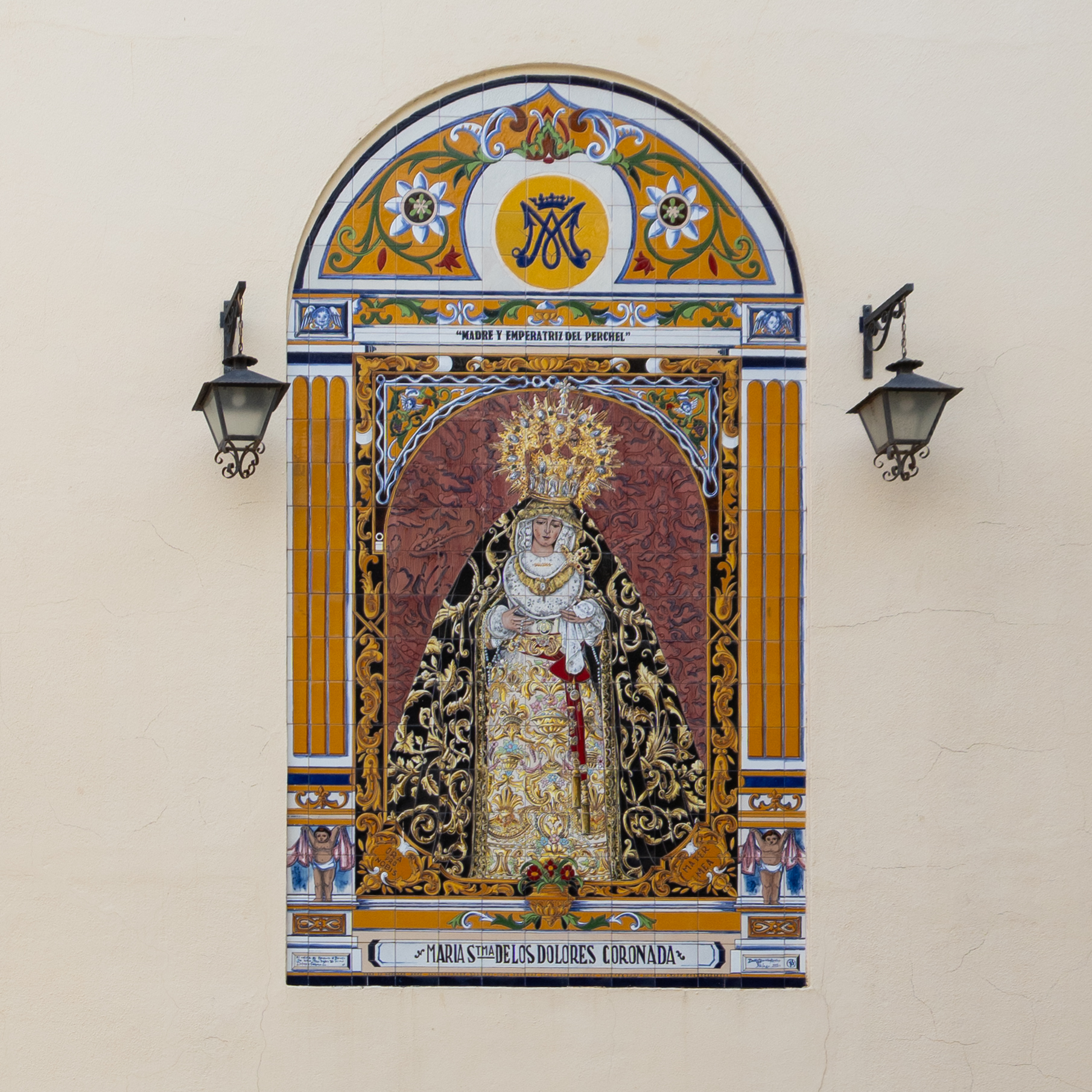
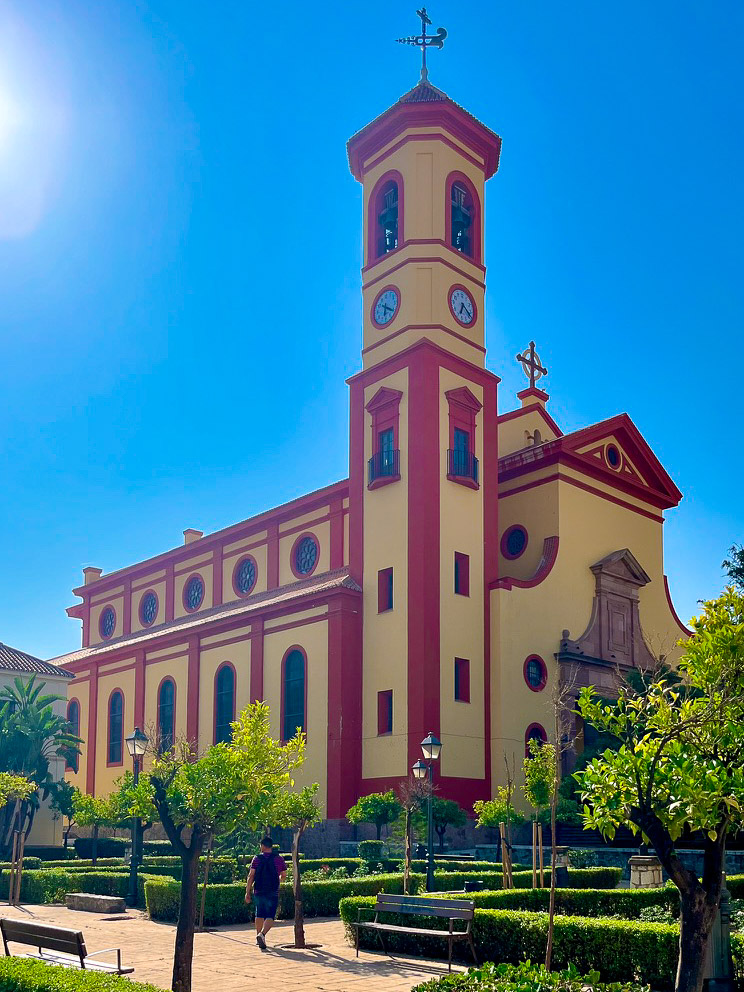
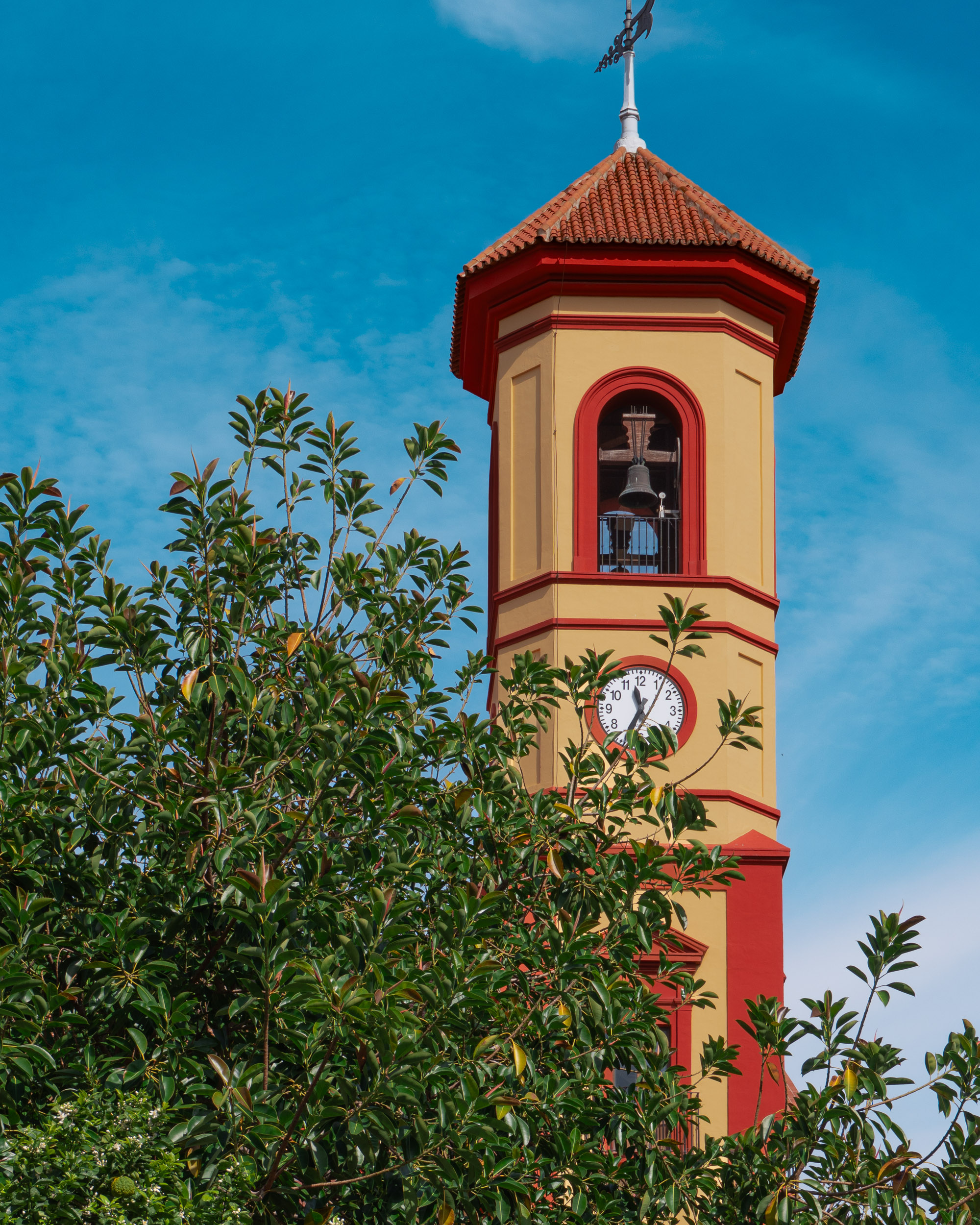
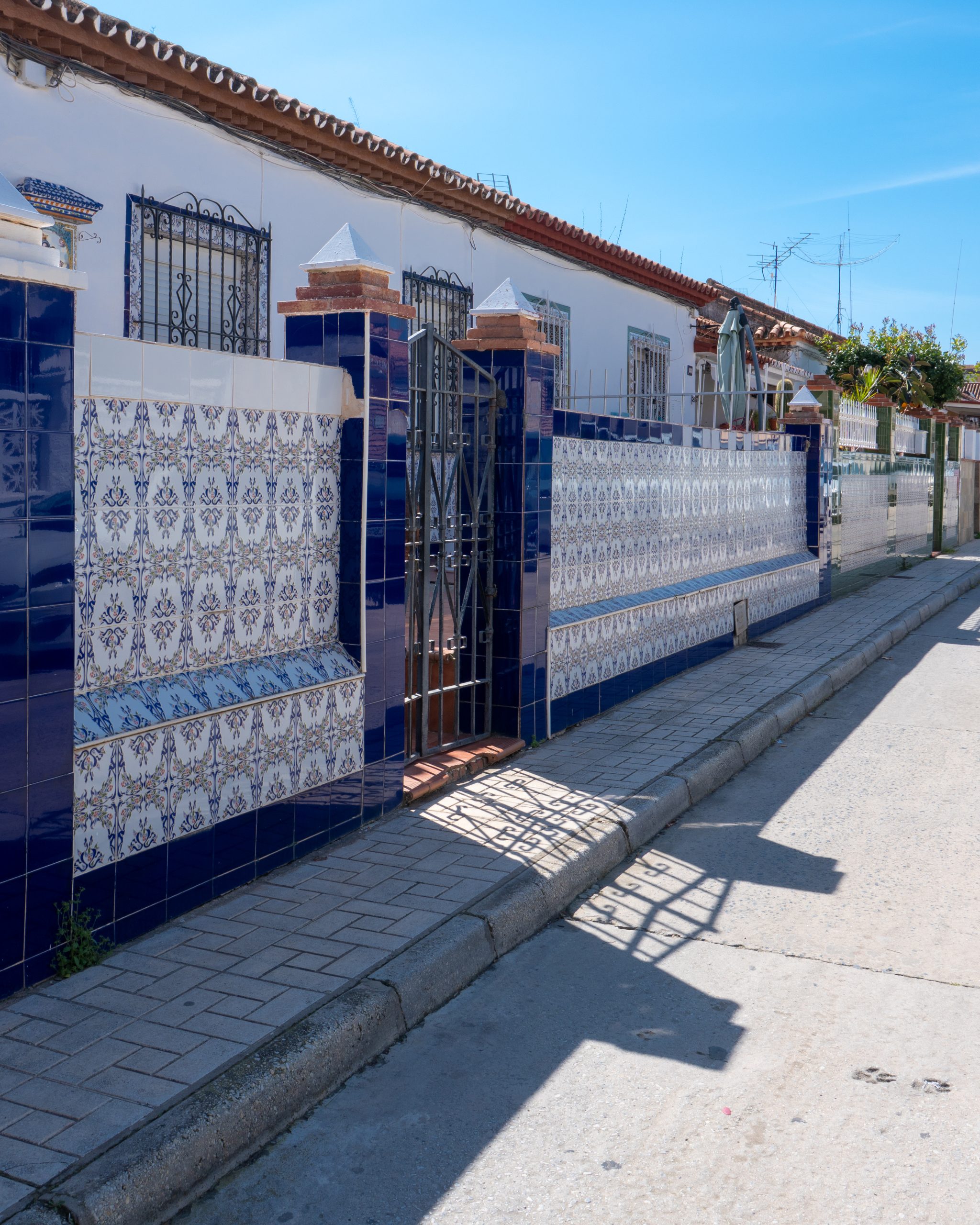
You can still see newsstands in various places in Málaga, like Kiosco Santa Gema, located on Plaza de los Tilos in the Cruz de Humilladero district.San Pedro Apóstol Church on Avenida de la Aurora in Málaga’s Cruz de Humilladero district.Wall mosaic of glazed ceramic tiles depicting the Virgin Mary, on the San Pedro Apóstol Church on Avenida de la Aurora.San José Obrero church on Calle Virgen de las Nieves in Málaga’s Cruz de Humilladero district.The yellow and red colors of the San José Obrero Church on Calle Virgen de las Nieves make it a real eye-catcher.Andalusian houses on Calle Virgen De La Estrella in Cruz de Humilladero.Andalusian tiled house on Calle Virgen De La Paloma in Cruz de Humilladero.
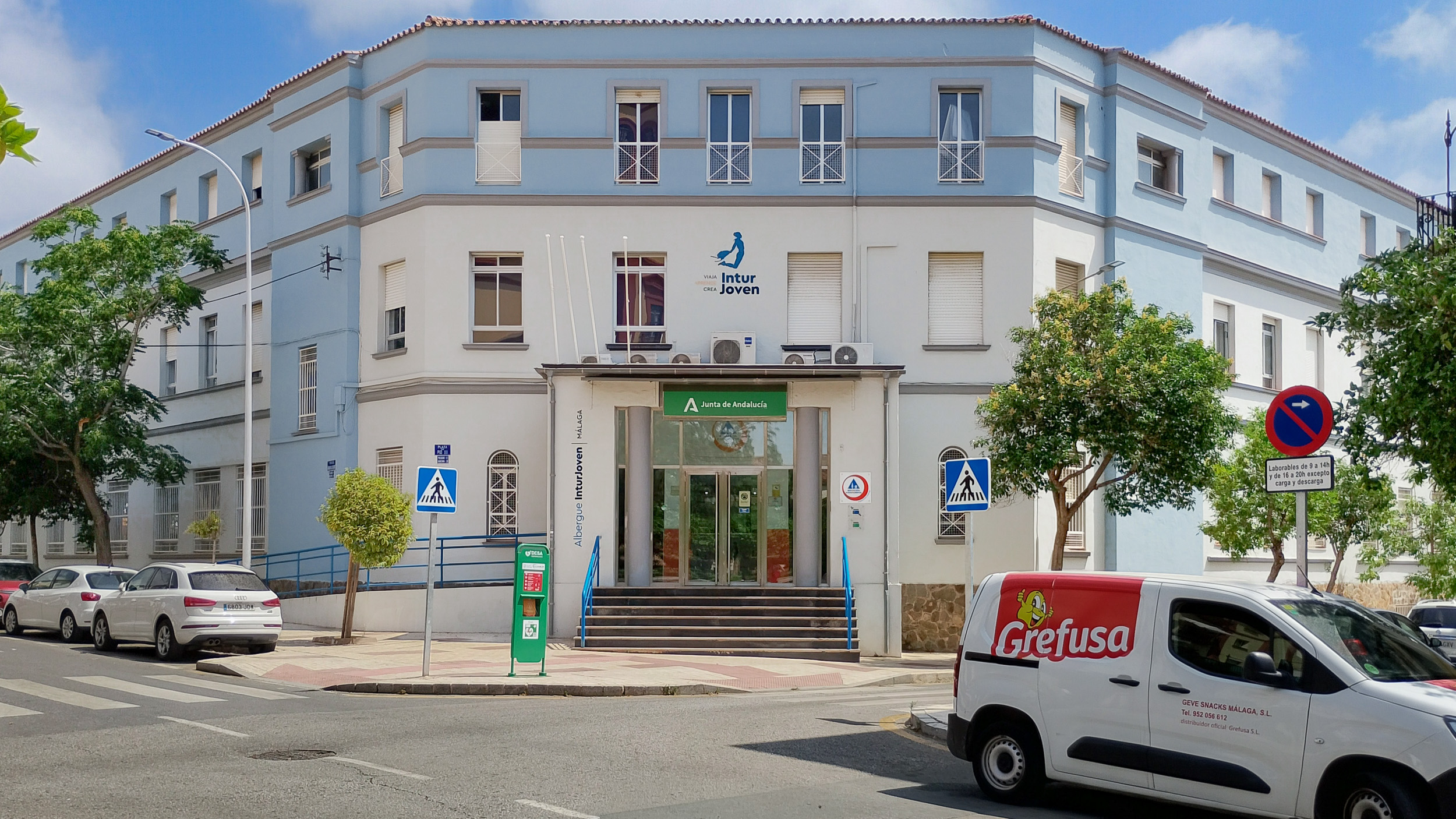
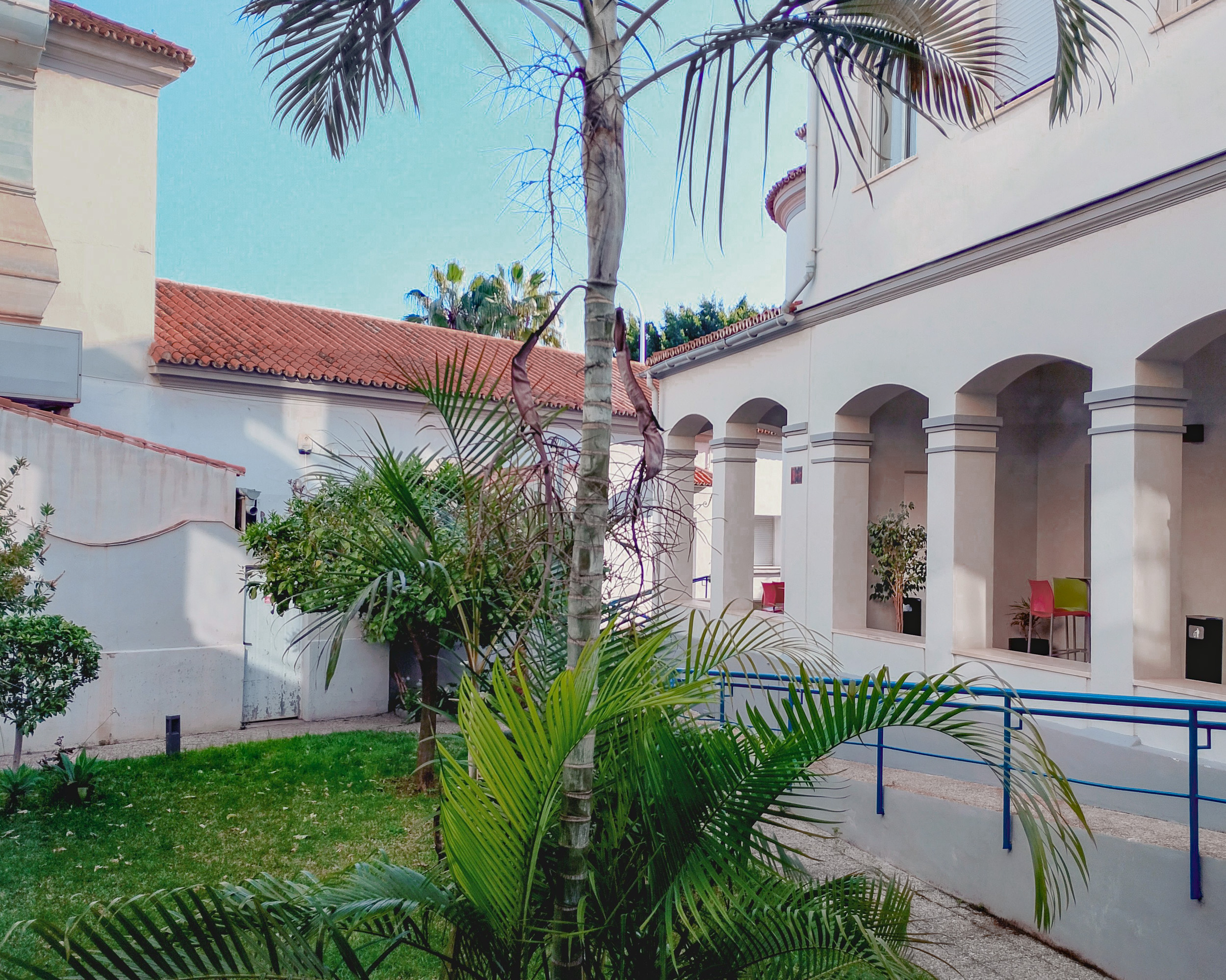
Below you see the Albergue Inturjoven, at Plaza Pío XII in the Cruz de Humilladero district. The building was originally constructed in the 1950s as a dedicated boarding school and residence for young students. Today, it continues this long tradition of youth hospitality by operating as a welcoming hostel located on Plaza Pío XII. It is the perfect home base for students, backpackers, and group travelers looking to experience authentic Andalusian culture.
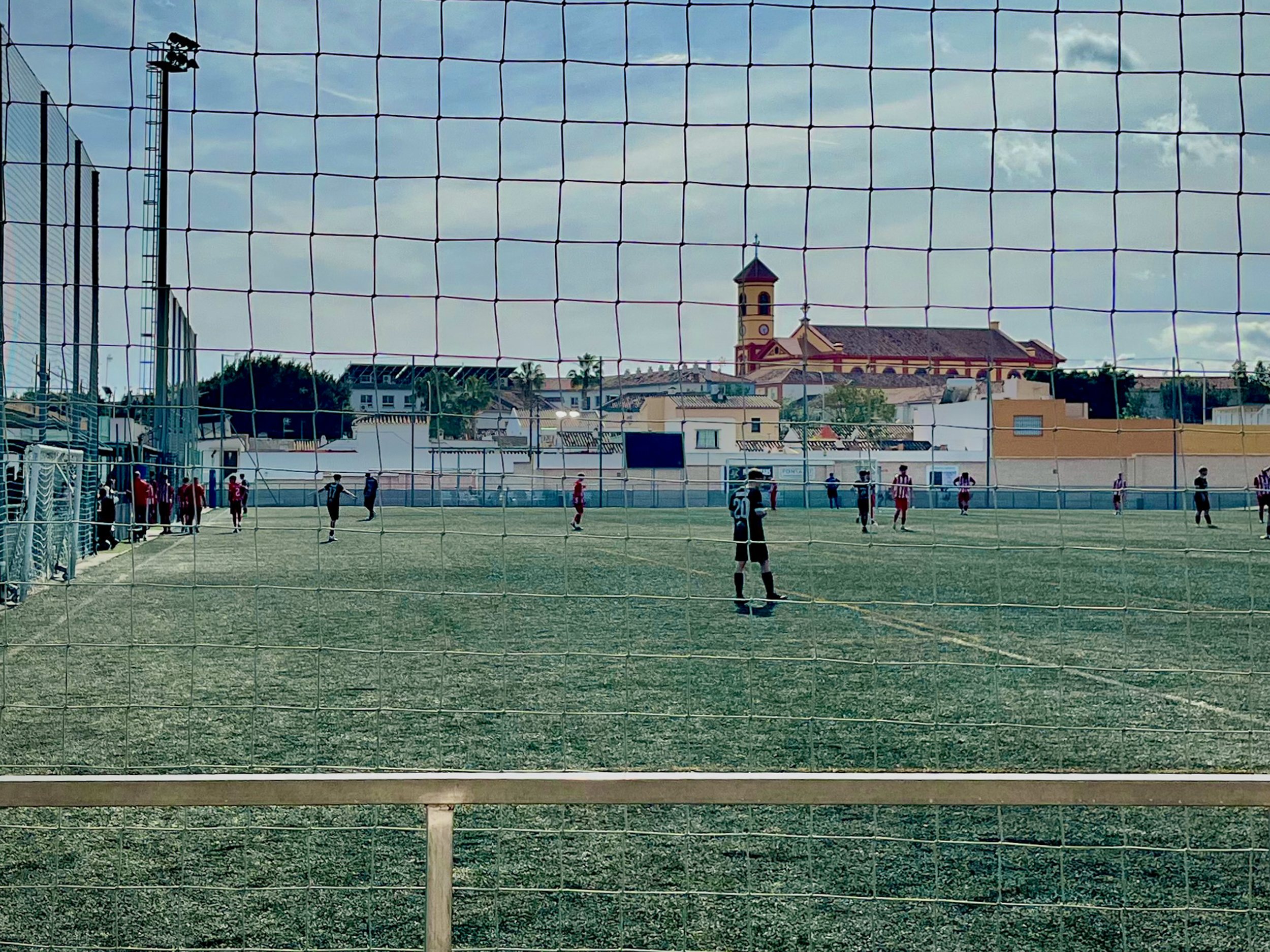
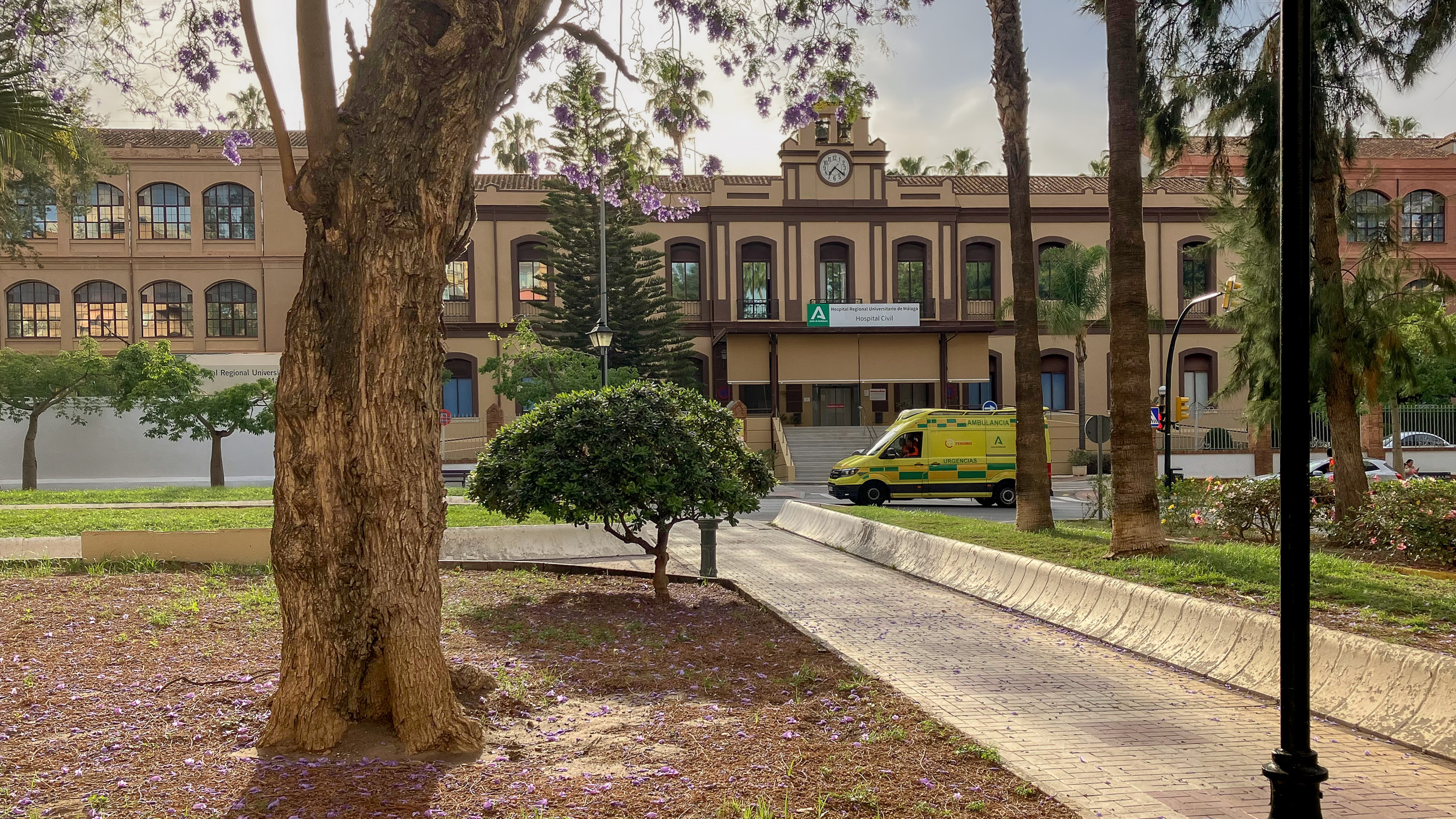
Entrance of Albergue Inturjoven on Pl. Pío XII 6 in the Cruz de Humilladero district.The Inturjoven hostel features a charming interior garden courtyard where you can relax or enjoy some shade.Soccer is also an important sport in Málaga. The image shows a training ground for the municipal team Malaka, located on Calle Virgen de las Flores in the Cruz de Humilladero district.Málaga CF’s La Rosaleda football stadium is shown on Paseo de los Martiricos, within the Palma-Palmilla district.Hospital Civil on Avenida del Arroyo de los Ángeles on the border of the Centre district and the Bailen-Miraflores district.The center of District 10, Puerto de la Torre, in northwest Málaga, which retains the character of an Andalusian village.Málaga María Zambrano is the city’s main train station. It connects the city to the rest of the country via, among other things, high-speed trains (AVE).