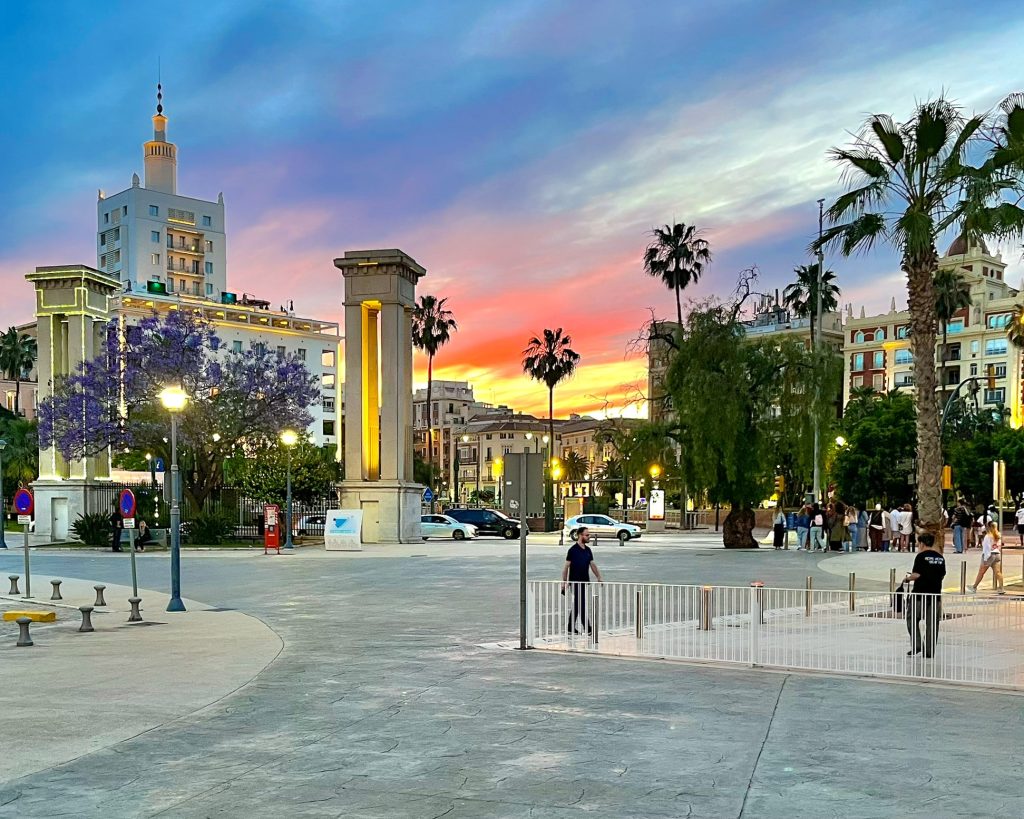
Almería Photography: Fortress City of Andalusia
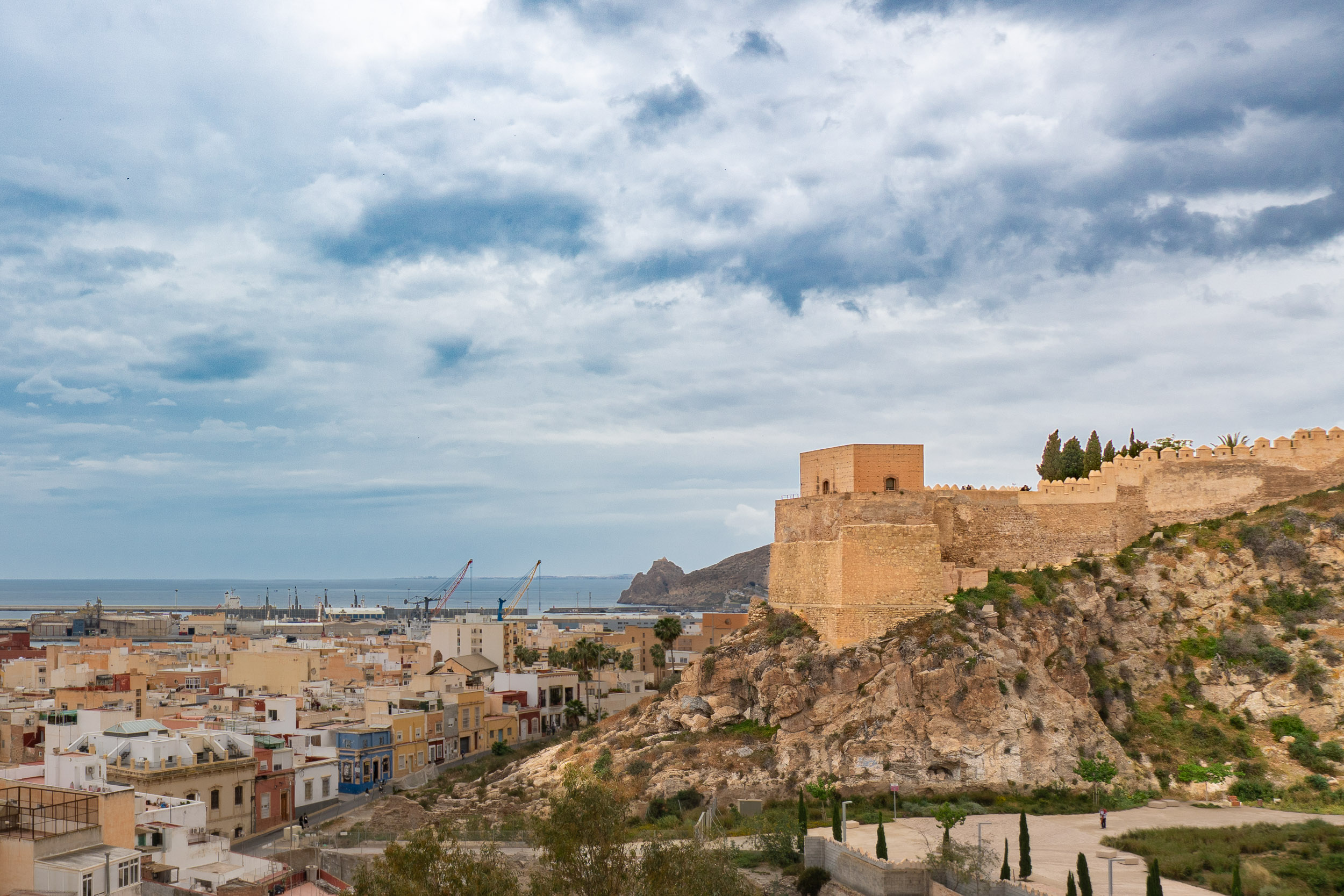
Photos of Almería, a city shaped by the Alcazaba fortress, the sea and the port. The Moors called the city “Al Mariyah” — mirror of the sea. The name still fits Almería, with its many hours of sunshine and a cool sea breeze.
The sea and beaches of Almería feature less prominently on this page. However, I have created a separate gallery featuring other Andalusian beaches, in the province of Málaga.
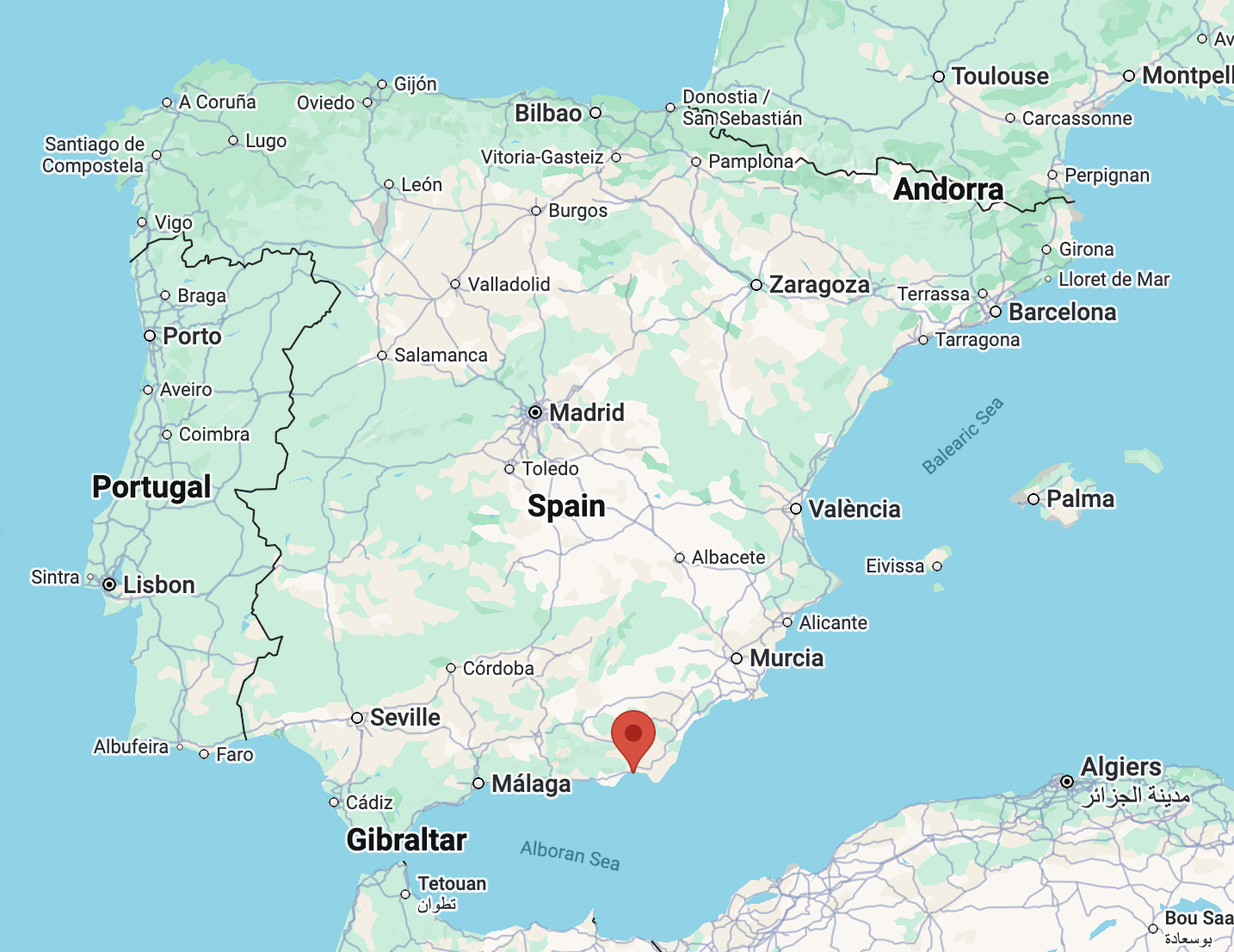
Where is Almería in Spain?
Almería lies in the east of Andalusia, in the southeast of Spain, in the province of the same name. The city is located on the Almería Coast, which stretches for 219 kilometers and is an area known for its deserted beaches and rugged cliffs. Low annual rainfall gives the landscape around Almería a desert-like character. Just over 200,000 people live in the city. Almería has a quieter atmosphere than many larger Andalusian cities.
Almería combines historic fortifications, Mediterranean views and wide urban spaces. The calmer atmosphere gives the city a different rhythm from larger Andalusian cities. Cruise ships and ferries arrive in the port of Almería. Ferries connect southern Spain with Morocco and Algeria. These routes keep Almería connected with North Africa.
On this page you can explore street photography of the city’s landmarks, urban scenery and cityscape views. You will also find historical monuments, castle walls and views of the port of Almería in the Mediterranean light.
In this gallery:
The Alcazaba and the Jayrán Wall · The Port of Almería and the Cable Inglés · Almería City Centre: La Rambla and Historic Architecture · Puerta de Purchena and Casa de las Mariposas
The Alcazaba of Almería and the Jayrán Wall
The Alcazaba of Almería is the second-largest example of Moorish architecture in southern Spain, surpassed in size only by the Alhambra in Granada. Photos of the Alcazaba of Almería and the Jayrán Wall show the Arab fortress above the city and the views towards the coast.
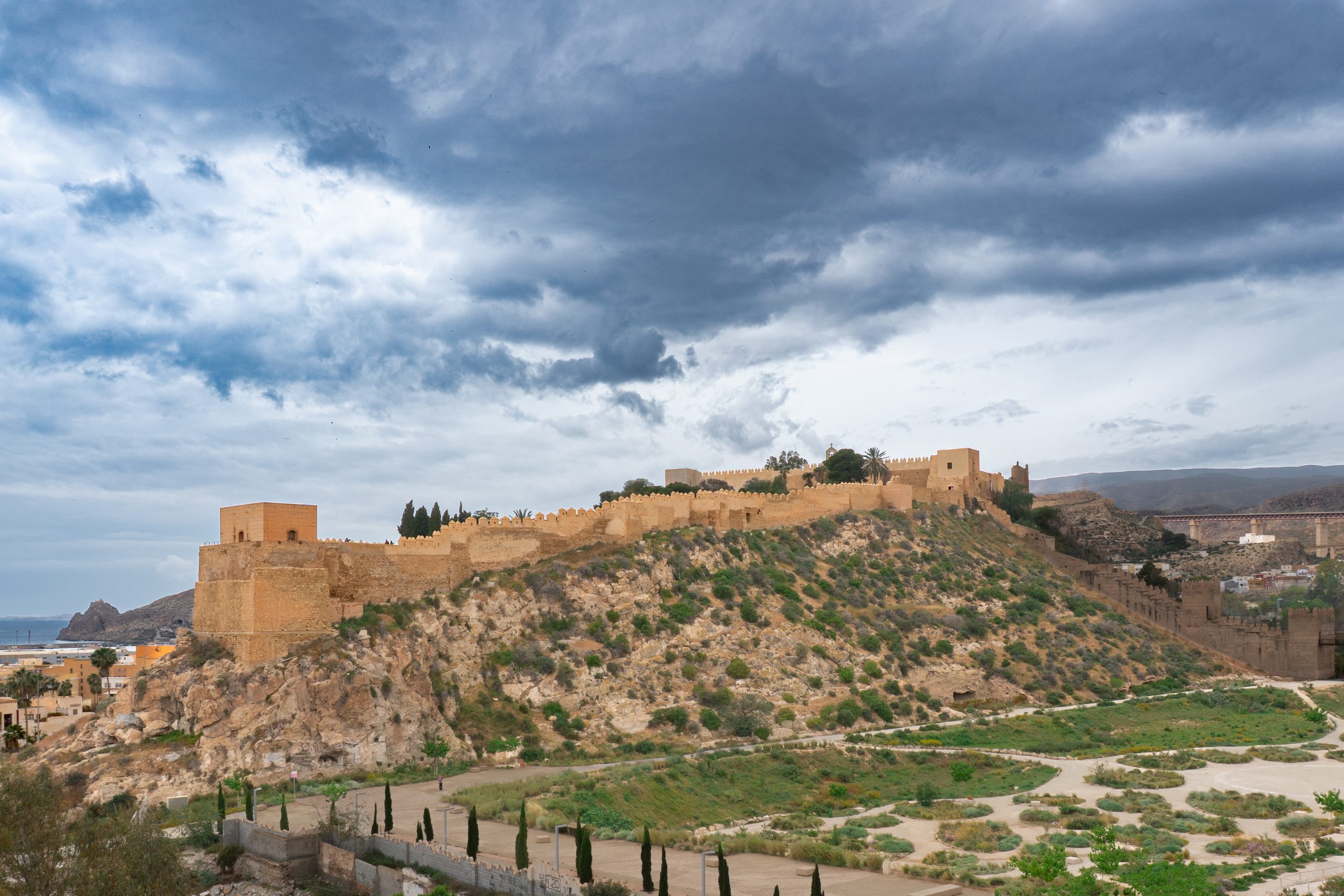
The Alcazaba of Almería is a Moorish fortress complex from the tenth century, to which parts were added in later centuries. It is a fortress of 35,000 square meters that could provide protection for 20,000 people. In addition to being a tourist attraction, it is also a place where concerts and cultural events regularly take place. The Alcazaba of Almería is the second largest Moorish structure in Spain.
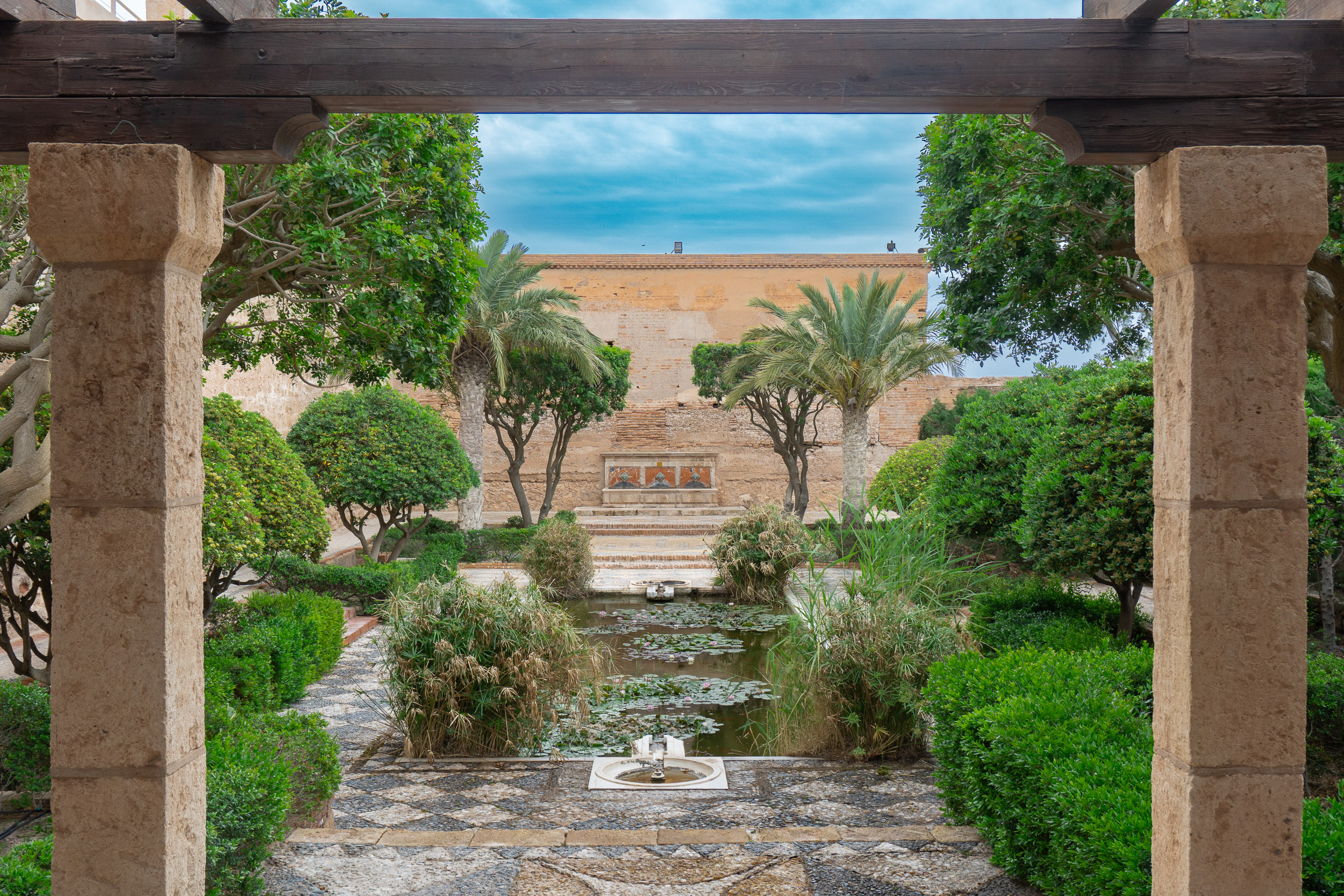
The gardens of the Alcazaba form an oasis of tranquility within Spain’s largest Arab citadel. They are located in the first walled section (the first enclave) of the fortress. The gardens were redesigned in the late 20th century by the restoration architect of the Alhambra in Granada, inspired by the famous Generalife gardens.
This green space contains water channels, ponds, and fountains, which are typical of Moorish garden architecture to create coolness. There is a varied flora of palms and cypresses, fig trees, azaleas, and fragrant beds full of rosemary and lavender. In spring, the iconic Judas tree blooms here with bright pink flowers.
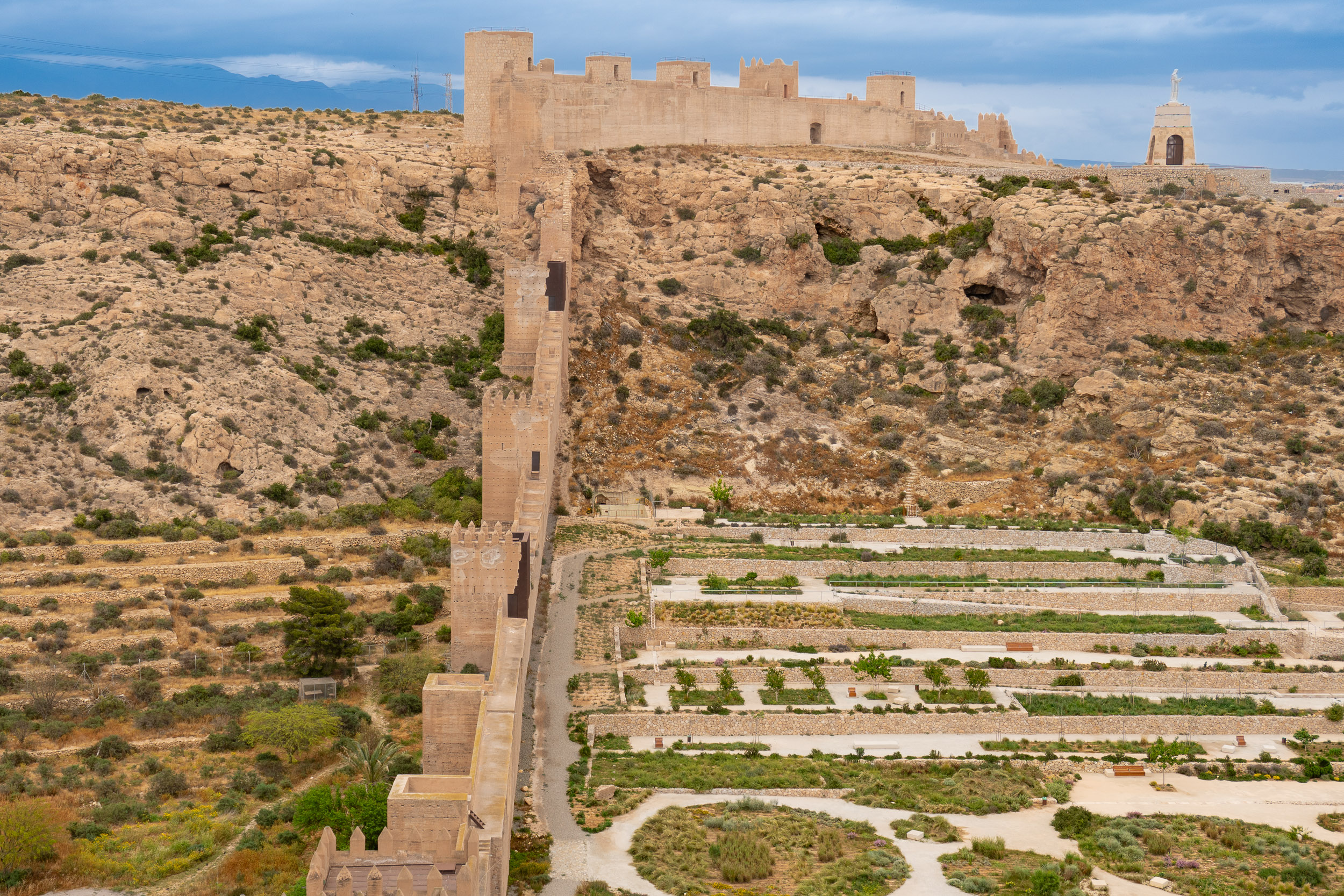
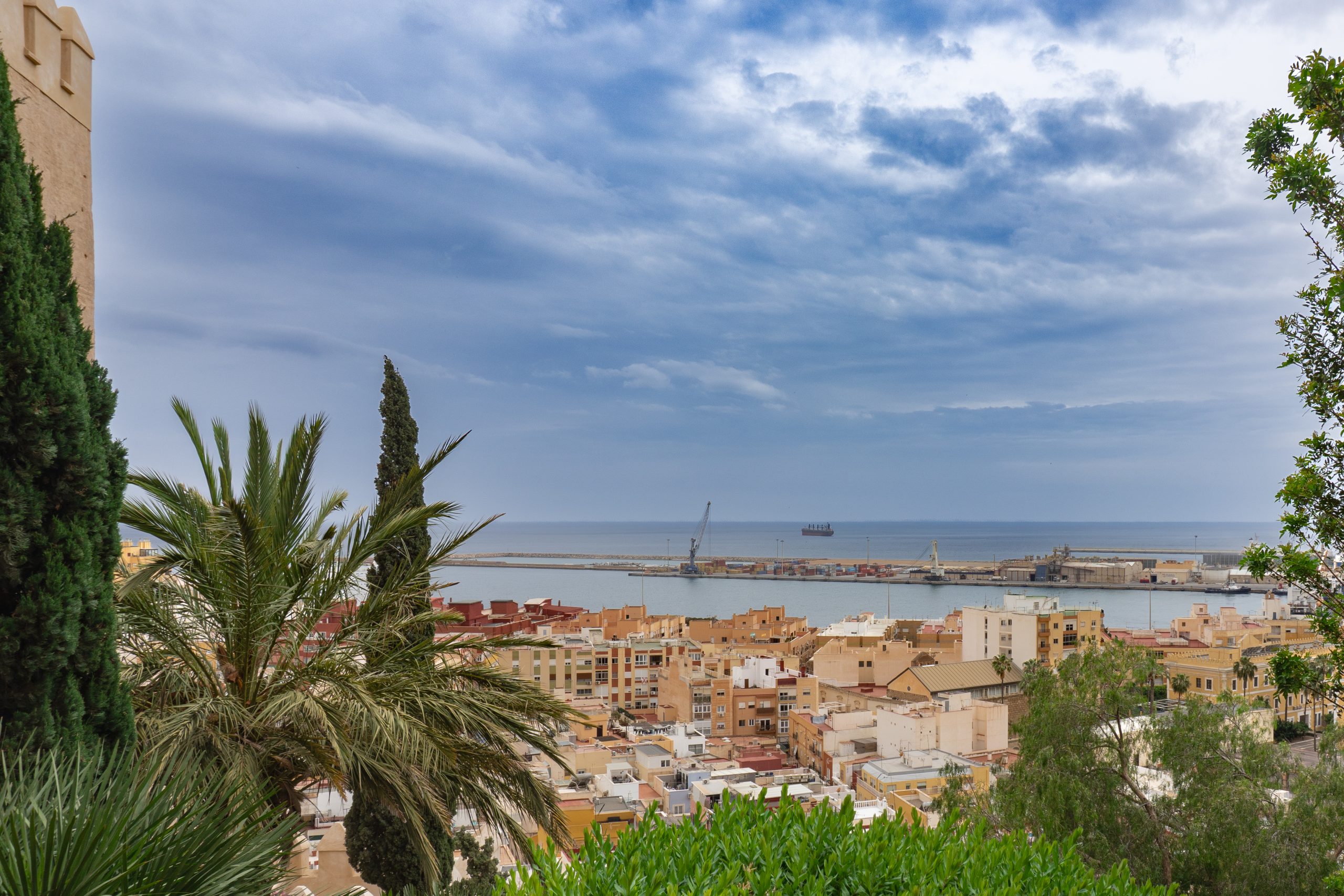
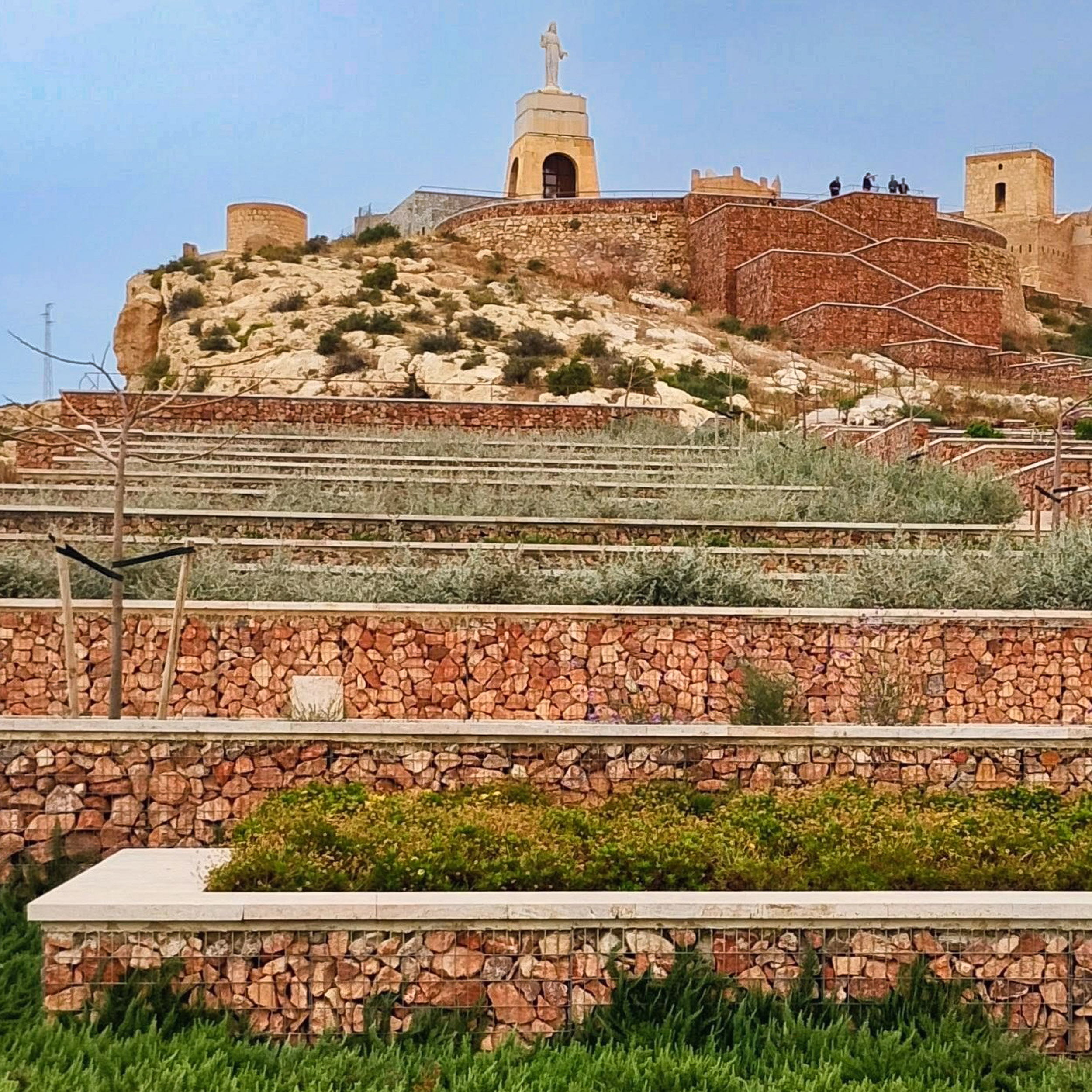
The monument to the Sacred Heart of Jesus offers a panoramic view of the city, the port, the Alcazaba, and the Jayrán Wall. The statue, sculpted from Macael marble, was installed in 1928 atop San Cristóbal Hill. It was destroyed during the Spanish Civil War but rebuilt in 1944. Finally, it was restored in the year 2000.
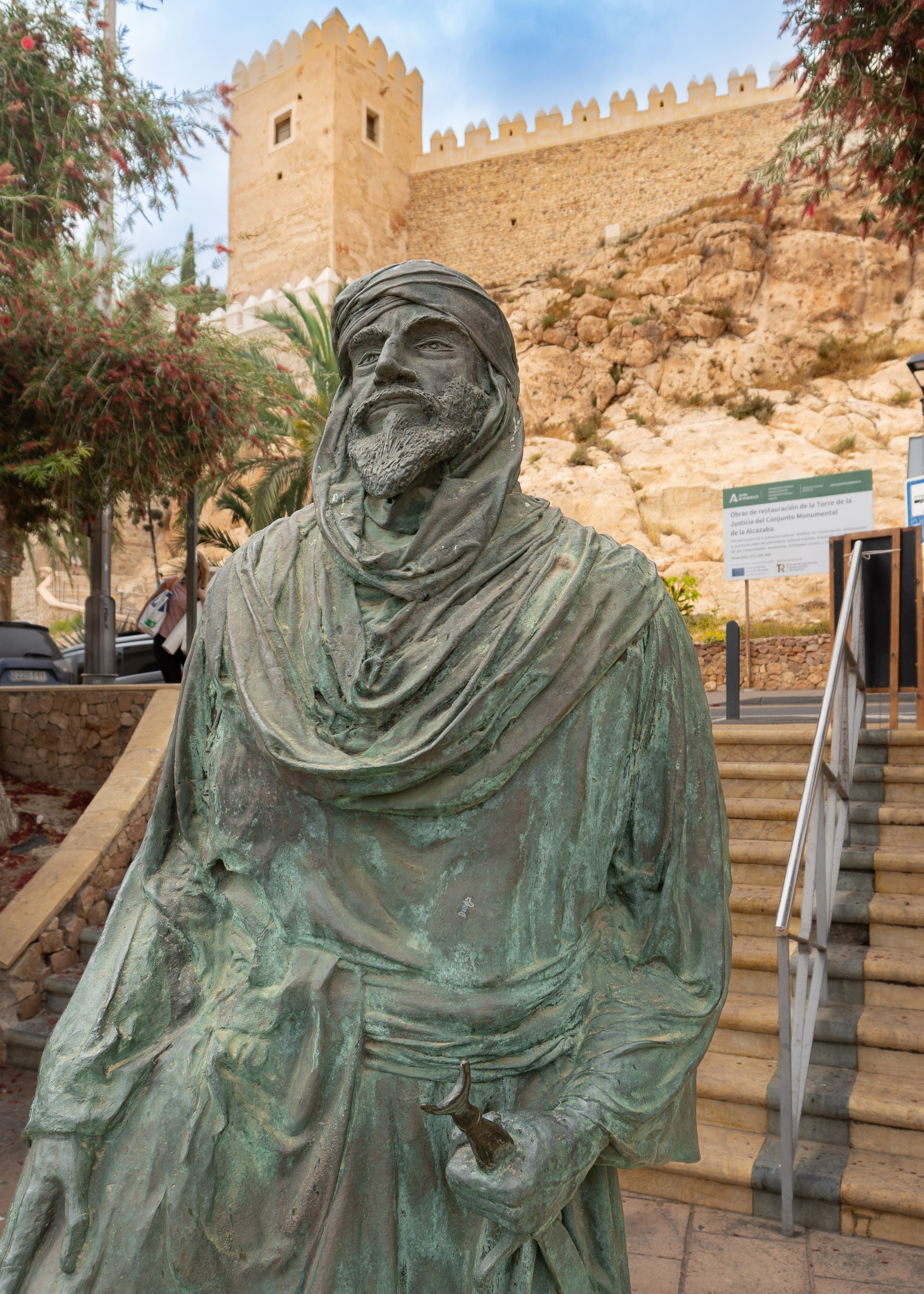
Khayran al-Amiri—or Jairán—was the first Muslim king of the Taifa of Almería. The Taifa of Almería was an independent Muslim kingdom that emerged in Al-Andalus in 1012. Al-Andalus was the Islamic society that formed on the Iberian Peninsula during the Middle Ages.
Al-Andalus existed from 711 to 1492, when the Reconquista (or the fall of Al-Andalus) brought Muslim rule to an end. The Reconquista consisted of a series of military campaigns waged by the Christian kingdoms of the northern Iberian Peninsula against Al-Andalus, which was under Muslim rule. Consequently, many Muslims were forced to convert to Christianity.
The Port of Almería, plant sculpture and the Cable Inglés
At the entrance to Nicolás Salmerón Park in Almería, you will find a vertical planter. The plant sculpture is in the shape of the letters “ALMERÍA”. It is 1.20 meters (4 feet) high, two meters (6.5 feet) wide, and just over seven meters (23 feet) long. This decorative planter welcomes visitors to the city. It was designed by Almería’s Department of Water and Greenery with the aim of giving the city a unique character, in a strategic location within the Port-City project.
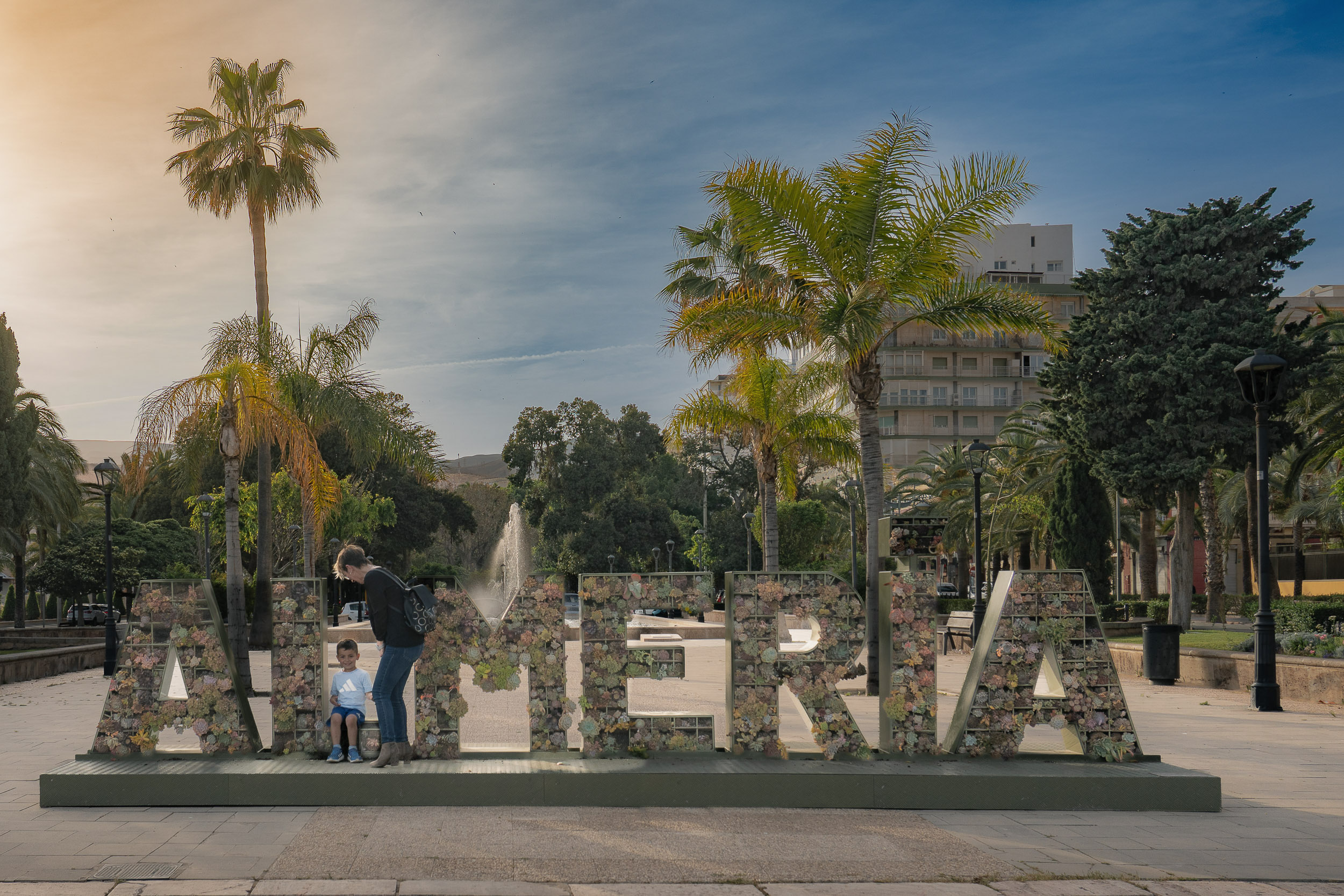
Below are some photos of the waterfront and harbor of Almería.

The Almería ferry terminal is located at the Levante Quay of the Port of Almería. Almería is part of the luxury and mid-sized cruise circuit covering the Western Mediterranean and the Atlantic, including destinations such as Málaga, Cádiz, Barcelona, and Valencia, as well as Tangier and Casablanca (Morocco). The port offers year-round direct routes to North Africa, connecting to destinations such as Melilla and Nador.

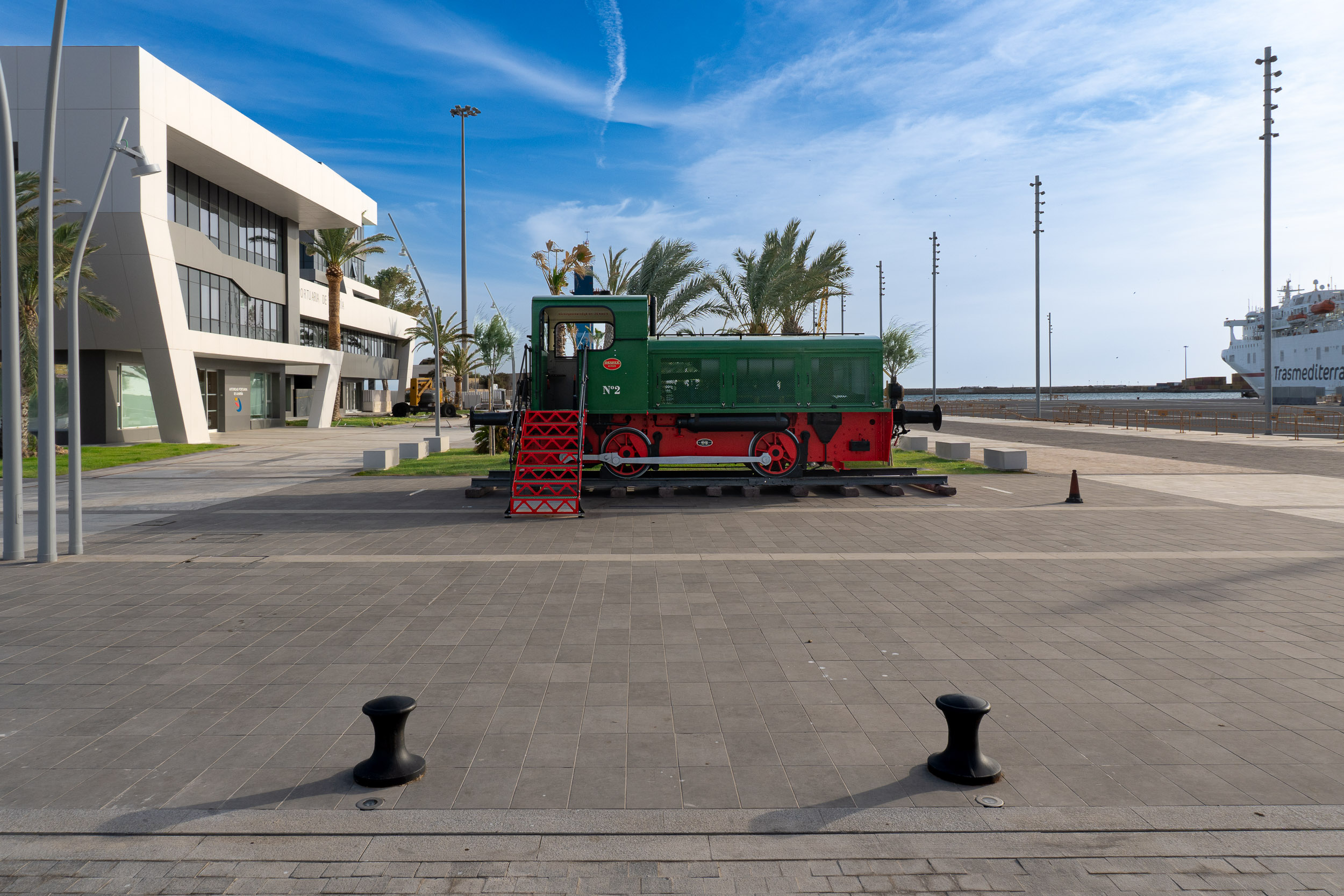
The Deutz locomotive of Almería, known as Locomotora Deutz Nº 2, is a historic diesel locomotive built in 1929 by the German manufacturer Deutz AG. After being used in the Port of Almería from 1930 to 1967 for moving goods and minerals on the docks, it was restored and placed as an industrial heritage monument near the entrance to the Muelle de Levante.
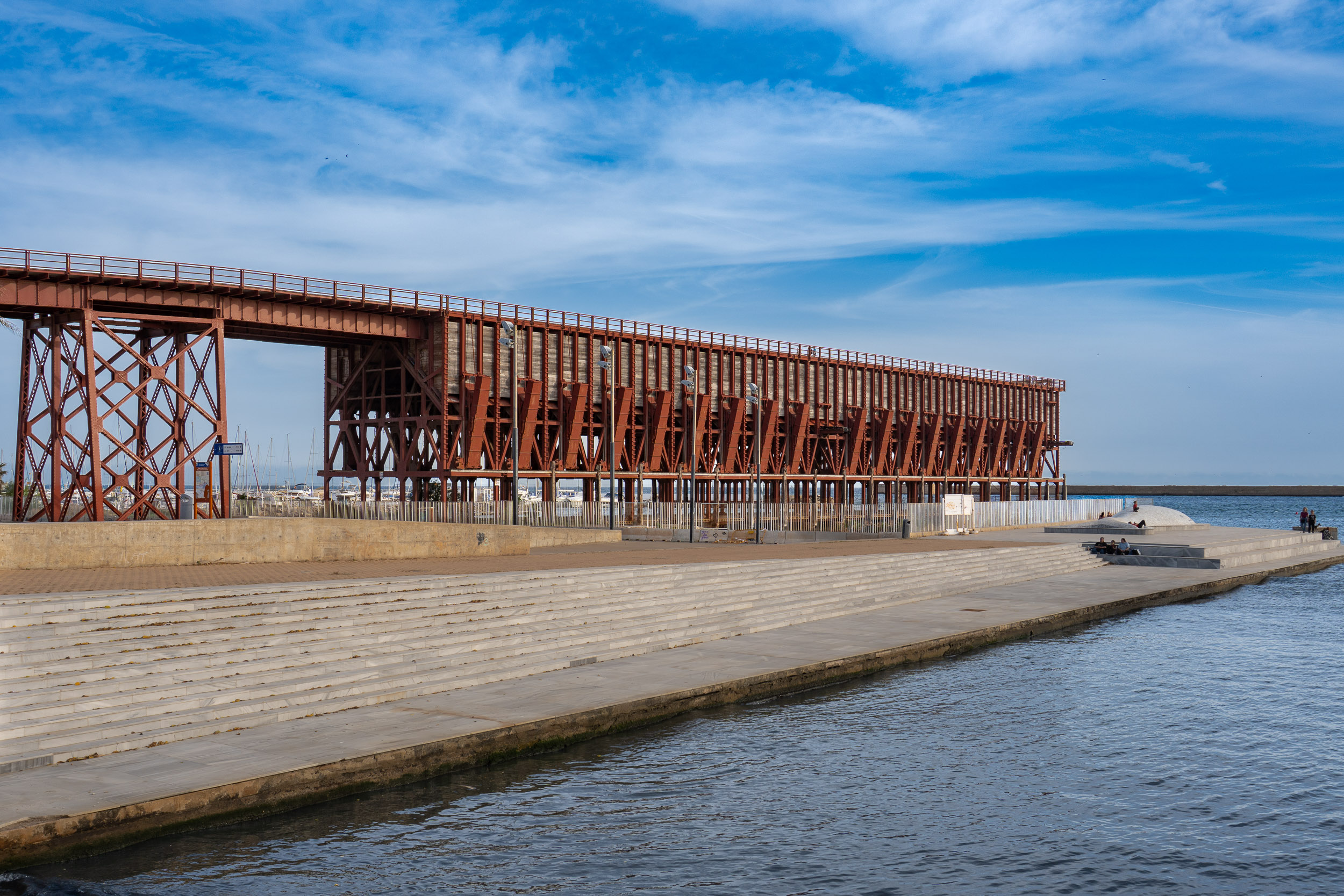
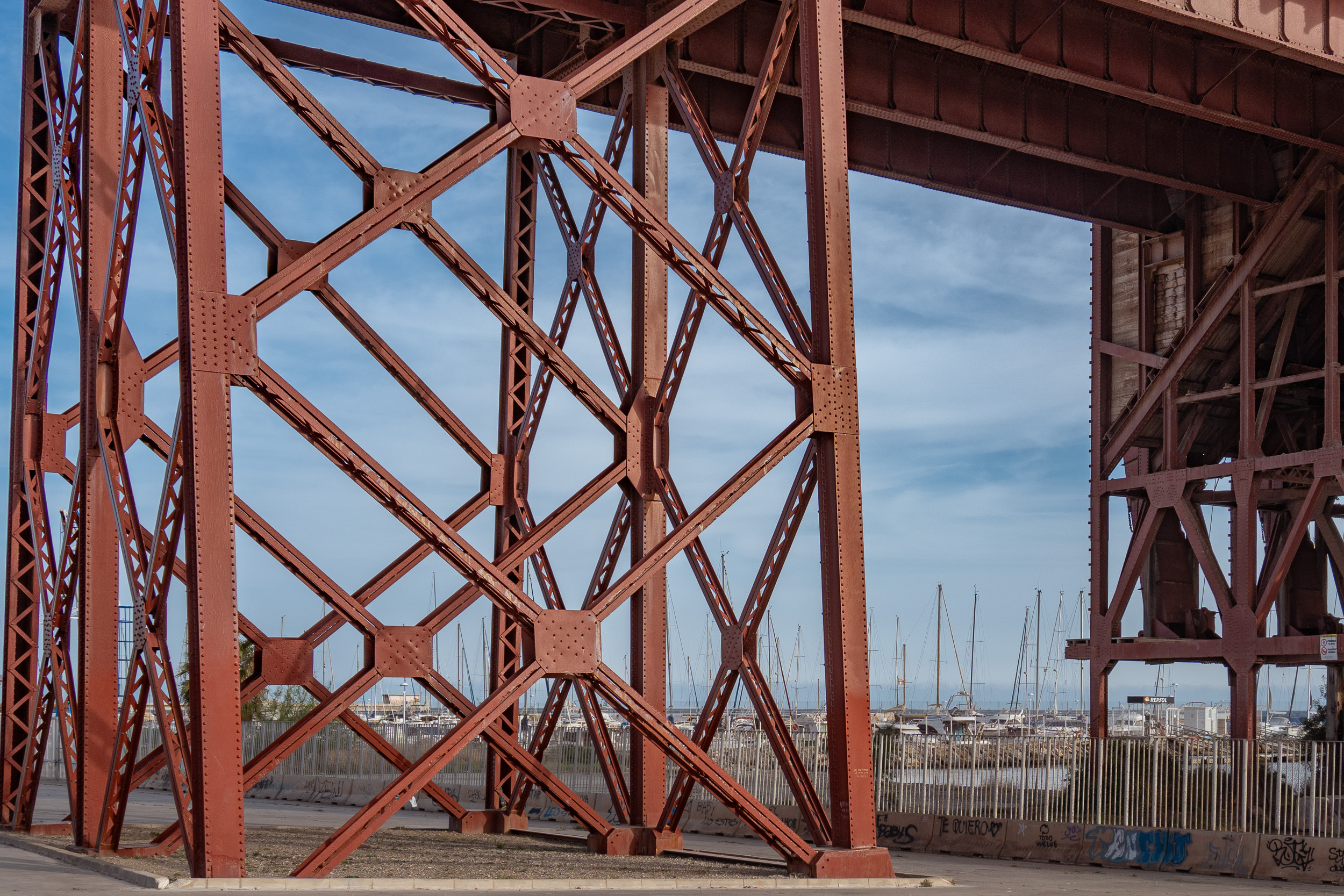
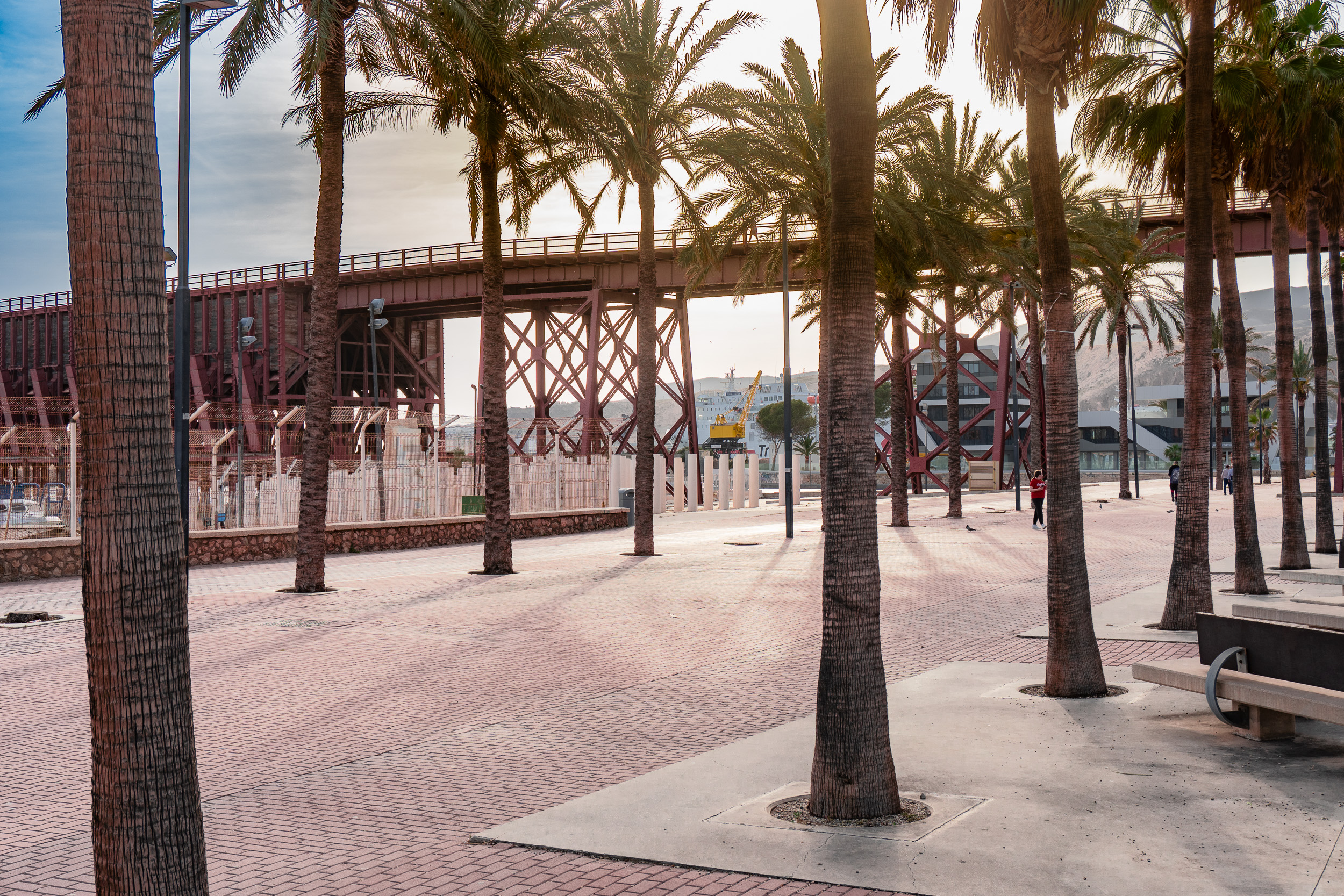
The “English Cable Structure” (below) dates from 1902 and is located at the quay in Playa de las Almadrabillas. It is also the terminus of a railway branch.
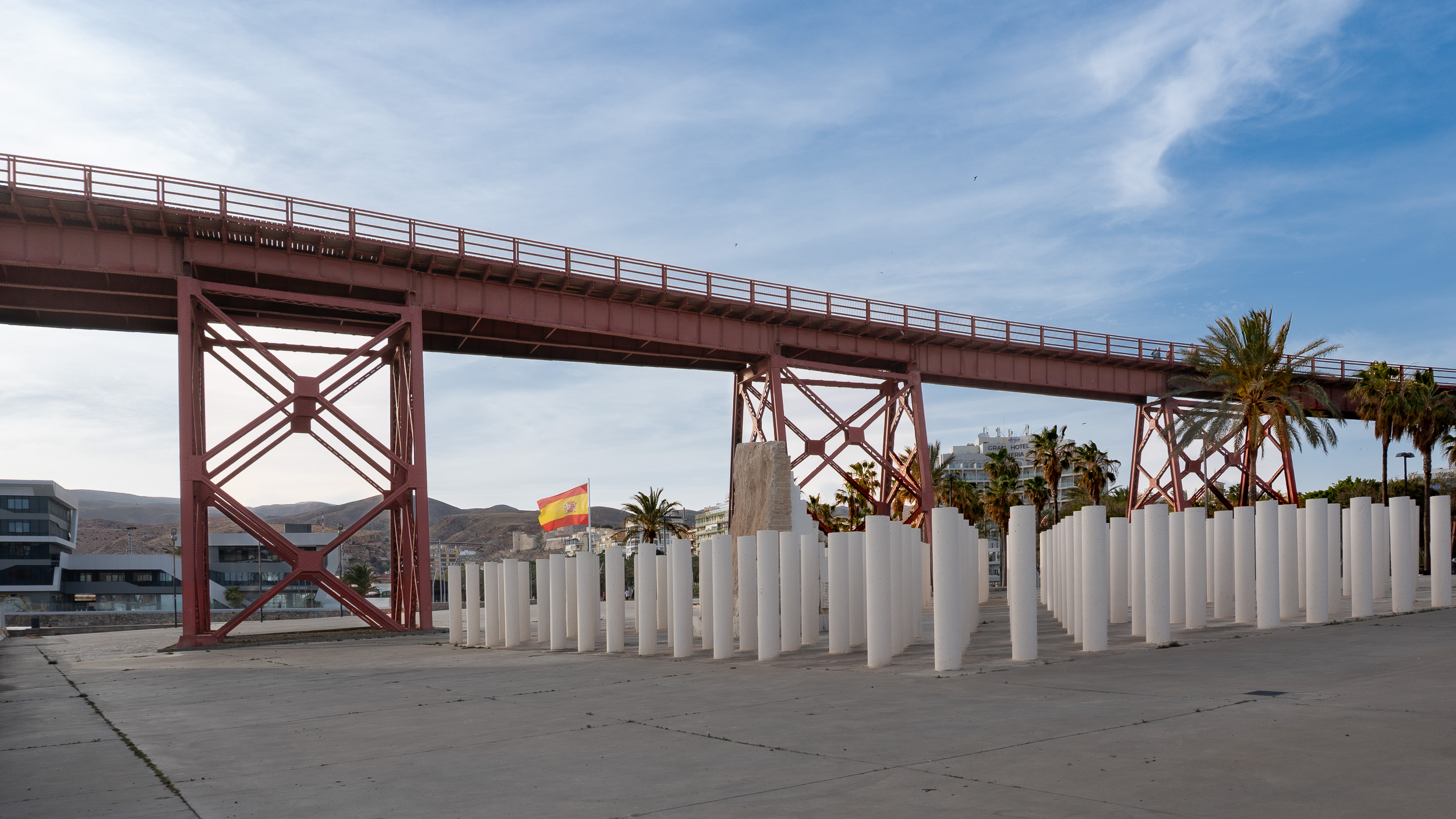
The English Cable Structure is an example and a masterpiece of iron architecture from the early twentieth century. Its construction was made possible by the development of the port and the railway line. It is characterised by the use of new materials, such as iron. The structure is a bridge connecting the quay to the train station, near Almería Beach. In 1998, it was declared a cultural heritage site due to its historical, symbolic, and aesthetic value.
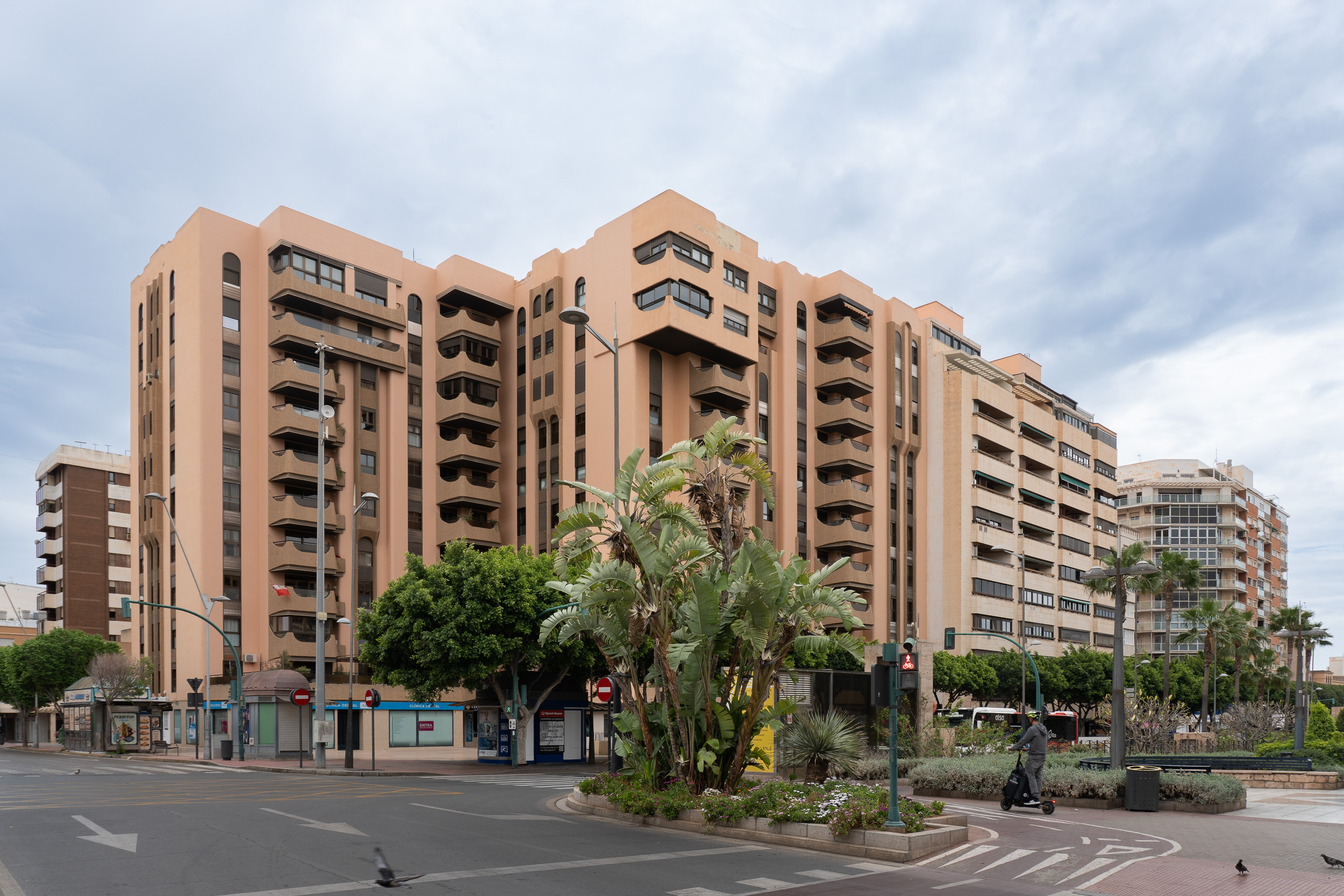
As can be seen below, Almería has many modern apartment buildings from the late 1970s and 1980s, built during Spain’s rapid urban expansion. This building is located on the square of Calle Canónigo Molina Alonso and Calle Hermanos Machado in the Oliveros district of Almería, near the port. The modern architecture utilizes stepped vertical balconies that optimize shading and naturally protect the apartments from the bright Andalusian sun. Although these apartments present a stark contrast to the old city center, they offer residents views of the surrounding area and easy access to local attractions such as the Alcazaba of Almería.
Almería City Centre: La Rambla, Paseo de Almería and Historic Architecture
Avenida Federico García Lorca is one of the main thoroughfares in the Spanish city of Almería. The avenue was built over the bed of a dried-up river and connects the north of the city with the port and the beaches.
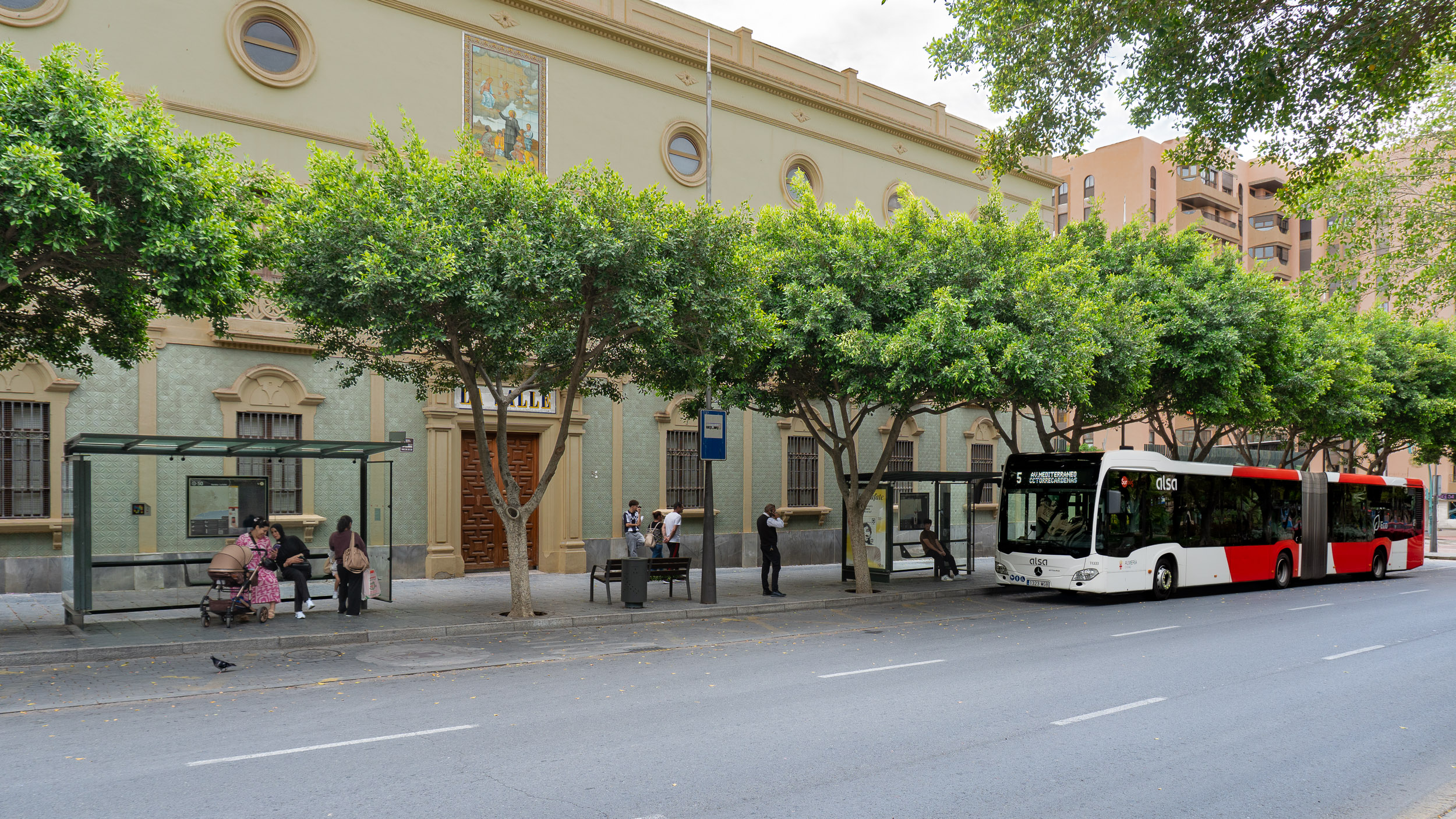
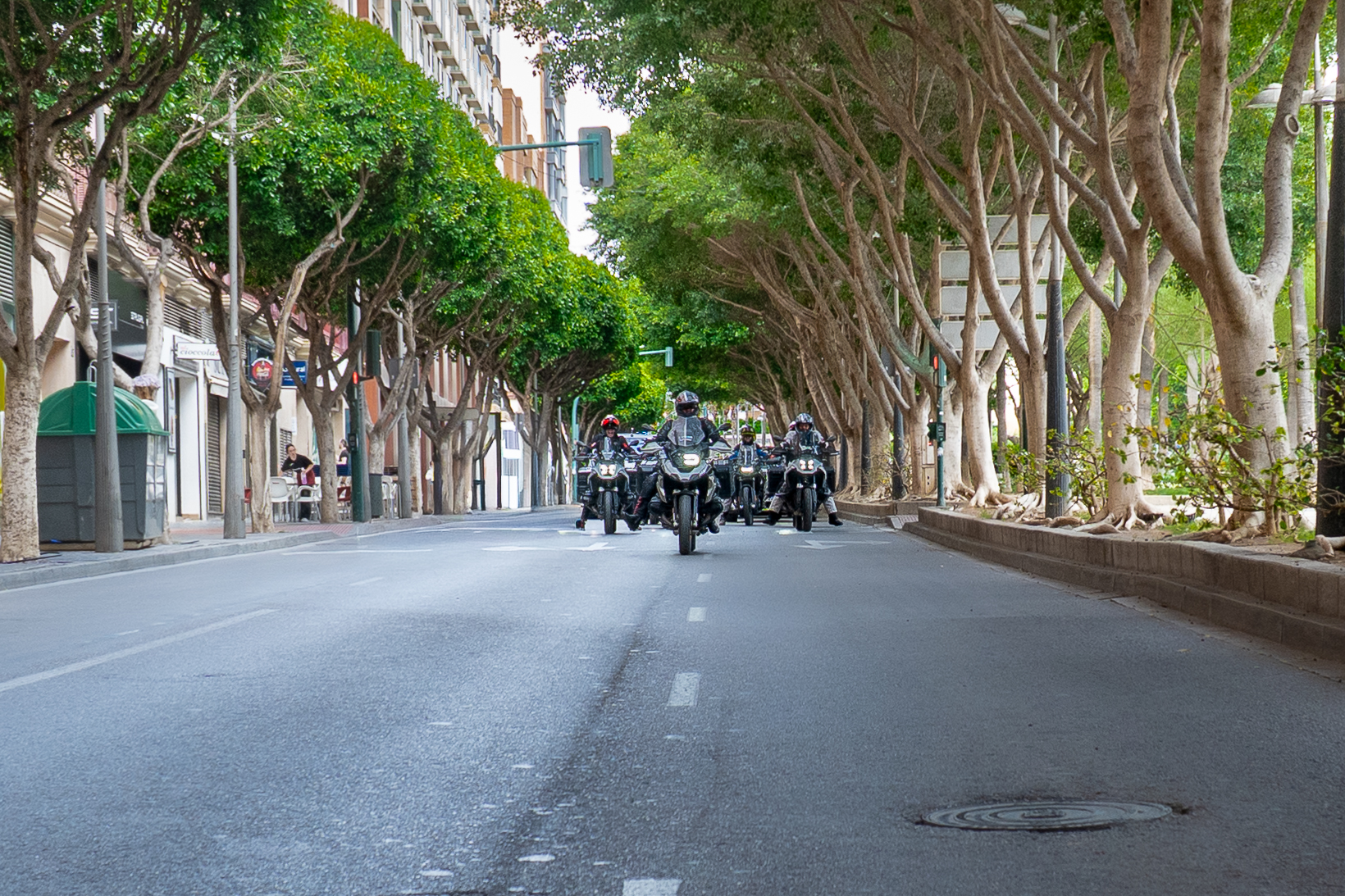
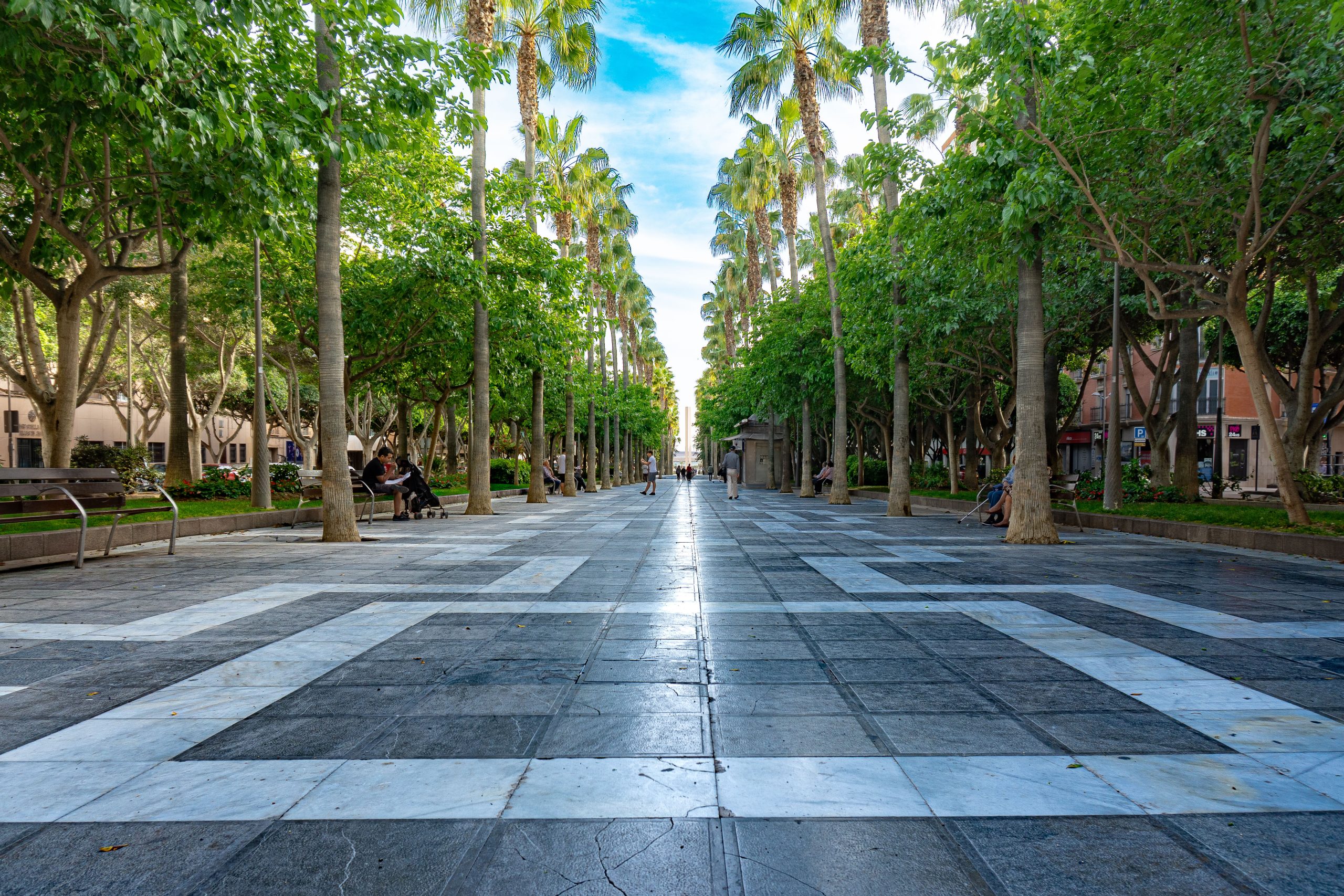
Local residents call the long, wide Federico García Lorca Avenue—with its rows of trees, fountains, and pedestrian areas—”La Rambla” or “La Rambla de Belén”. The urban boulevard section of the Rambla in Almería spans approximately 2 kilometres (1.24 miles) from the foothills of the city down to the Mediterranean Sea.
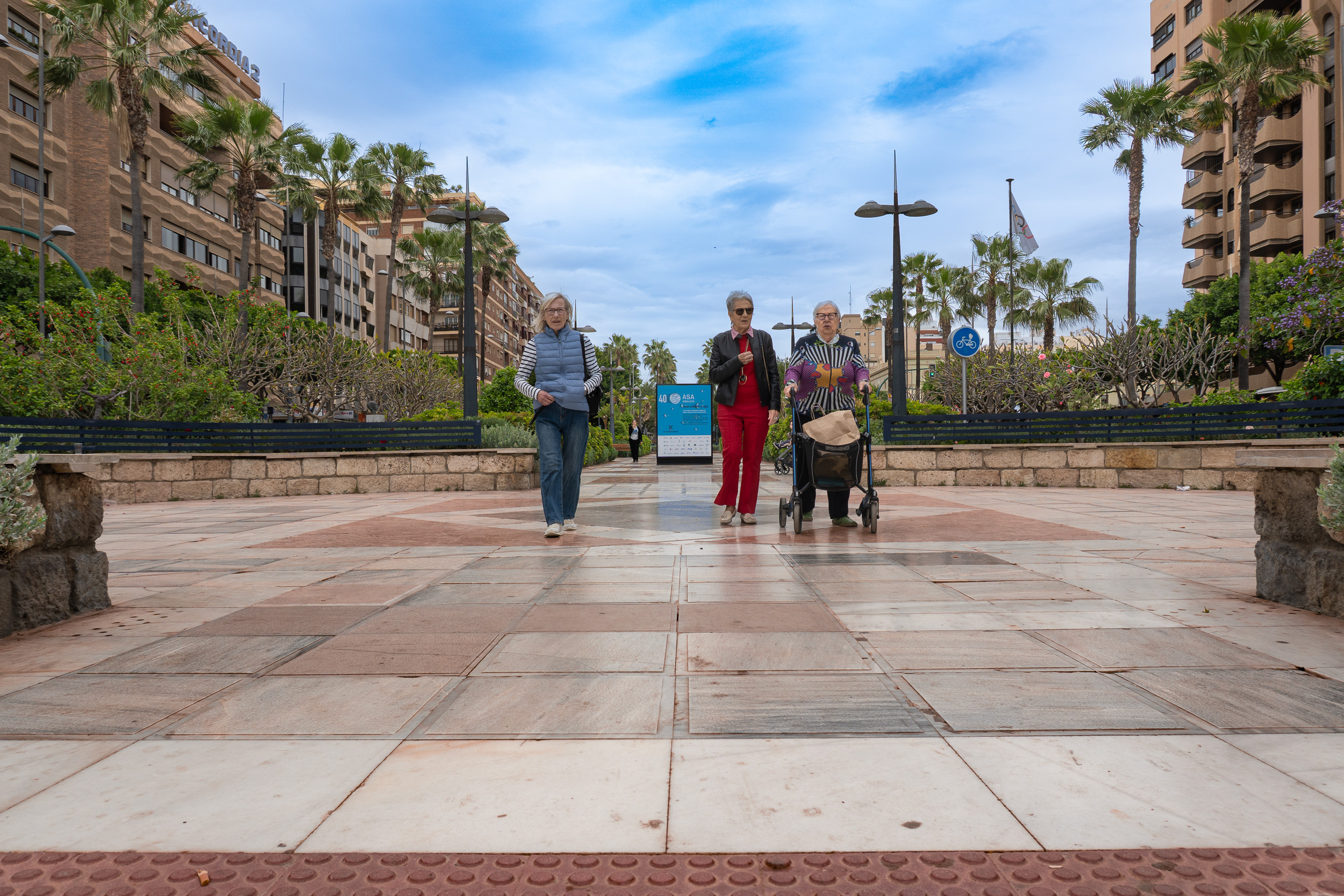
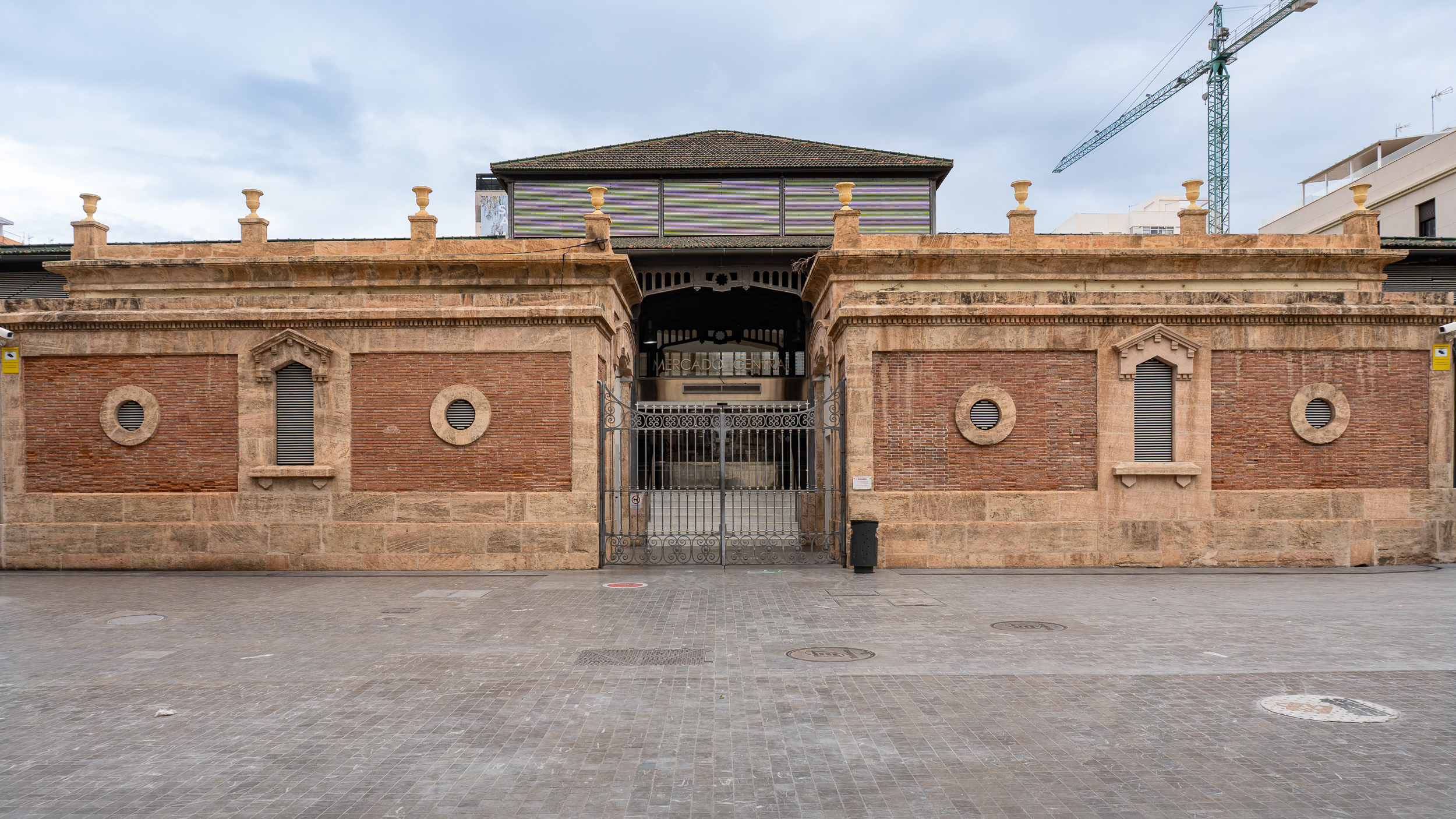
One of the streets adjacent to Federico García Lorca Avenue is Rambla Obispo Orberá. Further along, at the entrance to the Central Market car park, one can see an original form of “three-dimensional” street art that contrasts with the grey asphalt. There is an independent gallery for urban art photography in Almería.
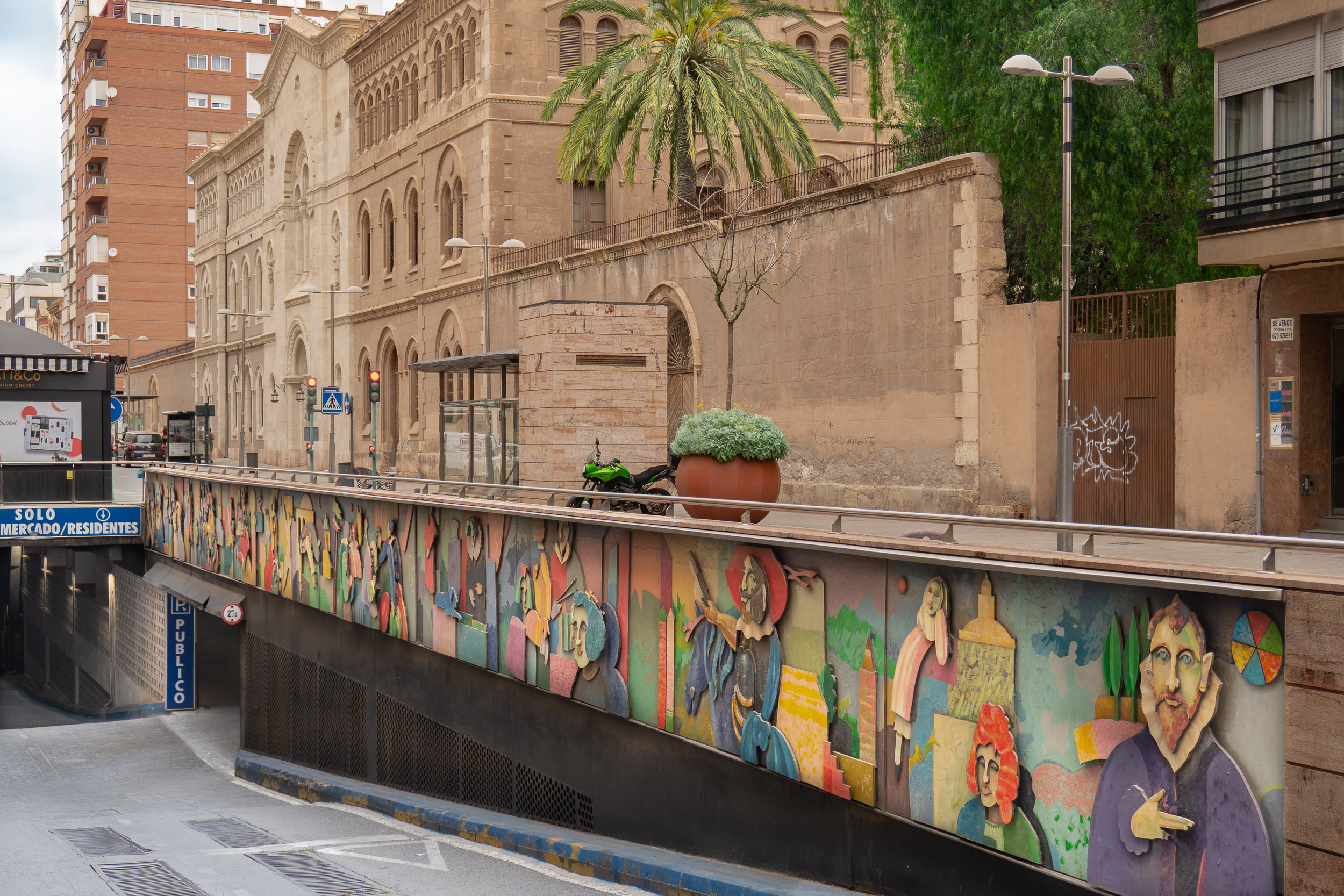
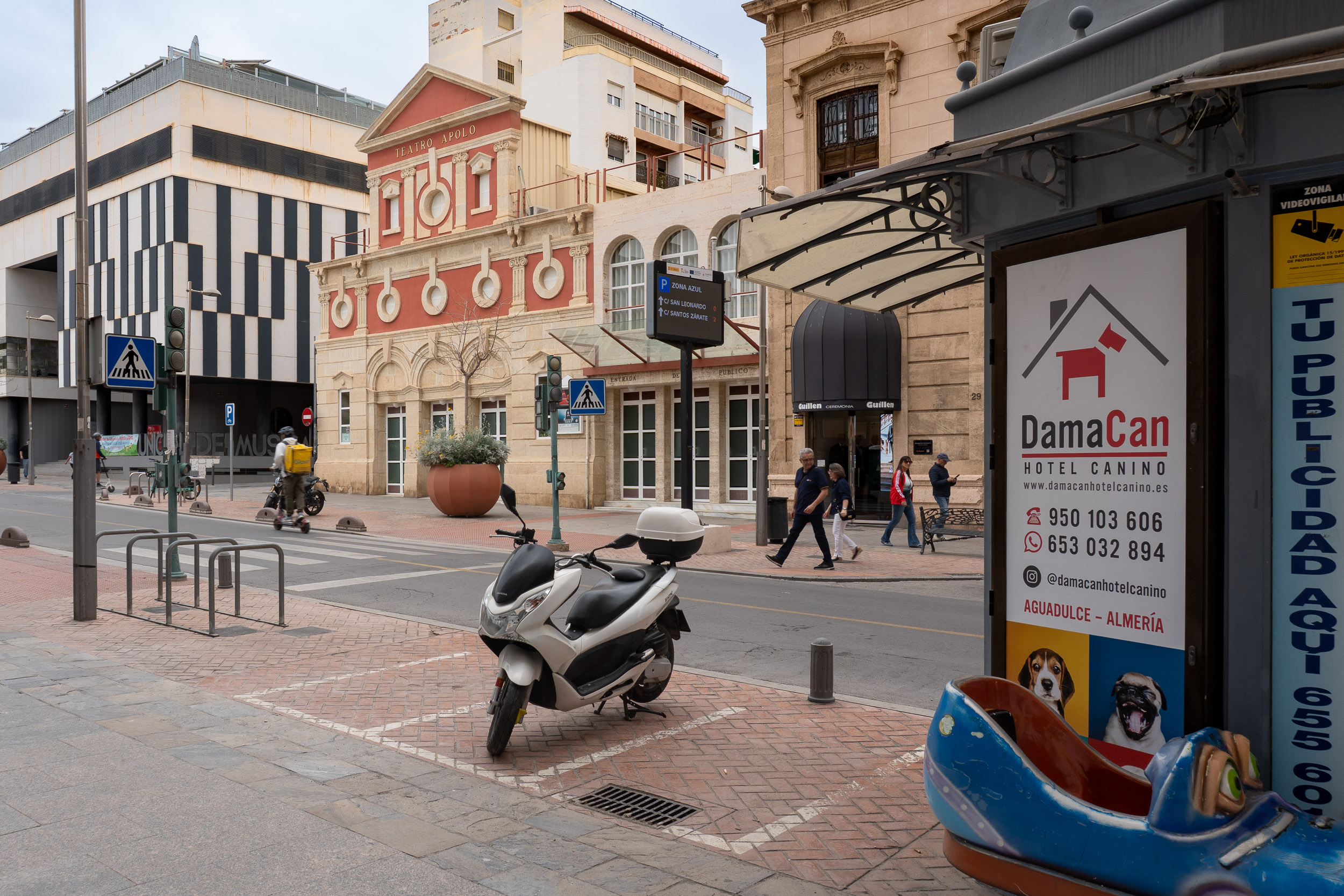
Built in 1881, the Apolo theatre was designed primarily in the historicist architectural style. This was a popular movement in 19th-century Spain in which architects combined elements from styles of earlier eras.
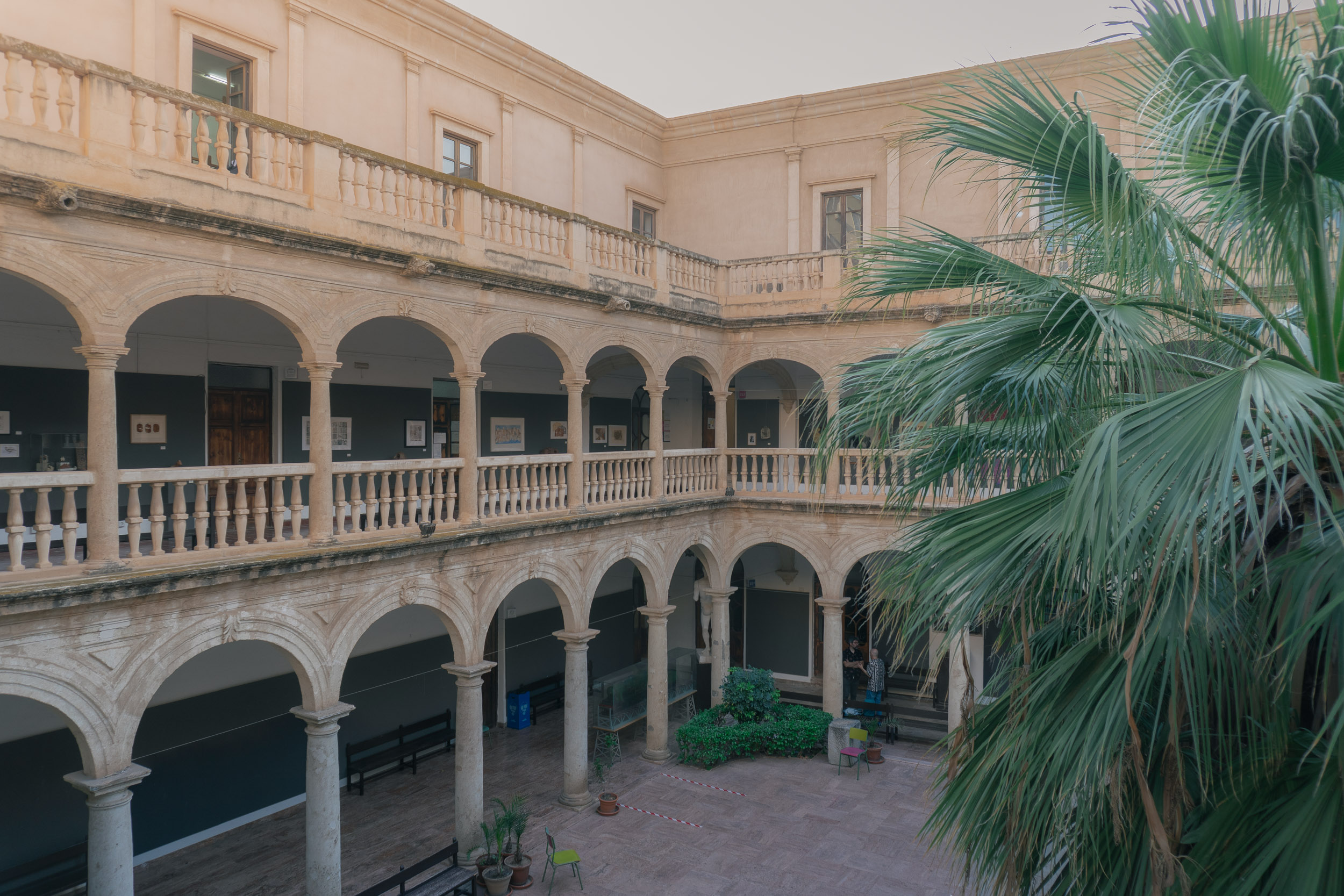
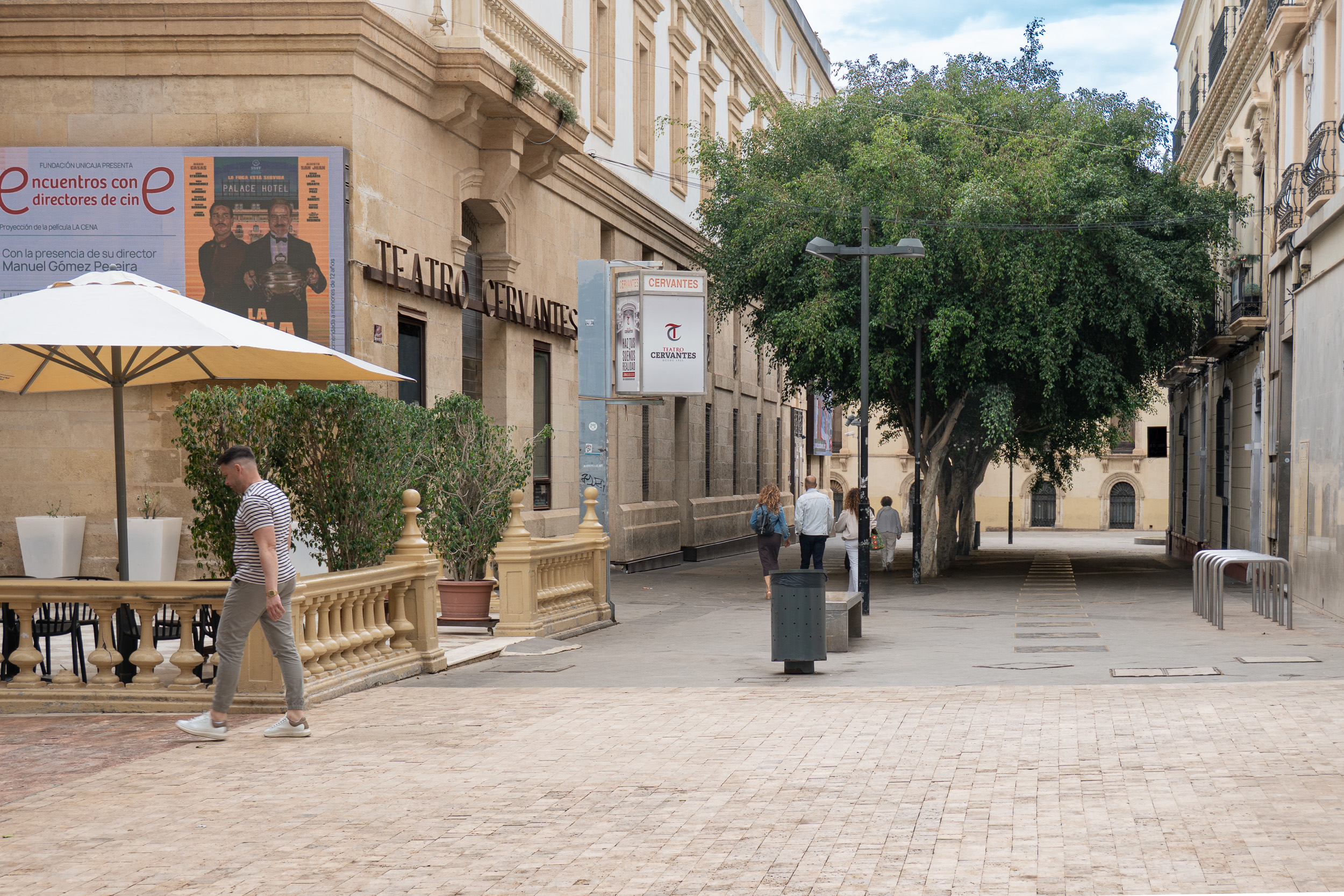
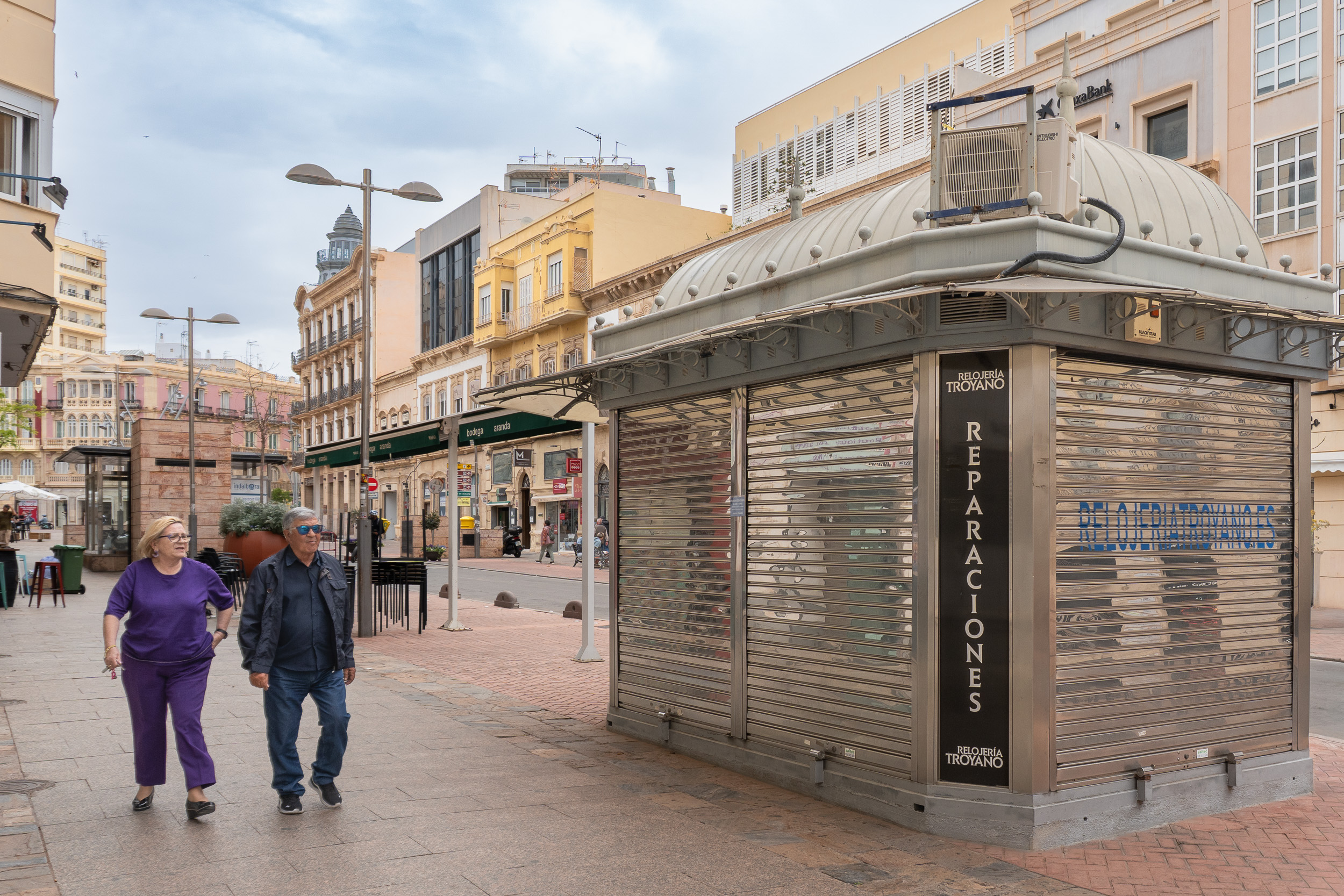
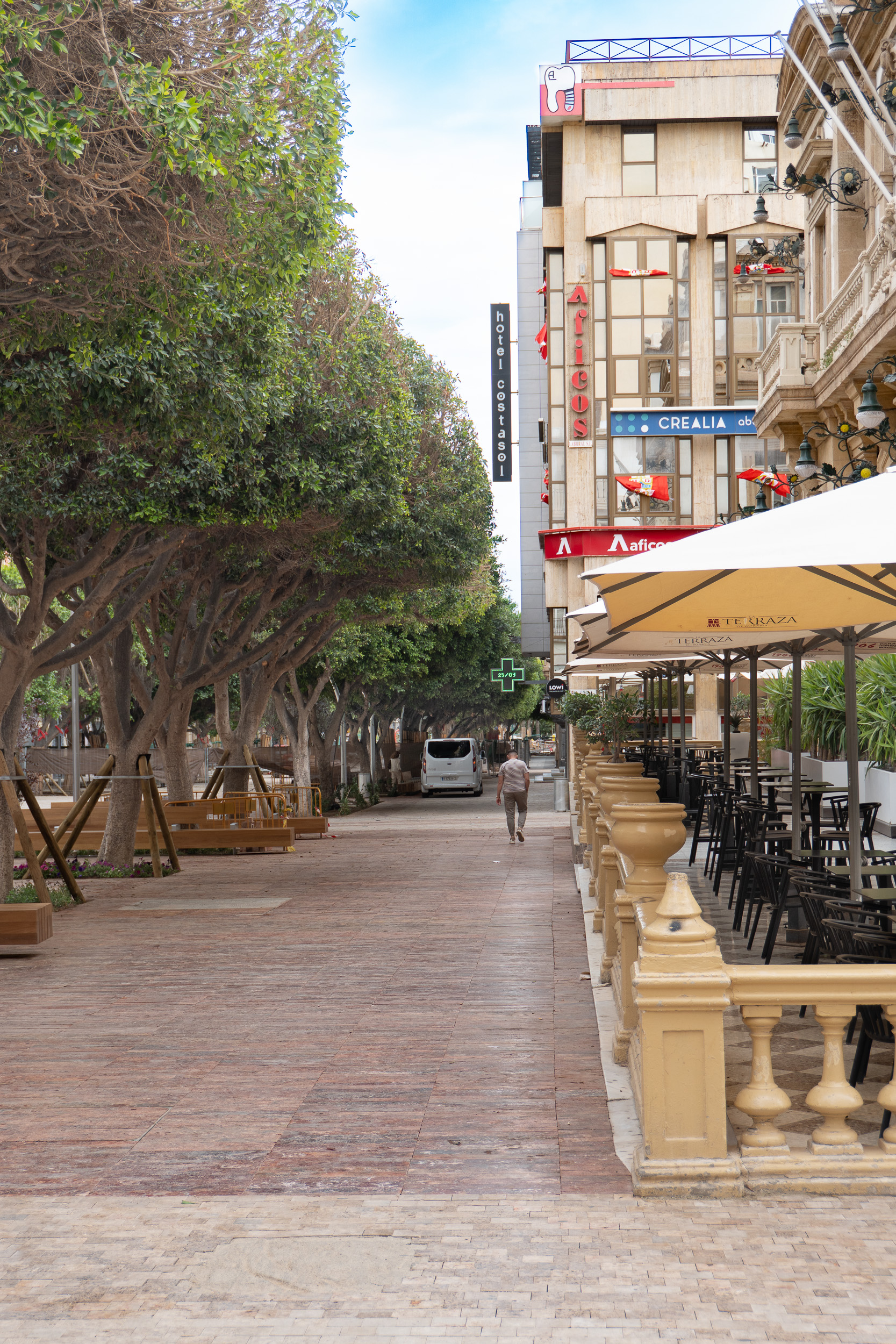
The Paseo de Almería (below) is the bustling main artery of the southern Spanish city of the same name. This historic promenade runs from the iconic Puerta de Purchena square to Plaza Emilio Pérez. It is the ideal place to shop, eat tapas, or enjoy the lively atmosphere under the shady trees.
Puerta de Purchena and Casa de las Mariposas
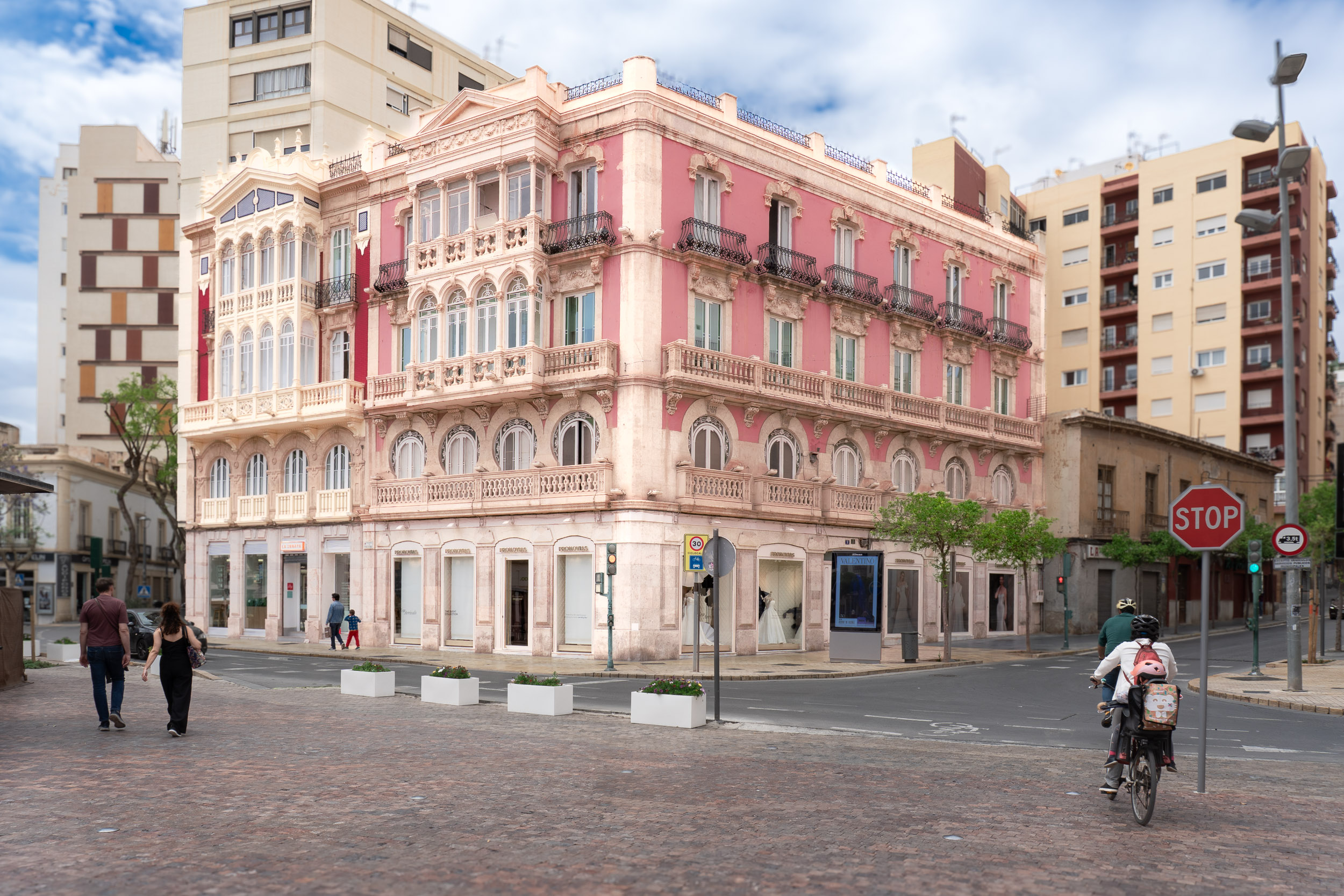
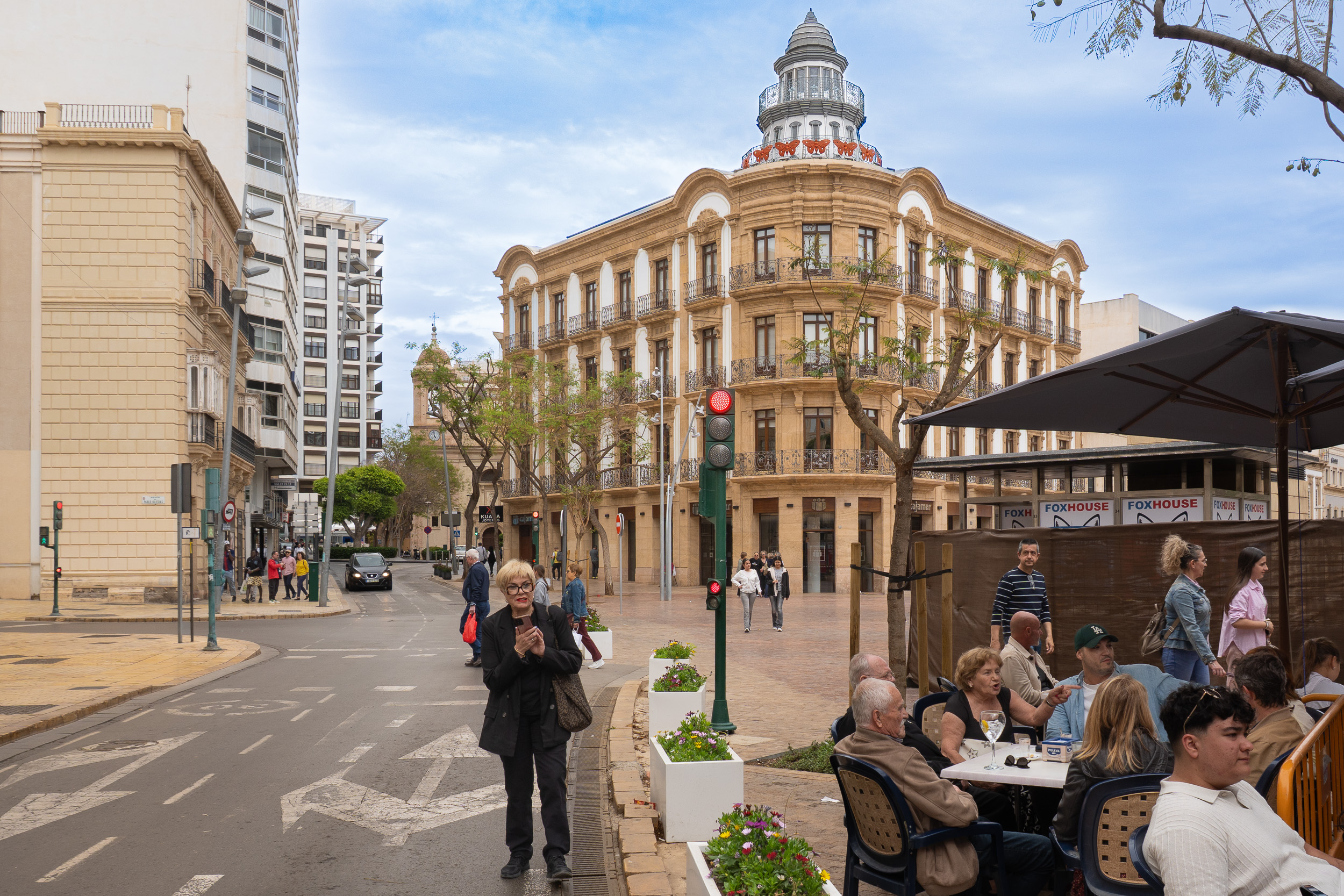
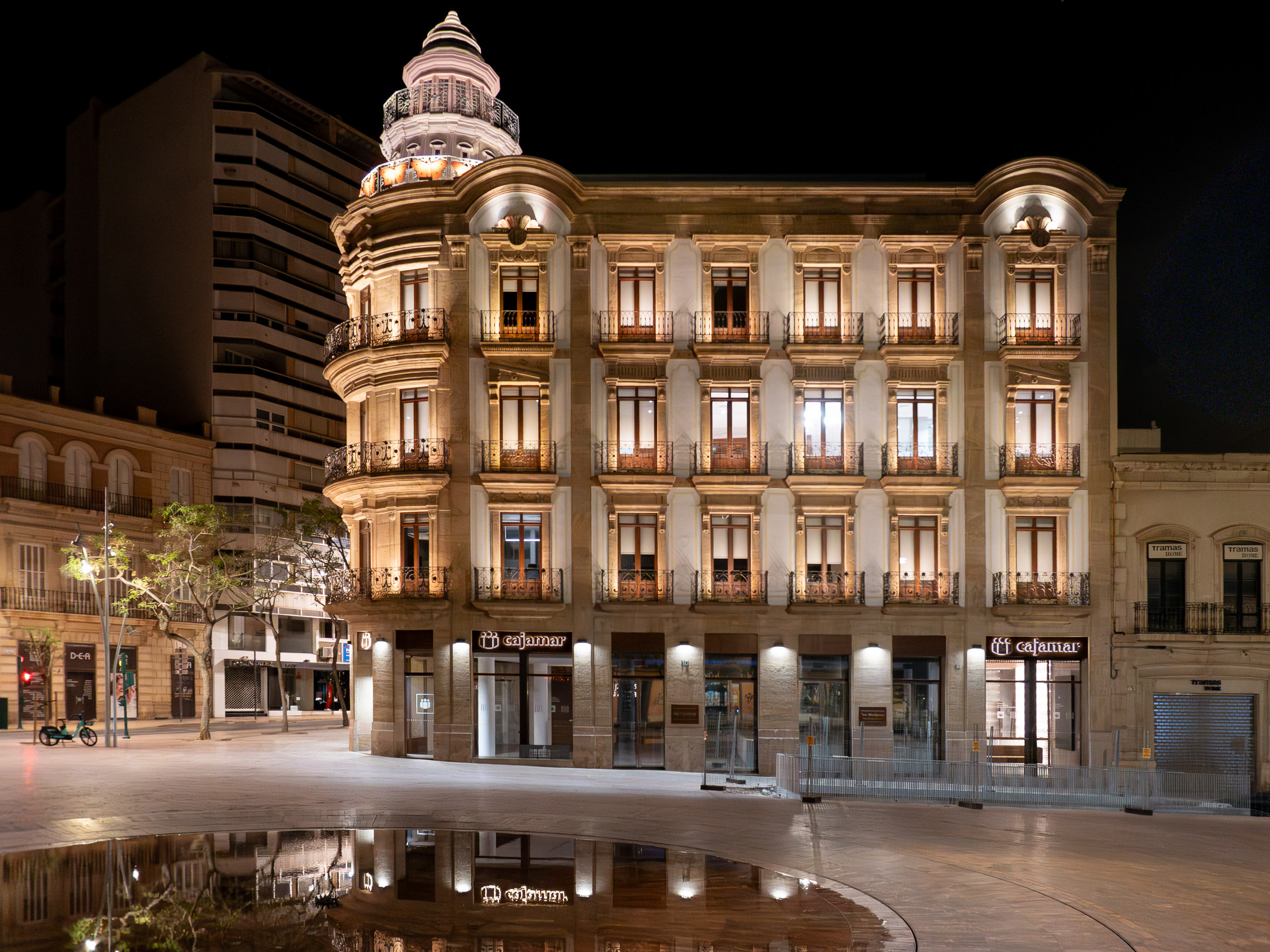
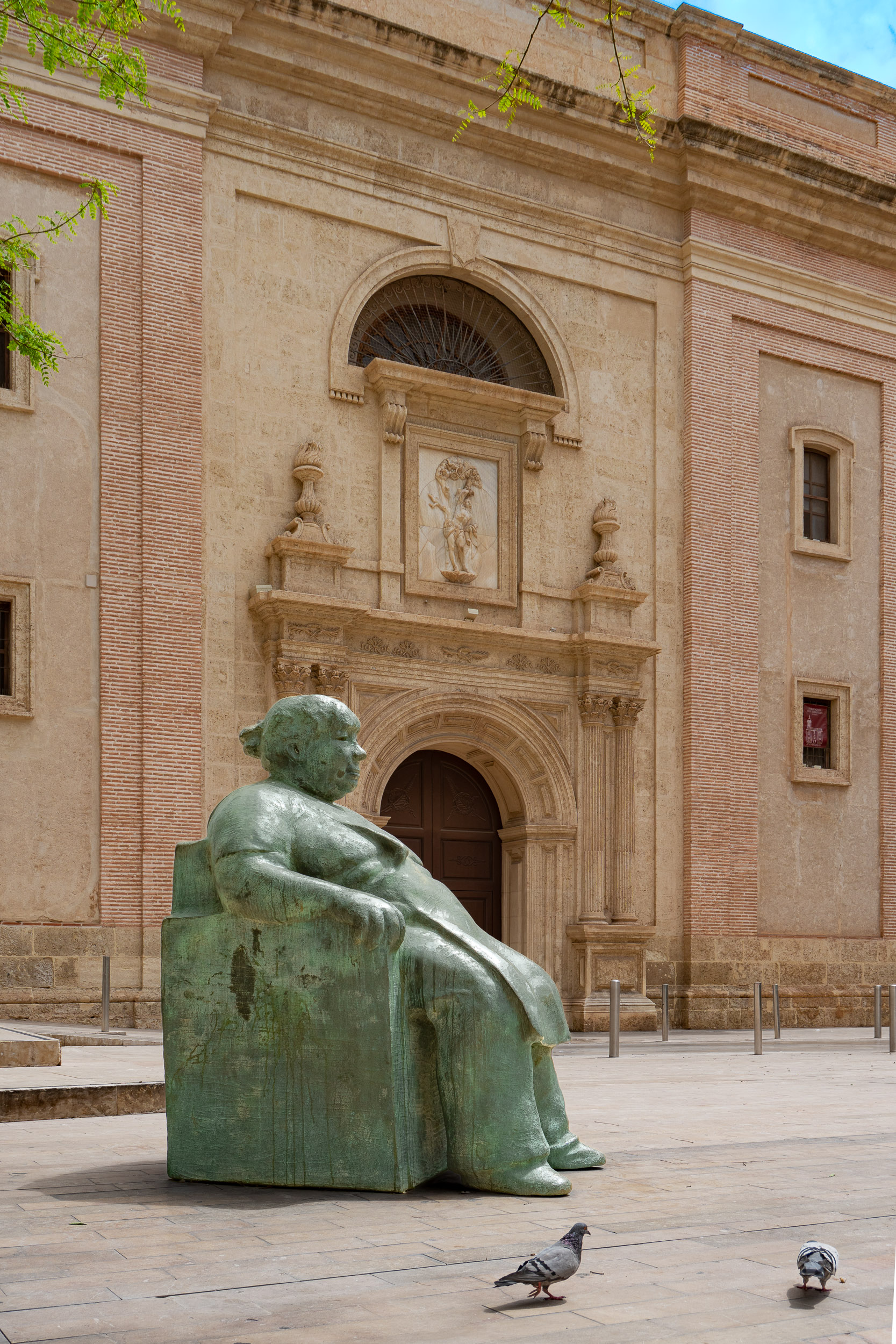
The Puerta de Purchena in Almería is a pedestrian zone with several examples of late 19th-century architecture and early 20th-century modernist architecture. The area has a layered urban character, with historic façades, hidden details and elegant city buildings. This pedestrian zone is also located in the city center of Almería. However, this separate chapter focuses primarily on the pedestrian zone and the adjacent streets.
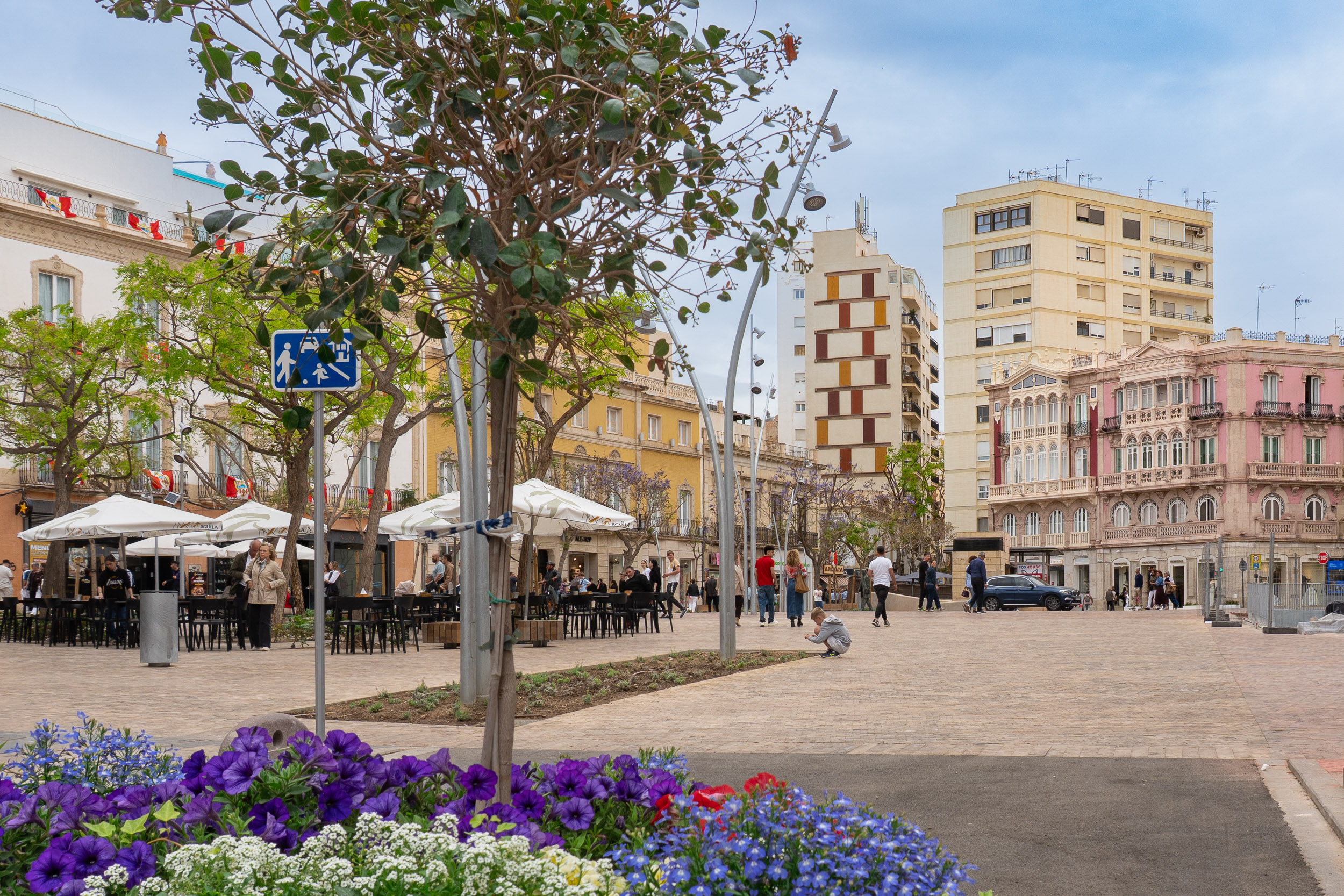
On the Puerta de Purchena square, you will find well-known shops such as the gift and gadget store ALE-HOP and the bridal boutique Pronovias Almería. Leading off from this square is the Paseo de Almería, the main shopping street, which is lined with major brands and boutiques.